

"Extremely dangerous" Hurricane Eta plows into northeast Nicaragua
Hurricane Eta, one of the most powerful storms to hit Central America in years, struck Nicaragua's Caribbean coast early on Tuesday morning in one of the country's poorest areas, unleashing heavy rains that stoked fears of deadly floods in the region. The head of Nicaragua's disaster management agency, Guillermo Gonzalez, told a news conference that Eta plowed ashore near the port of Puerto Cabezas, pulling roofs off houses, knocking down trees and powerlines and causing flooding in the region.
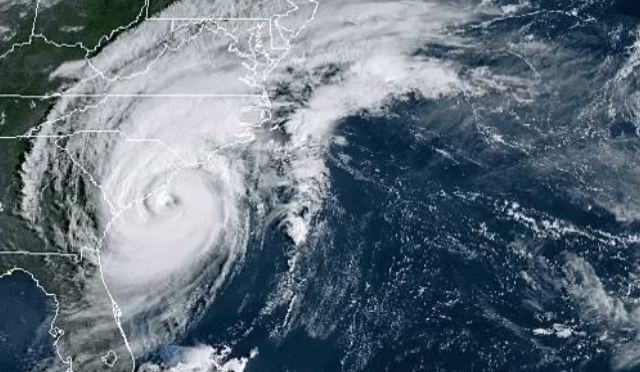
Hurricane Eta, one of the most powerful storms to hit Central America in years, struck Nicaragua's Caribbean coast early on Tuesday morning in one of the country's poorest areas, unleashing heavy rains that stoked fears of deadly floods in the region.
The head of Nicaragua's disaster management agency, Guillermo Gonzalez, told a news conference that Eta plowed ashore near the port of Puerto Cabezas, pulling roofs off houses, knocking down trees and powerlines and causing flooding in the region. Eta, an "extremely dangerous" Category 4 hurricane on the five-step Saffir-Simpson scale, has brought "catastrophic" winds to Nicaragua, the U.S. National Hurricane Center (NHC) said.
Shortly before the Nicaraguan government announced the arrival of the storm, Eta was blowing sustained winds of 145 miles per hour (233 kph), according to the NHC. The northern indigenous regions directly in Eta's path are some of Nicaragua's poorest. Many people nearby live in wooden homes that stand little chance against such a powerful storm.
Late on Monday, Javier Plat, a local Catholic priest, told Reuters there was a city-wide power outage in Puerto Cabezas and government-arranged shelters had reached capacity. "This city of 70,000 people is very vulnerable. We have houses made of wood and adobe. The infrastructure of the residential houses is our main vulnerability," Plat said.
Nicaragua on Monday evacuated at least 3,000 families, including fishermen who live in the most vulnerable villages on the Atlantic coast, officials said. The storm is forecast to move inland over northern Nicaragua through Wednesday morning and then hit central Honduras on Thursday. Once it clatters into the mountains of Nicaragua and Honduras, it should weaken rapidly, NHC said.


 Google News