

Science News Roundup: China to hold talks on building asteroid defence system; A black hole dubbed 'the Unicorn' and more
Following is a summary of current science news briefs.
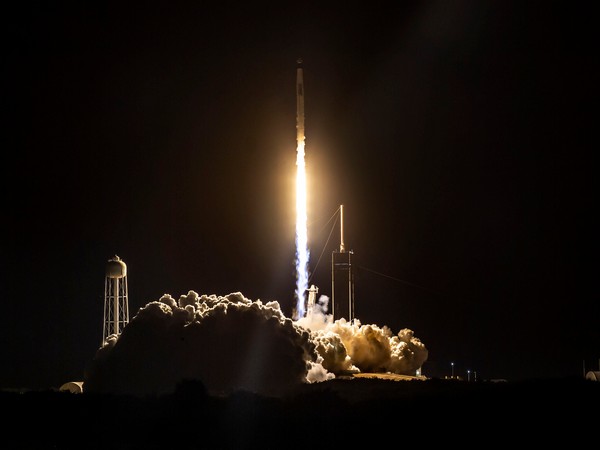
SpaceX rocketship launches 4 astronauts on NASA mission to space station
NASA and Elon Musk's commercial rocket company SpaceX launched a new four-astronaut team on a flight to the International Space Station early on Friday, the first crew ever propelled toward orbit by a rocket booster recycled from a previous spaceflight.
China to hold talks on building asteroid defence system
China will hold a discussion on building a defense system against near-earth asteroids, a senior space agency official said on Saturday, as the country steps up efforts towards realizing its longer-term space ambitions. Zhang Kejian, head of the China National Space Administration, didn't provide any further details in his opening remarks at a ceremony for China's space day in the eastern city of Nanjing.
Astronauts arrive at space station aboard SpaceX Endeavour
A four-astronaut team arrived at the International Space Station on Saturday aboard the SpaceX Crew Dragon capsule Endeavour, NASA said, after becoming the first crew ever to be propelled into orbit by a rocket booster recycled from a previous spaceflight. The Endeavour capsule, also making its second flight, was launched into space on Friday atop a SpaceX Falcon 9 rocket from NASA's Kennedy Space Center in Florida. SpaceX is Elon Musk's commercial rocket company.
Costa Rica unveils radar that tracks space objects from a farm
Surrounded by clear blue skies and fields of sugar cane crops on the Pacific coast, a farm in the northwest of Costa Rica is now home to a giant radar capable of tracking small objects in space that threaten the safety of astronauts and satellites. Costa Rican President Carlos Alvarado and U.S. and Costa Rican astronauts on Thursday unveiled the four large reflective panels that make up the commercial radar, which is connected to the servers of aerospace company LeoLabs in San Francisco.
A black hole dubbed 'the Unicorn' may be galaxy's smallest one
Scientists have discovered what may be the smallest known black hole in the Milky Way galaxy and the closest to our solar system - an object so curious that they nicknamed it 'the Unicorn.' The researchers said the black hole is roughly three times the mass of our sun, testing the lower limits of size for these extraordinarily dense objects that possess gravitational pulls so strong not even light can escape. A luminous star called a red giant orbits with the black hole in a so-called binary star system named V723 Mon.
Third-trimester vaccination appears safe; Pfizer/BioNtech vaccine effective in those with chronic illnesses
The following is a roundup of some of the latest scientific studies on the novel coronavirus and efforts to find treatments and vaccines for COVID-19, the illness caused by the virus. Third-trimester vaccination appears safe in early data


 Google News