

Sun emits two solar flares; NASA observatory captures events
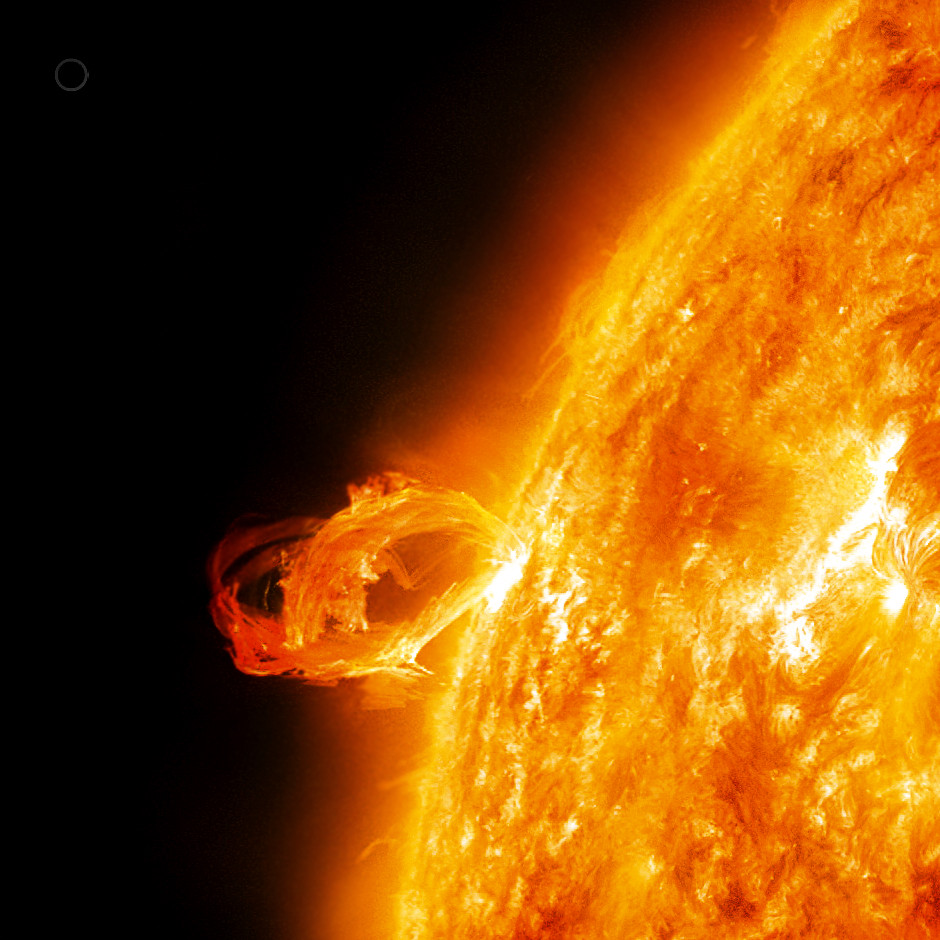
On April 19, 2022, NASA's Solar Dynamics Observatory (SDO) captured two solar flares emitted by the Sun. While one of the solar flares was moderate - M-Class - peaking at 9:35 p.m. EST, the other was strong - X-Class - peaking at 11:57 p.m. EST, the agency said.
Solar flares are large eruptions of electromagnetic radiation from the Sun that can last from minutes to hours. They can impact radio communications, electric power grids, navigation signals, and pose risks to spacecraft and astronauts.
The Sun emitted two solar flares on April 19, 2022, one moderate (M-class) peaking at 9:35 p.m. EST and one strong (X-class) peaking at 11:57 p.m. EST. NASA's Solar Dynamics Observatory, which watches the Sun constantly, captured an image of both events. https://t.co/42acXTfGhm pic.twitter.com/5fLck5IMUW
— NASA Sun & Space (@NASASun) April 20, 2022
The Solar Dynamics Observatory watches the Sun continuously and has greatly contributed to the scientific community's understanding of the closest star. The observatory hosts three scientific experiments: Atmospheric Imaging Assembly (AIA), EUV Variability Experiment (EVE), Helioseismic and Magnetic Imager (HMI).
Earlier this week, SDO captured an intense X-class solar flare which denotes the most intense flares. Additionally, the NASA/ESA Solar & Heliospheric Observatory (SOHO) captured a coronal mass ejection (CME) - large clouds of plasma and magnetic field that erupt from the Sun - on April 17.


 Google News