

NASA extends 8 planetary missions including asteroid-sampling mission
- Country:
- United States
NASA has extended several long-running planetary science missions including Mars and lunar explorers and an asteroid-sampling mission. These missions have been extended due to their scientific productivity and potential to deepen the knowledge and understanding of the solar system and beyond, the agency said on Monday.
The extended missions include:
Mars Odyssey
The spacecraft was launched in 2001 to map the composition of the Martian surface. For two decades, the longest-lived spacecraft at the Red Planet has helped locate water ice, assess landing sites, and study the planet's mysterious moons.
The extended mission will perform new thermal studies of rocks and ice below Mars' surface, monitor the radiation environment, and continue its long-running climate monitoring campaign.
Mars Reconnaissance Orbiter
The spacecraft blasted off from Cape Canaveral in 2005 and since then, it has been studying the Red Planet's atmosphere and terrain from orbit. It is the second longest-lived spacecraft to orbit Mars, after the Mars Odyssey and also serves as a key data relay station for other Mars missions.
In its sixth extended mission, MRO will study the evolution of Mars' surface, ices, active geology, and atmosphere and climate.
MAVEN
The Mars Atmosphere and Volatile EvolutioN (MAVEN) mission was launched in November 2013 to explore the Red Planet's upper atmosphere, ionosphere and interactions with the sun and solar wind.
The mission plans to study the interaction between the Martian atmosphere and magnetic field during the upcoming solar maximum.
Mars Science Laboratory (Curiosity)
Launched in 2011, Curiosity is the largest and most capable rover ever sent to the Martian surface. The rover was designed to determine habitability - whether the planet ever had an environment able to support small life forms called microbes.
In its fourth extended mission, the Mars Science Laboratory will climb to higher elevations, exploring the critical sulfate-bearing layers that give unique insights into the history of water on Mars.
InSight
InSight, short for Interior Exploration using Seismic Investigations, Geodesy and Heat Transport, touched down on Mars on November 26, 2018. It is the first outer space robotic explorer to study in-depth the "inner space" of Mars: its crust, mantle, and core.
The extended mission will continue InSight's seismic and weather monitoring if the spacecraft remains healthy.
Lunar Reconnaissance Orbiter
The robotic spacecraft was launched in 2009 to map the moon's surface like never before. In its extended mission, LRO will continue to study the surface and geology of the Moon. The evolution of LRO's orbit will allow it to study new regions away from the poles in unprecedented detail, including the Permanently Shadowed Regions near the poles where water ice may be found.
OSIRIS-REx
Launched in 2016, the Origins, Spectral Interpretation, Resource Identification, Security-Regolith Explorer (OSIRIS-REx) mission travelled to near-Earth asteroid Bennu and is bringing a small sample back to Earth for study.
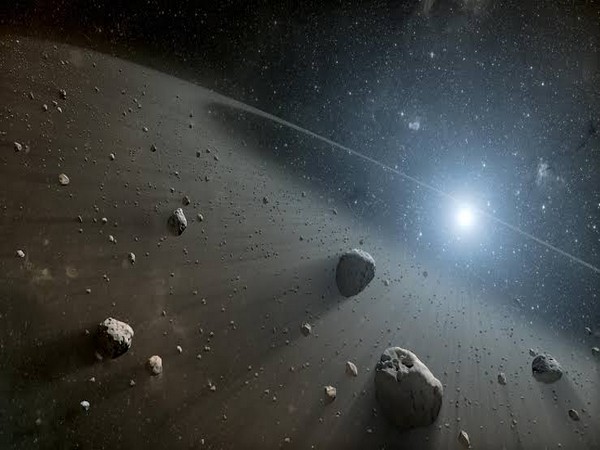
In its extended mission, the spacecraft will visit a new asteroid - Apophis - hence the new name 'OSIRIS-APophis EXplorer (OSIRIS-APEX)'. The asteroid roughly 1,200 feet in diameter will come within 20,000 miles (32,000 kilometers) of Earth in 2029. The mission will provide an unprecedented close-up look at this S-type asteroid.
New Horizons
New Horizons was launched in 2006 to study the dwarf planet Pluto, its moons, and other objects in the Kuiper Belt. In its second extended mission, New Horizons will continue to explore the distant solar system out to 63 astronomical units (AU) from Earth.
While most of the missions will be extended for three years, OSIRIS-REx will be continued for nine years in order to reach a new destination, and InSight will be continued until the end of 2022, the agency said on Monday.


 Google News