

NASA spacecraft to visit asteroid Apophis as it makes close approach to Earth in 2029
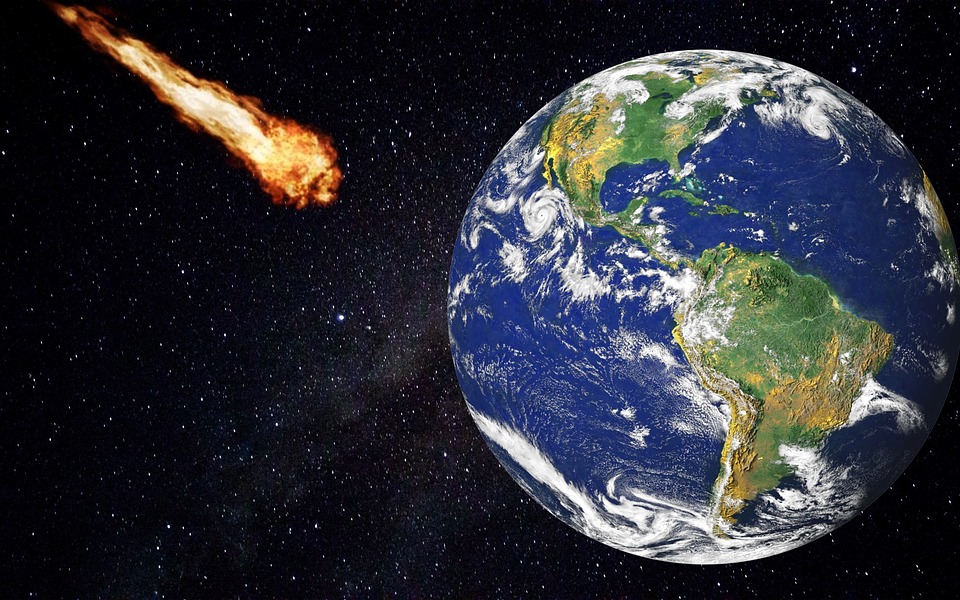
NASA's asteroid sampling mission, OSIRIS-REx, has been extended to reach a new destination with a new name. The OSIRIS-APophis EXplorer (OSIRIS-APEX) will visit and study near-Earth asteroid Apophis, which will have a close encounter with Earth in 2029.
Led by the University of Arizona, the mission will enter orbit around Apophis soon after the asteroid's Earth flyby, providing an unprecedented close-up look at this S-type asteroid.
OSIRIS-REx, the first NASA mission to collect and return a sample from a near-Earth asteroid, is currently on its way back to Earth to deliver the samples of asteroid Bennu that it collected in 2020. After delivering the sample, the spacecraft will travel out to Apophis.
Unlike OSIRIS-REx, OSIRIS-APEX will not collect a sample, but it will study the asteroid for 18 months and collect data along the way. The spacecraft also will make a maneuver similar to the one it made during sample collection at asteroid Bennu, by approaching the surface and firing its thrusters.
"Apophis is one of the most infamous asteroids. When it was first discovered in 2004, there was concern that it would impact the Earth in 2029 during its close approach. That risk was retired after subsequent observations, but it will be the closest an asteroid of this size has gotten in the 50 or so years asteroids have been closely tracked, or for the next 100 years of asteroids we have discovered so far. We were stoked to find out the mission was extended," said Dani DellaGiustina, planetary sciences assistant professor and OSIRIS-REx deputy principal investigator. She will take charge as the principal investigator of the OSIRIS-APEX mission.
NASA's OSIRIS-REx spacecraft will swing by Earth to drop a sample from asteroid Bennu on Sept. 24, 2023, but it won't clock out after that. NASA has extended the mission, which will be renamed OSIRIS-APEX, to visit & study asteroid Apophis in 2029. https://t.co/iW6tq9J6e2 pic.twitter.com/xyU2ulTQ5k
— University of Arizona (@uarizona) April 25, 2022


 Google News