

Near-Earth asteroid Bennu's surface is like a plastic ball pit, reveals NASA spacecraft
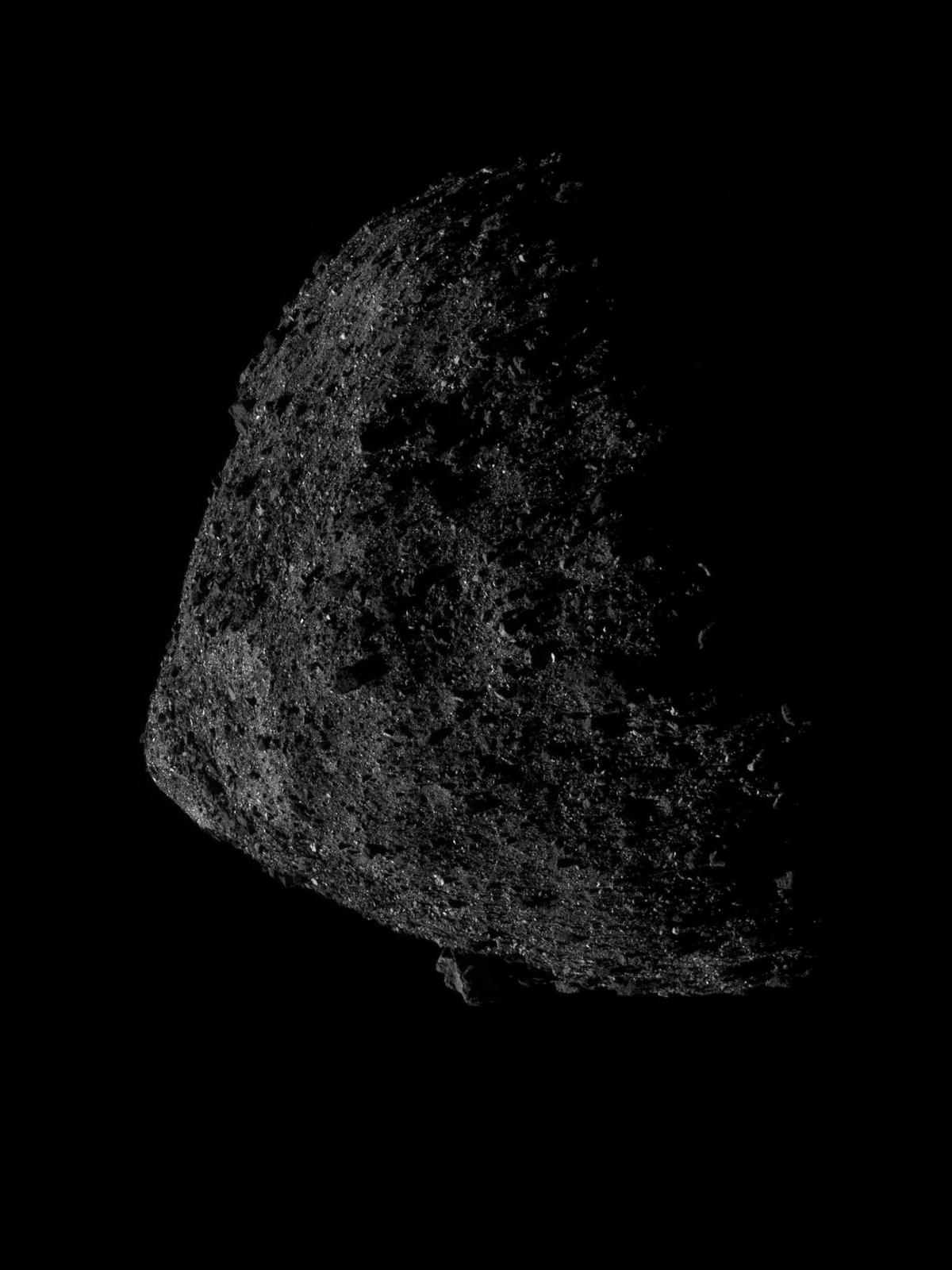
Scientists analyzing data collected by NASA's OSIRIS-REx spacecraft have discovered something astonishing about Near-Earth asteroid Bennu - its surface is loosely bound that if a person were to step onto the asteroid they would feel very little resistance as if stepping into a pit of plastic balls.
On October 20, 2020, OSIRIS-REx briefly touched down on Bennu and collected a sample for return to Earth. During this event the spacecraft's arm sank far deeper into the asteroid than expected, confirming that Bennu's surface is loosely bound. The sampling event brought the spacecraft all the way down to sample site, dubbed Nightingale.
Now, scientists have used data from OSIRIS-REx to revisit the sample-collection event and better understand how Bennu's loose upper layers are held together. They analyzed the volume of debris visible in before and after images of the sample site and also looked at acceleration data collected during the spacecraft's touch down.
They found that as OSIRIS-REx touched the asteroid it experienced the same amount of resistance a person would feel while squeezing the plunger on a French press coffee carafe - very little.
According to the researchers, there is a possibility that asteroids like Bennu - barely held together by gravity or electrostatic force - could break apart in Earth's atmosphere and thus pose a different type of hazard than solid asteroids.
"Our expectations about the asteroid's surface were completely wrong. What we saw was a huge wall of debris radiating out from the sample site. We were like, 'Holy cow!," said Dante Lauretta, principal investigator of OSIRIS-REx, based at the University of Arizona, Tucson, and Walsh, and the lead author of this study.
The latest findings about Bennu's surface were published on July 7 in a pair of papers in the journals Science and Science Advances.
A ball pit for spacecraft??Upon studying data from OSIRIS-REx, scientists discovered the surface of asteroid Bennu is loosely bound and offers very little resistance. In fact, the spacecraft had to use its thrusters to avoid sinking in: https://t.co/FzaEtZDz3t pic.twitter.com/tpYpfzUGPp
— NASA (@NASA) July 7, 2022


 Google News