

Webb telescope's NIRSpec is ready for science; can observe 100 cosmic objects simultaneously
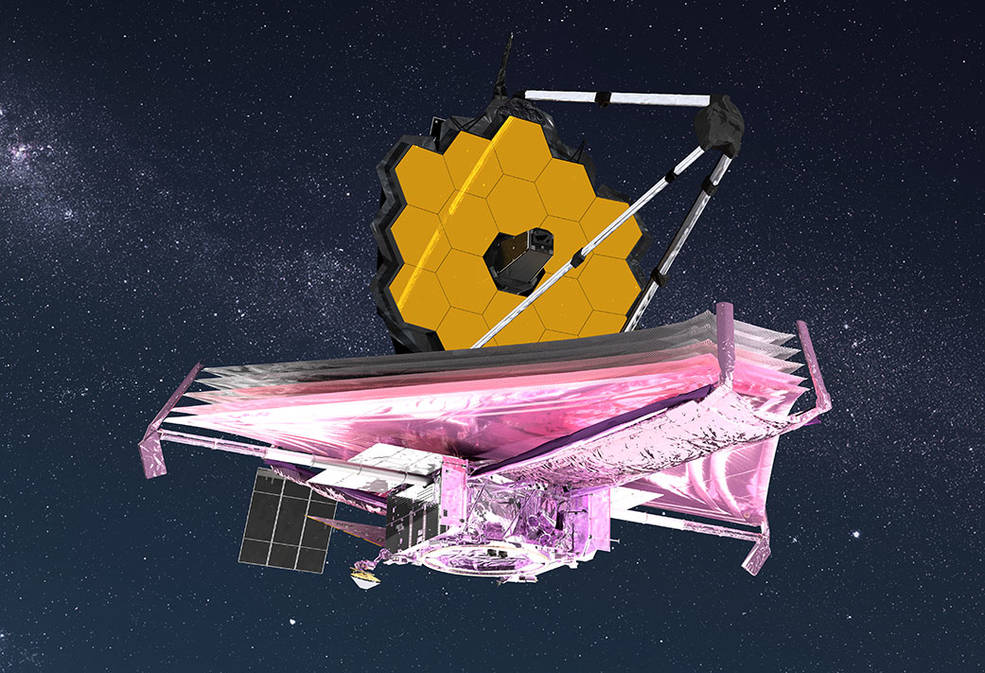
The Near-Infrared Spectrograph (NIRSpec), one of the four key science instruments on NASA's James Webb Space Telescope, has completed its commissioning activities and is ready for science operations.
Designed to observe 100 cosmic objects simultaneously, the NIRSpec will be the first spectrograph in space that has this remarkable multi-object capability.
NIRSpec has four key modes and the final mode verified for the instrument was the multi-object spectroscopy mode, a key capability that allows Webb to capture spectra, or rainbows of infrared light, from hundreds of different cosmic targets at once, NASA said on Thursday.
In multi-object spectroscopy mode, NIRSpec can individually open and close about 250,000 small shutters, all just the width of a human hair, to view some portions of the sky while blocking others.
"We made it: NIRSpec is ready for science! This is an amazing moment, the result of the hard work of so many JWST and NIRSpec people and teams over more than two decades. I am just so proud of everyone," said Pierre Ferruit, Webb project scientist with ESA (European Space Agency) and principal investigator for NIRSpec.
Webb's Near-Infrared Spectrograph is ready to #UnfoldTheUniverse!NIRSpec showed it can capture infrared spectra (rainbows of light) from 100s of targets at once, using ~250,000 tiny shutters to view & block parts of the sky. 3 down, 1 instrument to go! https://t.co/RtglYavdWW pic.twitter.com/BtEurN2IBQ
— NASA Webb Telescope (@NASAWebb) July 7, 2022
NASA's James Webb Space Telescope will be ready to begin its science mission once all 17 instrument modes are verified. Now, only one mode remains to be verified, for the Near-Infrared Camera (NIRCam), following which the months-long process of preparing the telescope for science will formally be complete.
Webb's commissioning process will conclude on July 12, with the release of the telescope's first full-color images and spectroscopic data.


 Google News