

Hubble snaps detailed view of spiral galaxy around 220 million light-years from Earth
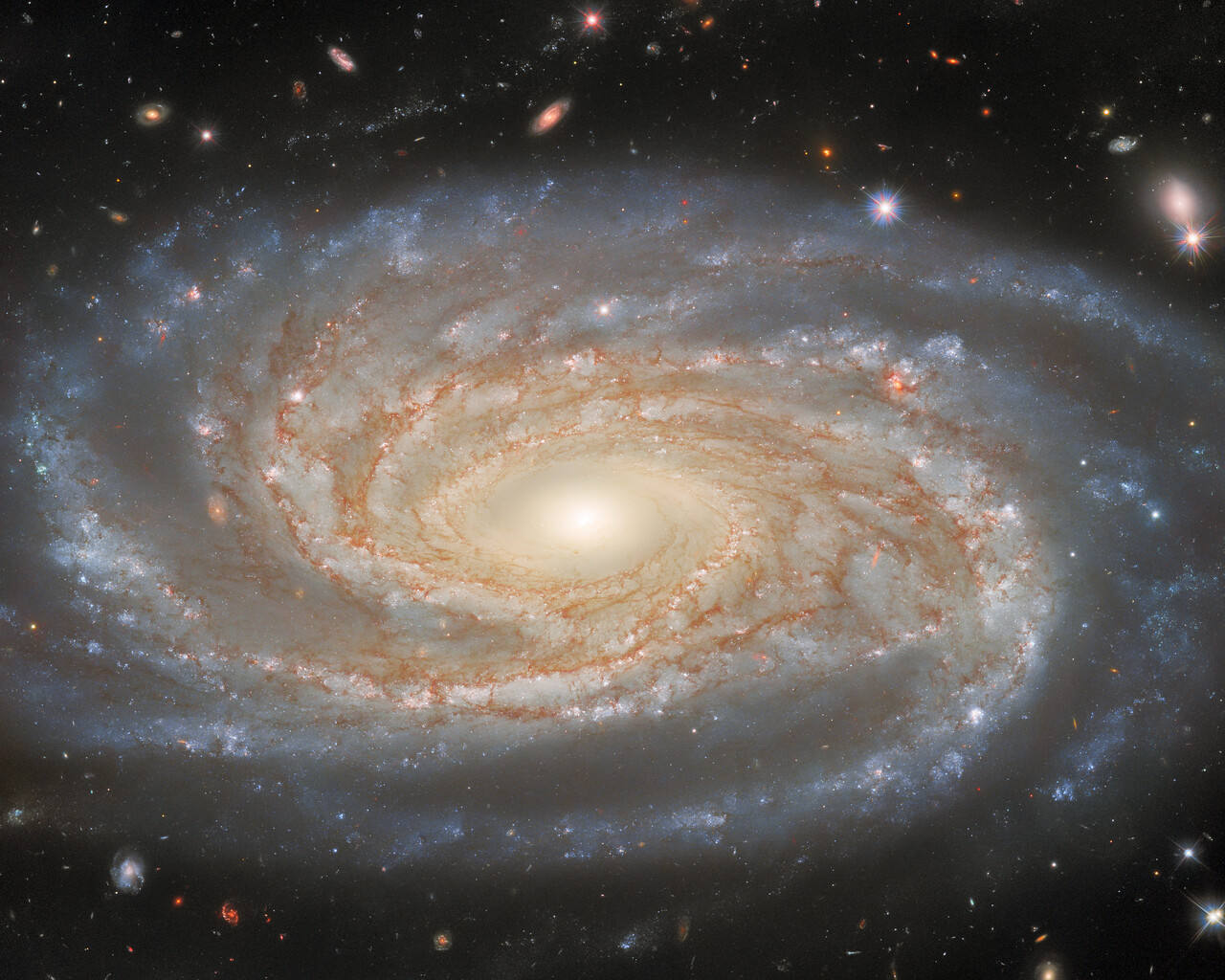
The picture, captured by NASA/ESA Hubble Space Telescope, shows an especially rich and detailed view of the spiral galaxy NGC 7038, which lies around 220 million light-years from Earth in the southern constellation Indus. The galaxy has been particularly helpful to astronomers in measuring distances at vast cosmic scales.
In the above picture, the oval-shaped galaxy with four blue spiral arms winding around it is NGC 7038. The galaxy's centre can be seen shining brightly with pale yellow light while thin strands of orange dust are spread around the centre, following the paths of the arms.
The image is made from a combined 15 hours worth of Hubble time focused on NGC 7038 and collecting light. The telescope inspected NGC 7038 with its Wide Field Camera 3 (WFC3) to calibrate two of the most common distance measurement techniques: type 1A supernovae and Cepheid variables.
In this Hubble image, very many small stars and galaxies are also visible on the black background.
1/ This Hubble picture of the week showcases the spiral arms of the NGC 7038 galaxy. Made from a combined 15 hours' worth of Hubble time, the image shows an especially rich view of NGC 7038, exposing a huge number of distant stars and galaxies. More at: https://t.co/MFHJvMWjce pic.twitter.com/YXp8XGAQ05
— HUBBLE (@HUBBLE_space) November 7, 2022
Astronomers determine vast cosmic distances by techniques called the Cosmic Distance Ladder. Each rung in the ladder is calibrated by earlier steps, based on measurements of objects closer to us. This makes the accuracy of distances at the largest scales dependent on how accurately distances to nearby objects can be determined, the European Space Agency explained in a blog post.


 Google News