

NASA telescope captures solar flare bursting from the Sun
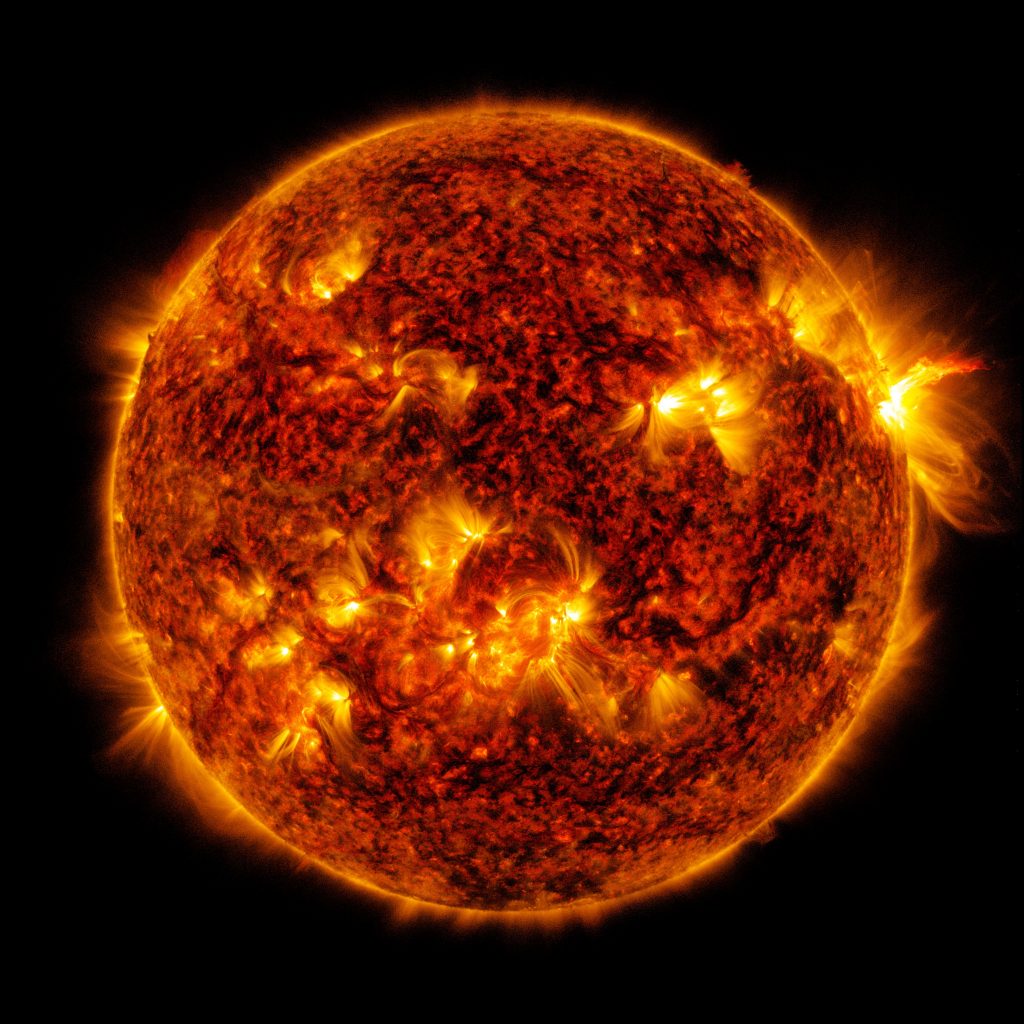
The Sun emitted a medium-class solar flare on Sunday, November 6, peaking at 07:11 pm EST. An image of the event was captured by NASA's Solar Dynamics Observatory (SDO), which constantly watches our life-giving star.
NASA defines a solar flare as an intense burst of radiation, or light, on the Sun. They are our solar system's most powerful explosive events – the most powerful flares have the energy equivalent of a billion hydrogen bombs, enough energy to power the whole world for 20,000 years.
Solar flares erupt from active regions of the Sun, places where the Sun's magnetic field is especially strong and turbulent. Active regions are formed by the motion of the Sun's interior, which contorts its own magnetic fields. They only affect Earth when they occur on the side of the Sun facing Earth.
Solar flares are classified based on their strength, or energy output, and the effect a flare will have on Earth depends on what class it is (B, C, M, and X classes, with X being the most intense).
Can you make the whole place shimmer? I can 😎 This sparkling image from the Solar Dynamics Observatory shows when a solar flare burst from the Sun yesterday, peaking as an M5.2-class flare at 07:11pm EST on Nov. 6.Learn more about solar flares here: https://t.co/ATgOS1ThF3 pic.twitter.com/AJYzL4fi6s
— NASA Sun & Space (@NASASun) November 7, 2022
Solar events continue to increase as we near solar maximum - the period when the Sun is most active - in 2025. For the unversed, the sun goes through a natural solar cycle approximately every 11 years, during which it shifts from relatively calm (solar minimum) to stormy (solar maximum), then back again.
According to NASA, over the past week, the Sun erupted one solar flare and 15 coronal mass ejections, but no geomagnetic storms were observed.


 Google News