

NASA's Webb to resume science observations with MIRI's MRS mode; will observe Saturn’s polar regions
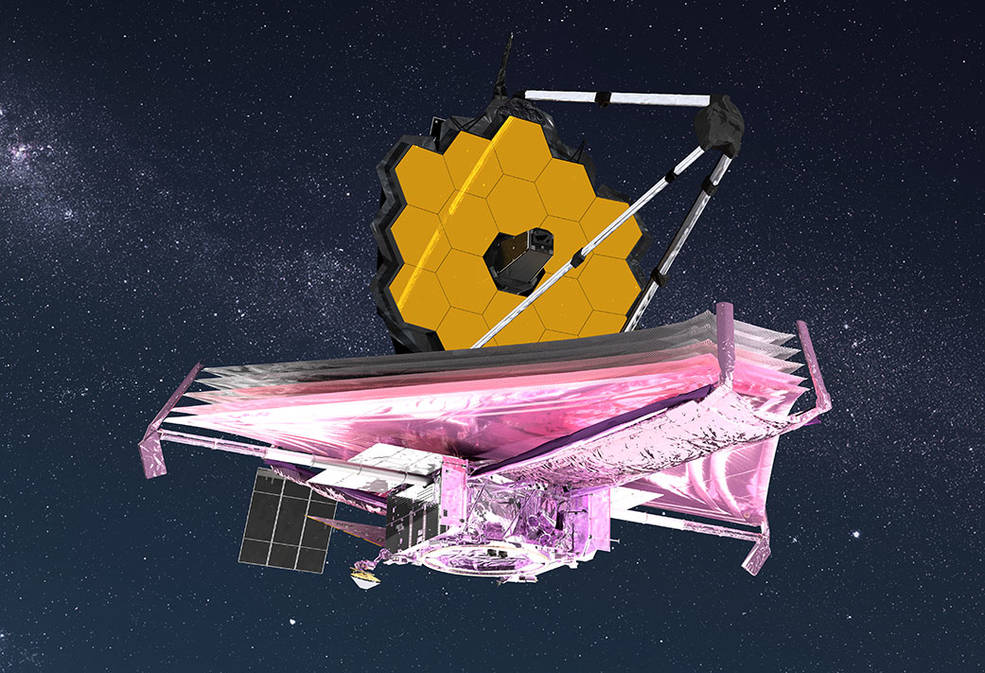
The James Webb Space Telescope (JWST) will resume science observations with the Mid-Infrared Instrument's (MIRI) medium resolution spectrometry (MRS) mode by Saturday, November 12. Observation using this specific mode was paused by the mission team on August 24 after measuring increased friction in one of the grating wheels used in this observing mode.
An in-depth investigation carried out by the experts' team concluded that the issue was likely caused by increased contact forces between sub-components of the wheel central bearing assembly under certain conditions.
Webb will resume MRS observations with a unique opportunity to observe Saturn's polar regions.
"An engineering test was executed Wednesday, Nov. 2, that successfully demonstrated predictions for wheel friction. Webb will resume MIRI MRS science observations by Saturday, Nov. 12, starting with a unique opportunity to observe Saturn's polar regions, just before they become unobservable by Webb for the next 20 years," NASA said in a statement on Tuesday.
MIRI is designed to observe the redshifted light of distant galaxies, newly forming stars, and faintly visible comets as well as objects in the Kuiper Belt. The instrument's other three observing modes are imaging, low-resolution spectroscopy, and coronagraphy.
Webb is the largest, most powerful telescope ever launched into space. The mission is led by NASA with its partners, ESA (European Space Agency) and the Canadian Space Agency.


 Google News