

NASA's Parker Solar Probe once again comes close to the Sun to observe its activity
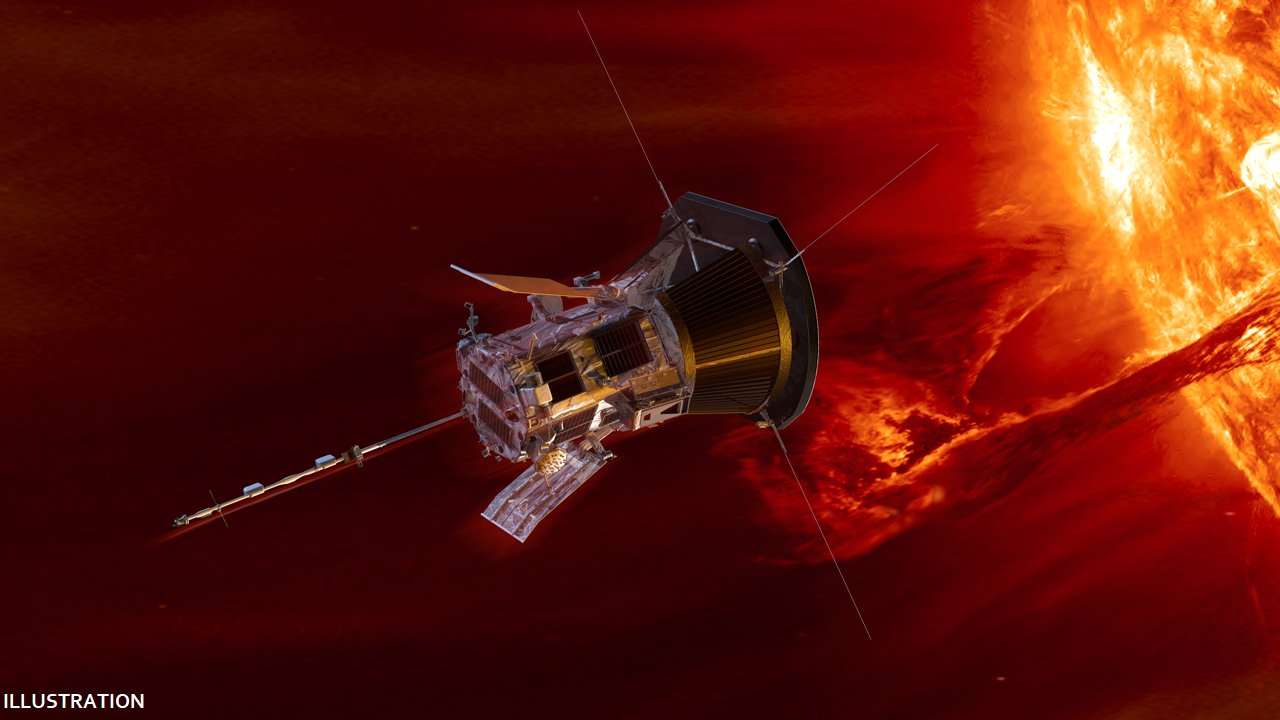
NASA's Parker Solar Probe has embarked on the 14th of 24 planned close encounters with the Sun to observe its activity up close. During this close encounter, the probe eventually came within 5.3 million miles of the solar surface.
The closest approach - called perihelion - happened on December 11 at 8:16 a.m. EST, during which the spacecraft travelled at 364,639 miles per hour - that's fast enough to fly from New York to Tokyo in just over a minute.
During this close approach, which ends Friday, December 16, the European Space Agency's Solar Orbiter, NASA's Solar Terrestrial Relations Observatory-A (STEREO-A), and radar telescopes on Earth will view the Sun from the same angle as Parker at the beginning of the encounter.
"It's a very exciting time to have a spacecraft flying so close to the Sun and observing its activity. Every close encounter opens up new opportunities to understand better how the Sun works and how it affects us here on Earth and beyond," said Nour Raouafi, Parker Solar Probe project scientist at Johns Hopkins Applied Physics Laboratory (APL) in Laurel, Maryland.
Parker Solar Probe will check back in with mission operators at Johns Hopkins APL on December 17, according to NASA.
On Dec. 6, NASA's Parker Solar Probe began the 14th of 24 planned close approaches to the Sun, eventually coming within 5.3 million miles of the solar surface. pic.twitter.com/37jEqArGtU
— NASA Sun & Space (@NASASun) December 13, 2022
Launched in 2018, the Parker Solar Probe is the first-ever mission to touch our life-giving star and unlock the mysteries of its atmosphere. The spacecraft employs a combination of in situ measurements and imaging to perform its scientific investigations and revolutionize humanity's understanding of the Sun.
The mission is part of NASA's Living With a Star program to explore aspects of the Sun-Earth system that directly affect life and society.


 Google News