

Rebooting Juno: NASA spacecraft recovering memory after recent flyby of Jupiter
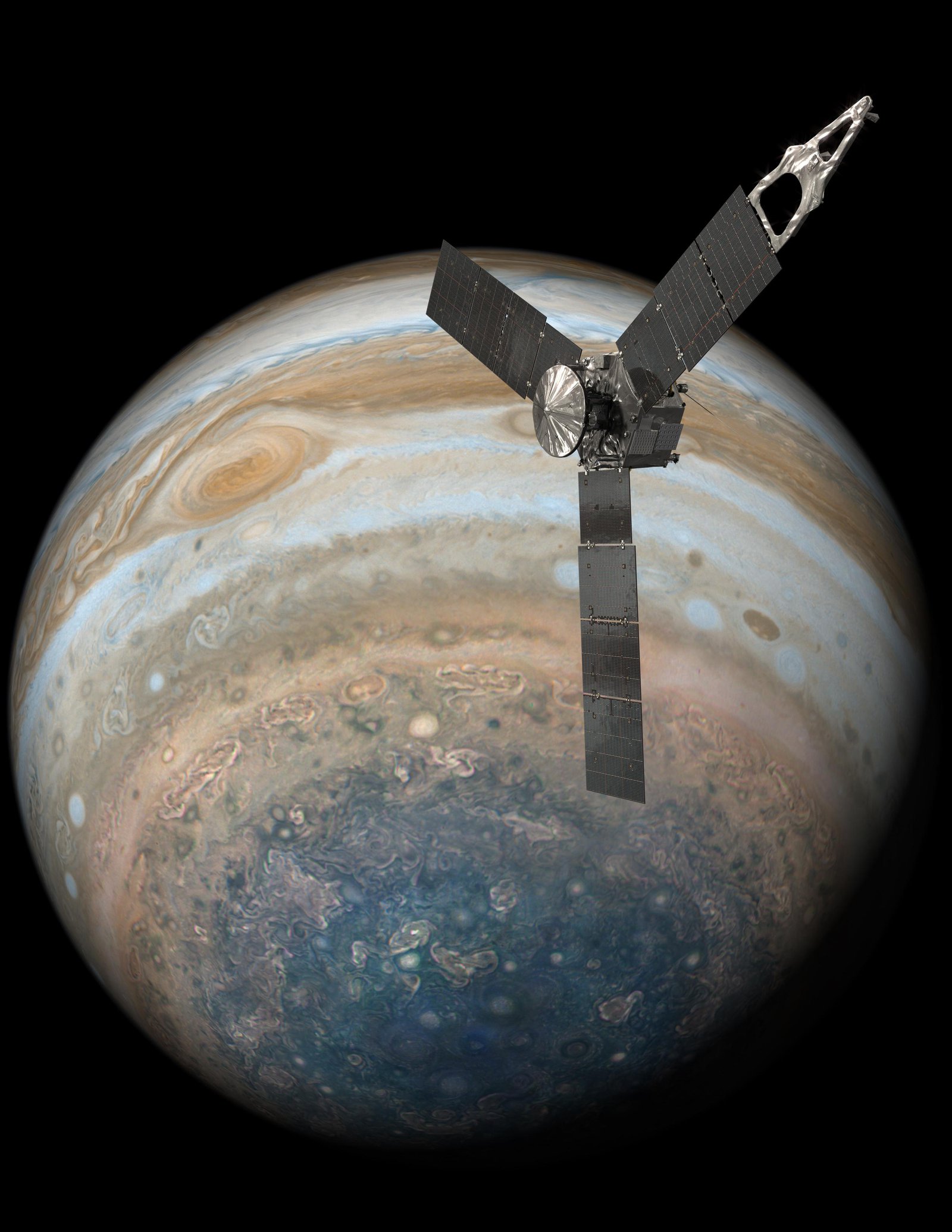
NASA's Juno, which is on an extended mission to explore Jupiter's moon, recently completed its 47th close pass of the gas giant. However, when the solar-powered spacecraft was transmitting its science data to mission controllers from its onboard computer, the downlink was disrupted.
According to NASA, the cause of the issue was most likely a radiation spike as the spacecraft flew through a radiation-intensive portion of Jupiter's magnetosphere. The computer was successfully rebooted by mission controllers and, on December 17, the spacecraft was put into safe mode, a status in which only essential systems run.
The spacecraft is in a healthy state and is expected to exit safe mode in about a week. The science data from the spacecraft's most recent flyby of Jupiter and its moon Io appears to be intact. The mission team has already started downlinking the data.
"There is no indication that the science data through the time of closest approach to Jupiter, or from the spacecraft's flyby of Jupiter's moon Io, was adversely affected. The remainder of the science data collected during the flyby is expected to be sent down to Earth over the next week, and the health of the data will be verified at that time," NASA said in a statement on Friday.
The #JunoMission spacecraft successfully completed its 47th close pass by Jupiter on Dec. 14, but an on-board computer issue disrupted the downlink of data collected during the pass. Juno is healthy, and the team expects to complete the full downlink soon: https://t.co/XAnOKeSkH5 pic.twitter.com/gaIoaPRhGV
— NASA Solar System (@NASASolarSystem) December 23, 2022
Juno, NASA's most distant planetary orbiter is scheduled to perform the next close flyby of Jupiter on Jan. 22, 2023. The orbiter will continue its investigation of the solar system's largest planet through September 2025, or until the spacecraft's end of life


 Google News