

Planet's size plays key role in deciding how much water it can hold: Study
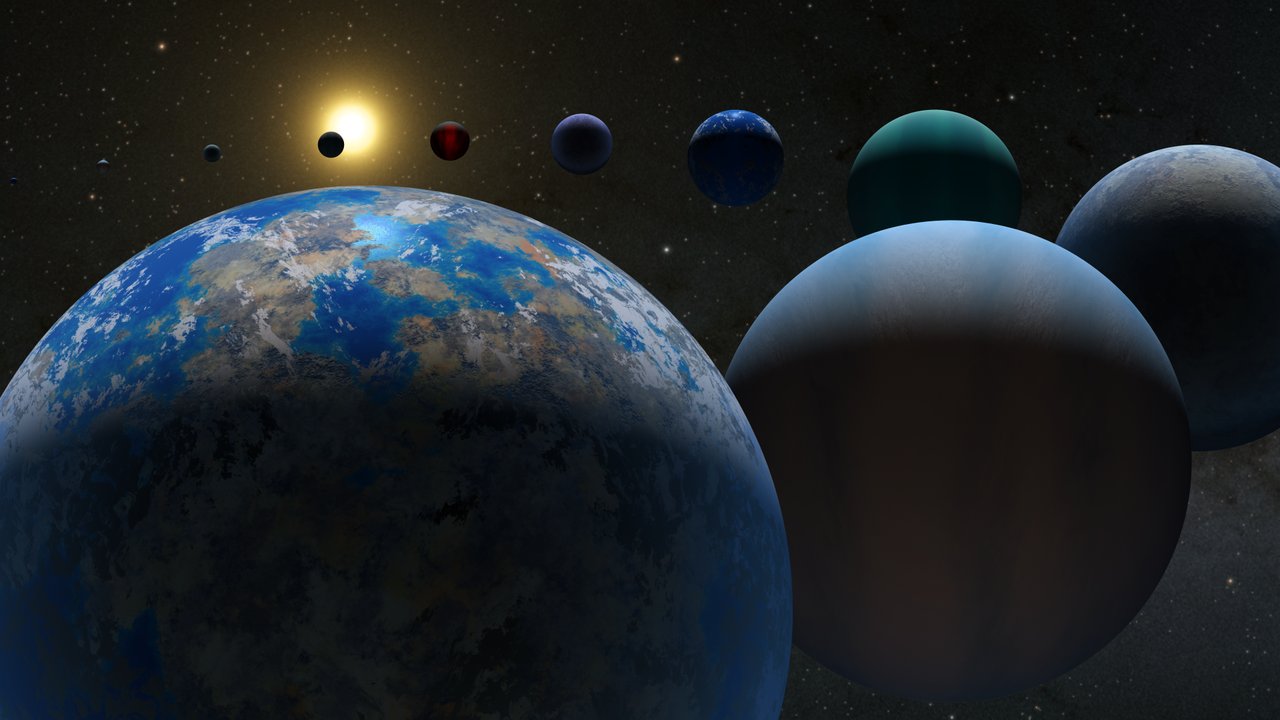
The search for life elsewhere in the universe is an ongoing endeavour that continues to captivate researchers around the world. Scientists from the University of Cambridge have now developed a new tool to estimate the potential water storage capacity of rocky planets based on their size and the chemistry of their host star.
The new tool can predict the proportion of water-rich minerals inside a planet, which act like a sponge, soaking up water which can later return to the surface and replenish oceans.
Planets orbiting M-type red dwarf stars, the most common type of star in the Milky Way, have been a subject of significant interest in the search for habitable worlds. According to the researchers, these stars have particularly tempestuous adolescent years, during which they release intense bursts of radiation that blast nearby planets and bake off their surface water.
Red dwarf stars have a much longer adolescent phase compared to our Sun, due to which the planets under their wing suffer a runaway greenhouse effect where their climate is thrown into chaos.
"We wanted to investigate whether these planets, after such a tumultuous upbringing, could rehabilitate themselves and go on to host surface water," said lead author of the study, Claire Guimond, a PhD student in Cambridge's Department of Earth Sciences, adding that the model gives an upper limit on how much water a planet could carry at depth, based on these minerals and their ability to take water into their structure.
Most of a planet's interior water is contained within a rocky layer called the upper mantle that lies between the planet's core and its crust. The pressure and temperature conditions within the mantle are just right for the formation of green-blue minerals that can retain water. The layer is also within reach of volcanoes, which have the potential to bring water back to the surface through eruptions.
According to the new study, larger planets, around two to three times bigger than Earth, typically have drier rocky mantles because the water-rich upper mantle makes up a smaller proportion of their total mass.
The findings could not only provide scientists with guidelines to aid their search for habitable exoplanets but also add to their understanding of how planets, including our neighbours like Venus, can transition from barren hellscapes to blue marble.
The study is published in the journal Monthly Notices of the Royal Astronomical Society.


 Google News