

Hubble views an in-between galaxy - not quite spiral not elliptical
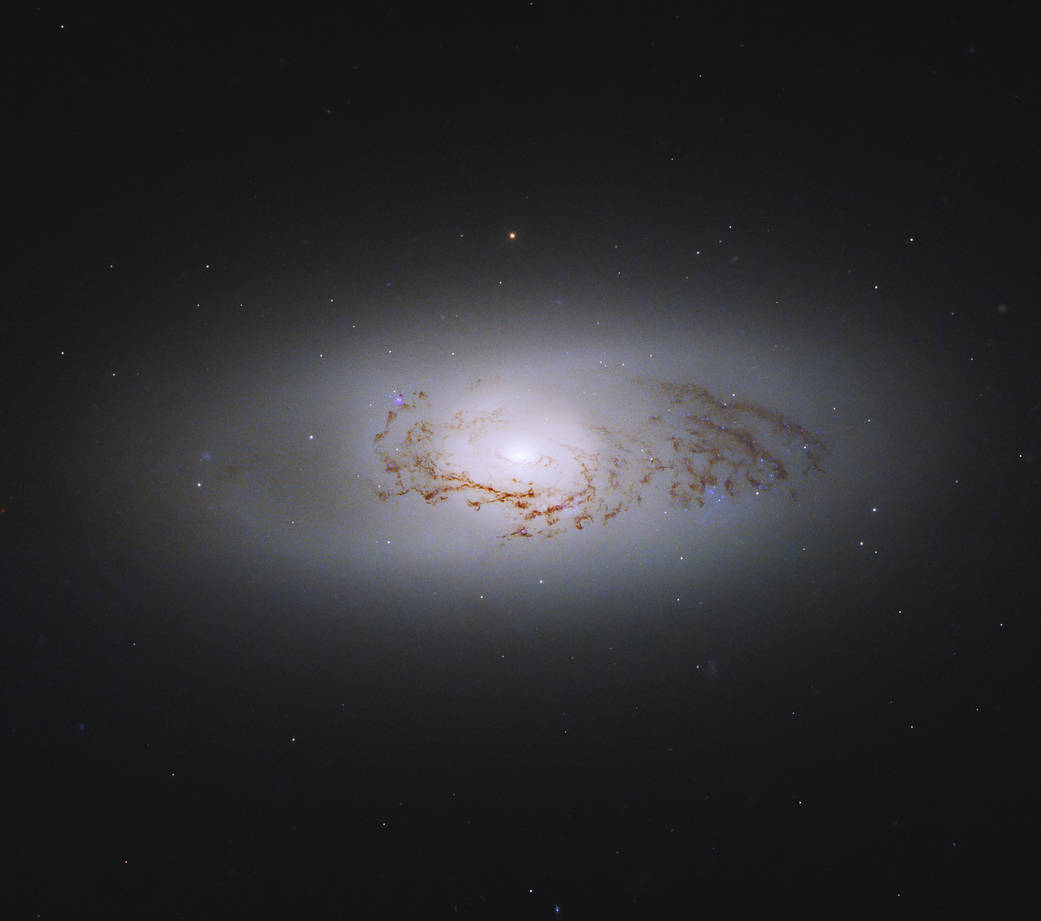
This stunning photograph by NASA's Hubble Space Telescope showcases a lenticular galaxy's (NGC 3489) unique blend of spiral and elliptical characteristics, presenting a mesmerizing sight in the depths of the universe.
Lenticular galaxies, like NGC 3489, occupy a distinctive place in the cosmic landscape, possessing traits that are not entirely spiral or elliptical. Instead, they exist somewhere in between, resulting in their alluring and enigmatic appearance.
These galaxies possess a central bulge, densely populated with stars, and a thin, circular disk composed of stars, gas, and dust. However, they lack the distinctive spiral arms commonly associated with spiral galaxies. On the other hand, lenticular galaxies exhibit older stellar populations and minimal ongoing star formation, just like elliptical galaxies.
At the heart of NGC 3489 lies an active galactic nucleus (AGN) that emanates an intense luminosity and emits radiation across the entire electromagnetic spectrum as the black hole devours material that gets too close to it.
NGC 3489, which lies about 30 million light-years away in the constellation Leo, is classified as a Seyfert galaxy, a type of AGN that is known for being dimmer compared to other AGNs. Unlike their more luminous counterparts, Seyfert AGNs do not outshine the surrounding galaxy, allowing astronomers to clearly observe the galaxy surrounding the black hole.
Not quite spiral and not quite elliptical, lenticular galaxies lie somewhere in between, exhibiting traits of both — making this brilliant behemoth every bit as beautiful as its beaming brethren: https://t.co/pnyT341p8O📸: @NASAHubble pic.twitter.com/XQ44wILNDE
— NASA 360 (@NASA360) May 21, 2023
Launched into space in 1990, the Hubble telescope continues to revolutionize our understanding of the universe, delivering awe-inspiring images that showcase the vastness and wonders of space. Its high-resolution imagery has allowed us to closely witness galaxies, stellar birth and death, and even observe planets beyond our solar system.


 Google News