

Nearby star explosion captivates astronomers; closest supernova seen in five years
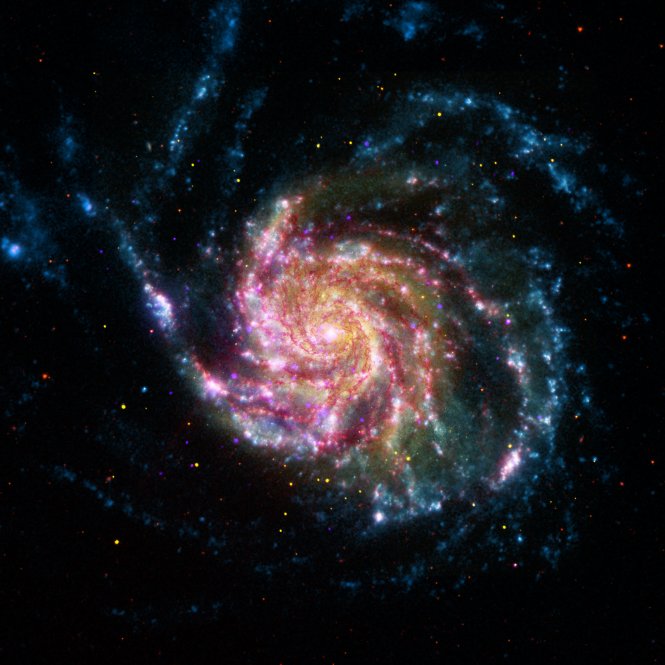
NASA's Astronomy Picture Of the Day (APOD) features the Pinwheel Galaxy or M101, one of the most well-known and visually striking galaxies in the night sky. In a momentous astronomical event, esteemed Japanese astronomer Koichi Itagaki recently discovered a supernova, dubbed SN 2023ixf, in M101, which lies only about 21 million light-years away, making it the closest supernova seen in the past five years.
In case you have been living under a rock, supernovas are incredibly powerful and dramatic stellar explosions that take place at the end of a massive star's life cycle. They are among the most energetic events in the universe, releasing an enormous amount of energy and producing intense brightness that can outshine entire galaxies.
SN 2023ixf was detected merely three days ago and was subsequently located on automated images from the Zwicky Transient Facility two days earlier. It ranks as the second closest supernova observed within the past decade and marks the second supernova detected within M101 in the past 15 years.
The proximity of this cosmic spectacle presents a remarkable opportunity for researchers to delve into the intricacies of a supernova's birth. Initial findings indicate that SN 2023ixf belongs to the Type II supernova category - a cataclysmic occurrence that transpires when a massive star exhausts its nuclear fuel and succumbs to gravitational collapse.
Astronomers predict that SN 2023ixf will continue to brighten and remain visible to telescopes for several months, providing an extended window of opportunity for in-depth exploration. Studying the supernova in such close proximity may unlock valuable insights into the life cycles of massive stars and the processes that govern their explosive fates.
For the unversed, NASA's APOD features a different astronomical image each day, captured by ground-based and space-based telescopes, along with a detailed description provided by a professional astronomer. These captivating visuals range from mesmerizing images of distant galaxies and nebulae to close-up views of planets, moons, and other celestial objects.


 Google News