

Saturn's iconic rings may only last few 100 million years more, NASA studies reveal
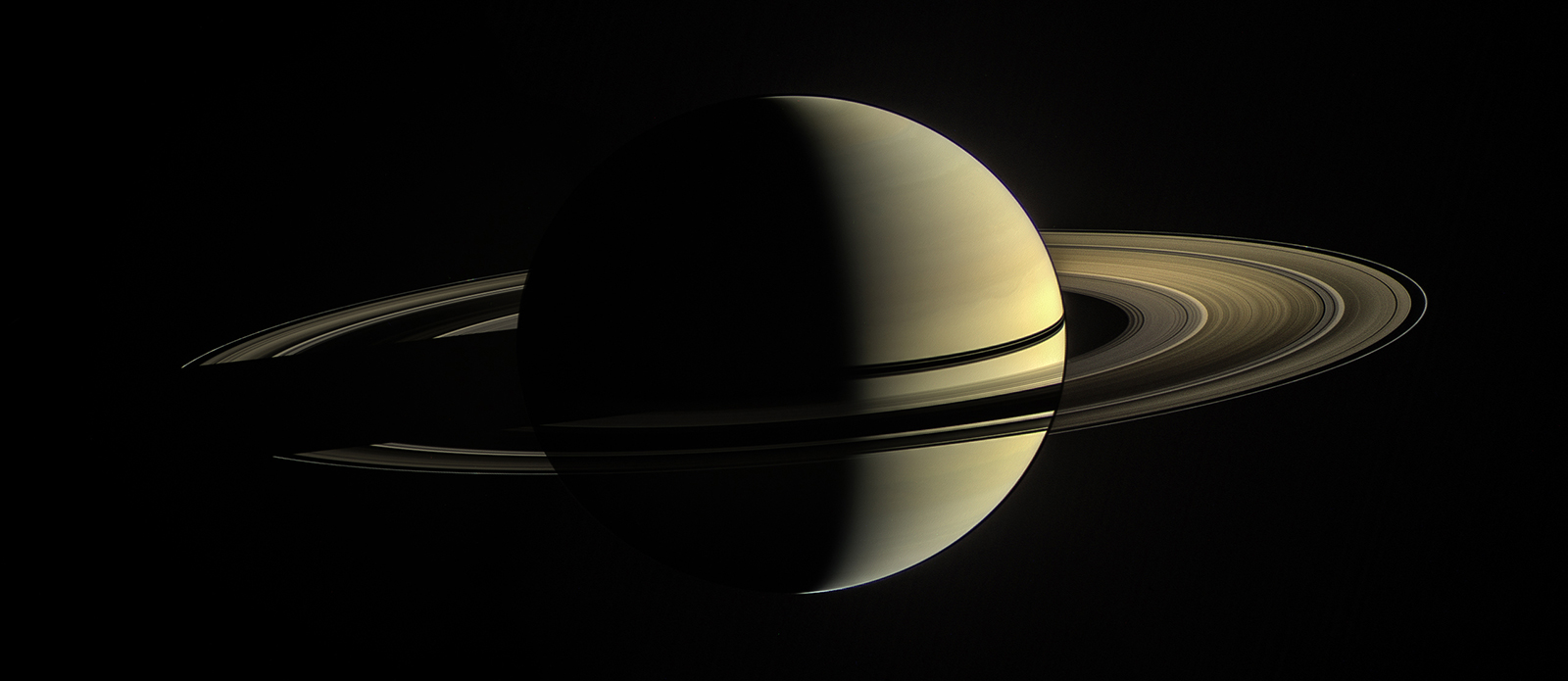
Three recent studies from NASA's Ames Research Center have found evidence that Saturn's iconic rings are relatively young and could vanish within a few hundred million years, potentially leaving future Earth dwellers to witness a ringless Saturn, just as the dinosaurs did in the distant past.
For centuries, the celestial beauty of Saturn's icy rings has captivated stargazers and astronomers alike. While it was previously believed that Saturn has possessed these beautiful rings for billions of years, recent studies, which examined extensive data gathered by NASA's Cassini spacecraft, indicate a relatively young age and a limited lifespan for them.
"The idea that the iconic main rings of Saturn might be a recent feature of our solar system has been controversial, but our new results complete a trifecta of Cassini measurements that make this finding hard to avoid," said Jeff Cuzzi, a researcher at Ames and co-author on one of the recent papers. Cuzzi also served as the Cassini mission's interdisciplinary scientist for Saturn's rings.
One of the three new studies provides a better understanding of the arrival rate and contamination of non-icy material in Saturn's rings. It reveals that the micrometeoroids, which contribute to the material, are not as abundant as previously thought, allowing Saturn's gravity to more effectively pull the material into the rings. These findings suggest that the rings could not have endured this bombardment for more than a few hundred million years - a small fraction of Saturn's and the solar system's 4.6-billion-year age.
The second study emphasizes the physics governing the long-term evolution of the rings and it identified micrometeoroid bombardment and the distribution of debris within the rings as the two important elements. It concludes that the rings could have reached their current mass in a few hundred million years and that they most likely formed when unstable gravitational forces destroyed some of Saturn's icy moons.
The third study quantifies the speed at which ring material drifts toward Saturn, with meteoroids playing a significant role. Their interaction with the existing ring particles and the way the resulting debris gets hurled outward combine to create a conveyor belt-like motion that brings ring material closer to the planet. Based on calculations of this process and the eventual disappearance of the particles into Saturn, the researchers predict that Saturn may lose its rings within the next few hundred million years.
Recent studies from @NASAAmes shed new light on Saturn's rings, pointing to evidence that the rings—comprised of almost entirely pure ice—are a relatively new addition to the gas giant and may only last a few 100 million years more. https://t.co/LDqYbAHLPz pic.twitter.com/jmTEsF6elh
— NASA (@NASA) May 22, 2023
As scientists delve deeper into the mysteries of Saturn's rings, they eagerly await future missions and technological advancements that will further unravel the enigmatic story of these celestial jewels.


 Google News