

Euclid: ESA’s upcoming space telescope to explore dark Universe; will launch on SpaceX Falcon 9 in July
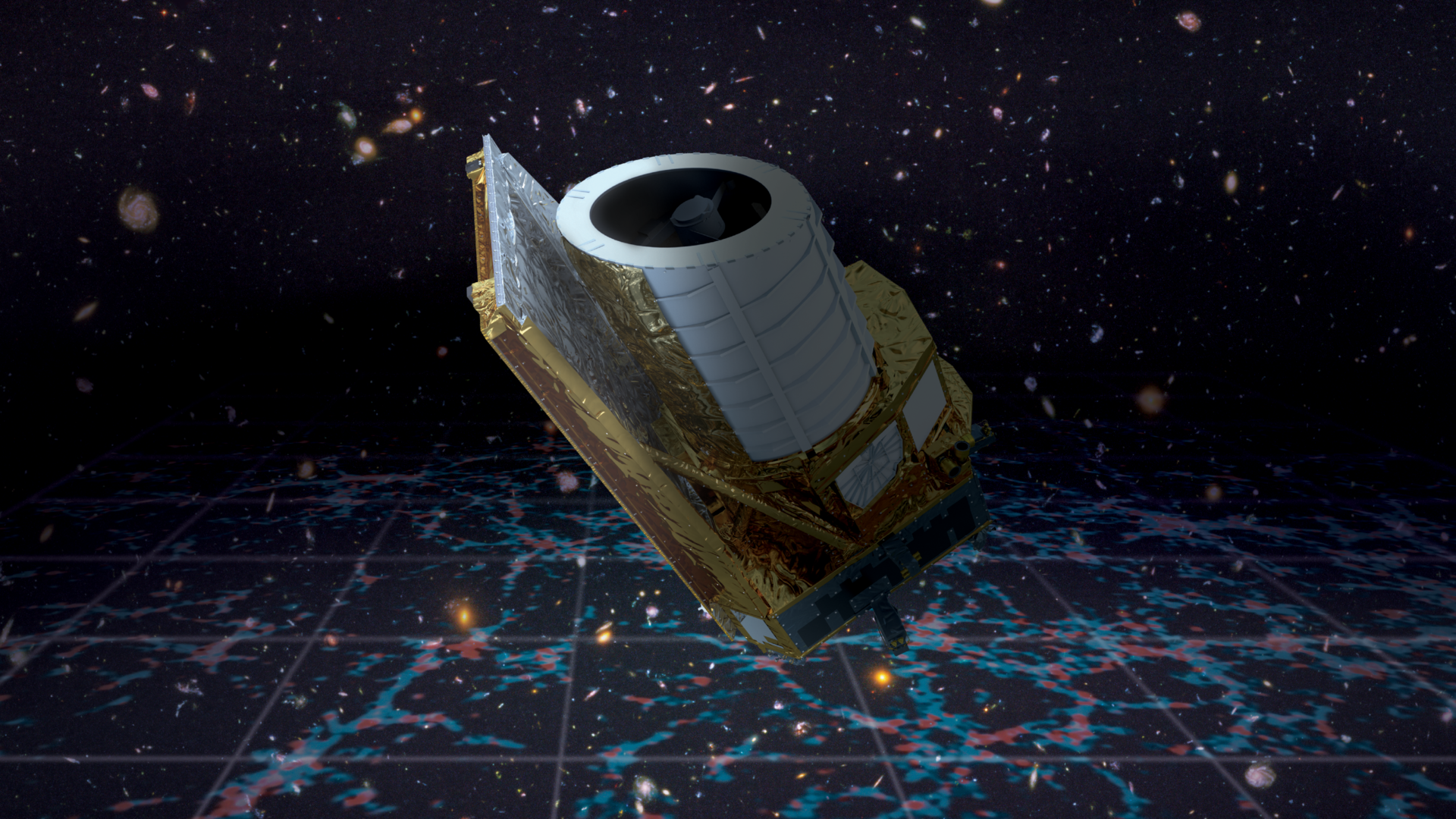
The European Space Agency's Euclid mission has reached a significant milestone as the spacecraft gets fueled in preparation for its upcoming launch on a SpaceX Falcon 9 rocket. The spacecraft is planned to launch on a SpaceX Falcon 9 launch vehicle from Cape Canaveral, Florida, USA, in July 2023.
According to the agency, the Euclid spacecraft requires two types of propellant to accomplish its mission objectives: hydrazine and gaseous nitrogen. The chemical propulsion system consists of ten hydrazine thrusters, which will propel the spacecraft to its designated Sun-Earth Lagrange point L2 (at an average distance of 1.5 million km beyond Earth's orbit), perform regular orbital manoeuvres to maintain its position, and ultimately execute a controlled disposal at the end of its mission. Approximately 140 kg of hydrazine is stored in a central tank onboard the spacecraft.
The fueling process for Euclid is a delicate operation due to the highly toxic nature of hydrazine. It necessitates the expertise of trained professionals who don self-contained atmospheric protective ensembles, commonly referred to as "scape" suits, to ensure their safety during the fueling procedure.
Achieving precise and stable pointing is crucial for Euclid to deliver high-quality images, which will be at least four times sharper than that achieved by ground-based sky surveys. To accomplish this, the spacecraft will employ six cold gas micro-propulsion thrusters powered by nitrogen. The nitrogen is stored in four tanks at high pressure, with a total of 70 kg of nitrogen available. This nitrogen supply will sustain the mission for at least six years, enabling the telescope to fulfil its scientific objectives.
The #DarkUniverse🕵️ gets ready for its mission.#ESAEuclid was fuelled ahead of its launch on a @SpaceX Falcon 9 🚀 this summer 👉 https://t.co/3BMaNzjGjq pic.twitter.com/4N6ussFbeE
— ESA's Euclid mission (@ESA_Euclid) June 20, 2023
ESA's Euclid has been designed to explore the composition and evolution of the dark Universe, delving into the mysteries of dark energy and dark matter. The space telescope will create the most comprehensive and accurate 3D map of the Universe ever assembled, spanning vast distances and observing billions of galaxies up to 10 billion light-years away, covering over one-third of the sky.
By studying the expansion of the cosmos and the distribution of large-scale structures across space and time, the mission will provide valuable insights into the fundamental nature of gravity, dark energy, and dark matter.


 Google News