

India's Space Sector Reforms Propel Commercial Growth: Dr. Jitendra Singh
Dr. Singh noted that these reforms have empowered NSIL to undertake missions under a demand-driven model, facilitating effective commercial exploitation of India's space capabilities.
- Country:
- India
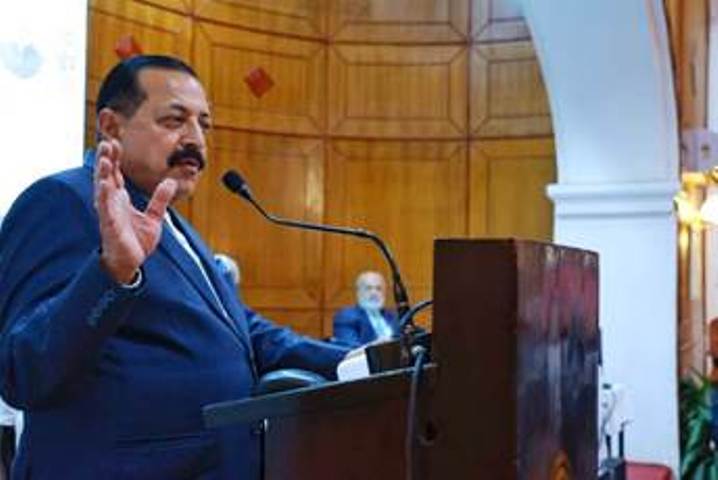
Dr. Jitendra Singh, Union Minister of State (Independent Charge) for Science and Technology; Earth Sciences; and Minister of State for PMO, Department of Atomic Energy, Department of Space, Personnel, Public Grievances, and Pensions, highlighted the transformative impact of space sector reforms in unlocking India's commercial potential in space. Responding to an unstarred question in the Rajya Sabha today, Dr. Singh underscored the achievements of NewSpace India Limited (NSIL), a Public Sector Enterprise under the Department of Space and the commercial arm of ISRO. Key Achievements of NewSpace India Limited (NSIL):
- Demand-Driven Satellite Missions:
- GSAT-N1 [GSAT-24]: NSIL's first demand-driven communication satellite mission was successfully launched on 23rd June 2022, meeting the Direct-To-Home (DTH) service requirements. The satellite is now fully operational.
- GSAT-N2 [GSAT-20]: The second mission, launched on 19th November 2024, focuses on broadband service needs and is currently undergoing in-orbit testing and commissioning.
- Upcoming GSAT-N3 Mission: Scheduled for launch in Q1 of 2026, GSAT-N3 will cater to S-Band communication needs for Indian governmental users.
- Satellite Launch Services:
- NSIL has successfully launched 124 international and 3 Indian customer satellites aboard PSLV, LVM3, and SSLV launch vehicles.
- Satellite Operations and Services:
- NSIL currently owns and operates 15 in-orbit communication satellites, providing space-based services for DTH, VSAT, TV, DSNG, IFMC, broadband, and other applications.
- Earth Observation Data Dissemination:
- Since May 2023, NSIL has been distributing Earth Observation satellite data to global customers.
- Mission Support Services:
- NSIL has provided 11 Launch Vehicle Tracking Supports and 9 Launch and Early Orbit Phase (LEOP) and Telemetry Tracking and Command (TTC) supports to both Indian and international customers, including support for a deep space mission.
- Technology Transfer Initiatives:
- To foster industry participation, NSIL has signed 75 Technology Transfer Agreements with Indian industries, facilitating the commercialization of ISRO-developed technologies.
- Industry Collaboration for Satellite and Rocket Manufacturing:
- NSIL is working closely with Indian and global clients to build communication and Earth Observation satellites tailored to their needs.
- A significant milestone includes a contract with Hindustan Aeronautics Limited (HAL), the lead partner in a consortium with Larsen & Toubro (L&T), for the end-to-end production of five Polar Satellite Launch Vehicles (PSLVs). The first fully Indian industry-manufactured PSLV is expected to launch in Q2 of 2025.
- Future Plans and Strategic Vision:
- Dr. Singh emphasized that NSIL aims to expand its commercial space ventures, including:
- Building additional communication satellites under the demand-driven model.
- Exploring Public-Private Partnership (PPP) strategies to realize LVM3 rockets through Indian industry, tapping into the emerging global launch service market.
- Enabling private Indian industries to build Earth Observation satellites, further integrating them into the space ecosystem.
Impact of Space Sector Reforms:
The space sector reforms announced in June 2020 have played a pivotal role in transforming India's space industry landscape. Dr. Singh noted that these reforms have empowered NSIL to undertake missions under a demand-driven model, facilitating effective commercial exploitation of India's space capabilities.
The Minister also highlighted that NSIL's efforts to build operational launch vehicles like PSLV, LVM3, and SSLV through Indian industry partnerships would significantly bolster the growth of the Indian industrial sector, enabling end-to-end rocket manufacturing domestically.
Furthermore, the transfer of ISRO-developed technologies to private players is expected to enrich India's space ecosystem and enhance the country's share in the global commercial space market.
Dr. Singh concluded by reiterating the government's commitment to fostering a robust and competitive space industry that leverages India's technological prowess for commercial success and global leadership in the space sector.


 Google News