

Decarbonizing Waste: The Role of Pre-Sorting and CCS in Climate-Neutral Goals
A study by the University of Kassel compares waste pre-sorting and carbon capture (CCS) for reducing emissions from waste incineration in Germany. While CCS offers the highest CO2 reduction, a hybrid approach combining both strategies could maximize climate benefits and material recovery.
 CO-EDP, VisionRI
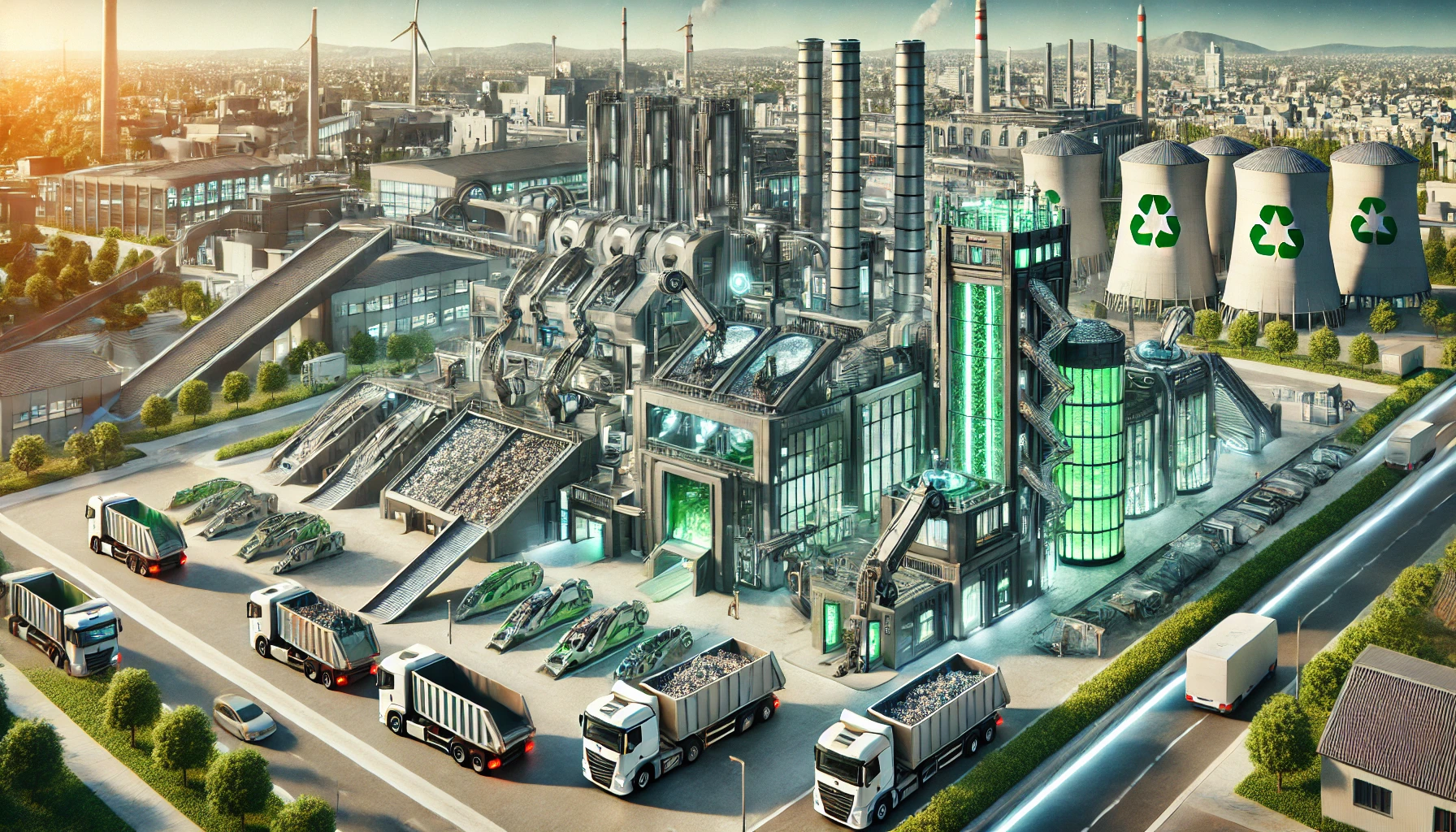
Researchers from the Center for Resource Management and Solid Waste Engineering at the University of Kassel have conducted an in-depth study on reducing the climate impact of residual waste treatment in Germany. As the country races toward its 2030 climate neutrality target, waste incineration remains a significant source of greenhouse gas (GHG) emissions. Kassel's municipal solid waste incineration (MSWI) plant, which processes 180,000 tons of waste annually, emits around 857 kg of CO2 per ton of wet residual waste, with 31% of those emissions being fossil-derived. To address this challenge, the study compares two major carbon management strategies: pre-sorting residual waste at material recovery facilities (MRFs) to extract recyclables before incineration and integrating carbon capture and storage (CCS) technology to capture CO2 emissions after incineration.
Carbon Capture or Pre-Sorting? The Battle for Emission Reduction
The study finds that while both strategies help reduce emissions, CCS is significantly more effective in mitigating climate impacts. MRF-based waste pre-sorting can cut direct fossil CO2 emissions by 27% and increase net life cycle GHG savings by a factor of 1.6. In contrast, CCS technology can slash fossil CO2 emissions by 90% and improve net GHG savings by a factor of 2.6. Unlike MRFs, which depend on the type and quality of waste, CCS remains highly effective regardless of waste composition, material recovery rates, or changes in energy systems. Its ability to capture and store biogenic CO2 results in negative emissions, positioning it as a powerful long-term solution.
However, CCS implementation is not without challenges. Flue gas composition plays a crucial role in CCS efficiency, and pollutants like SOx, NOx, and particulate matter can interfere with CO2 capture. Kassel's MSWI plant is already equipped with air pollution control systems, but further modifications might be necessary before retrofitting with CCS. Another major obstacle is Germany's lack of a comprehensive CO2 transport and storage network. Without proper infrastructure, transporting captured CO2 over long distances will require energy-intensive compression and liquefaction, potentially reducing the net climate benefits of CCS.
Is Pre-Sorting a Viable Short-Term Alternative?
While CCS offers the highest GHG reductions, MRFs provide an easier-to-implement alternative with immediate benefits. Pre-sorting diverts plastics, metals, and paper from incineration, reducing CO2 emissions while increasing material circularity. The study found that MRFs can recover up to 98 kg of recyclables per ton of residual waste, leading to substantial reductions in virgin raw material extraction.
However, the effectiveness of MRFs depends heavily on waste composition. If a significant portion of residual waste consists of high-quality recyclables, MRFs can yield even greater emission reductions than CCS. But if separate collection rates are already high, MRFs offer only marginal benefits. Another concern is the quality of recyclables obtained from residual waste, which may be lower than those collected separately. Market demand for recycled materials fluctuates, and lower-quality recyclables may face limited uptake in industries requiring high purity standards.
Future Challenges: Changing Energy Systems and Market Trends
The study also considers how future shifts in energy and material systems could affect these strategies. As Germany moves toward a decarbonized energy grid, the climate benefits of MSWI—currently derived from fossil fuel substitution in energy production—will diminish. By 2045, waste-to-energy incineration could transition from a net GHG-saving process to a net GHG-emitting one. This shift further strengthens the case for CCS, which remains effective regardless of energy market changes.
The study also explores different substitution scenarios. Currently, it is assumed that recovered materials and energy replace fossil-based alternatives, generating environmental credits. However, as the market increasingly adopts recycled materials and renewable energy, these credits will shrink. Under such conditions, MRFs would provide fewer climate benefits than currently estimated, while CCS would remain a reliable emissions reduction tool due to its focus on direct carbon removal rather than material substitution.
A Hybrid Approach for Maximum Impact
Given the uncertainties surrounding CCS deployment, the study suggests a hybrid approach that maximizes both material recovery and emissions reduction. Directing high-recyclable-content waste to MRFs while processing non-recyclable waste in CCS-equipped incinerators could offer the best of both worlds. This would allow cities to improve recycling rates while ensuring deep decarbonization through carbon capture.
Policymakers and waste management operators must also factor in long-term uncertainties. As waste treatment facilities represent multi-decade investments, decision-making should incorporate scenario-based modeling and uncertainty analysis to ensure resilient, future-proof solutions. Strategic investments in CO2 transport and storage infrastructure will be crucial to enabling widespread CCS adoption in municipal waste treatment facilities.
Ultimately, while both pre-sorting and CCS contribute to climate mitigation, CCS emerges as the superior long-term solution. However, its success hinges on overcoming technological and infrastructural hurdles. As Germany accelerates its transition to a circular economy, integrating both strategies in a complementary manner could provide the most comprehensive and sustainable approach to residual waste management.
- FIRST PUBLISHED IN:
- Devdiscourse


 Google News