

Stop captive breeding of lions, hunting & skeleton export quotas in South Africa
“We call for an immediate end to the quotas of skeleton exports from captive-bred lions and we also call on CITES to treat the trade in hunting trophies in the same manner as it treats all other trade in wildlife. Furthermore, canned hunting and non-conservation based captive breeding of lion and other predators should be banned as this industry does not in any way contribute to wildlife conservation and is entirely profit-driven,” Massimo Pradella. Read full Blog.
 Massimo Pradella

- Country:
- South Africa
In South Africa, lions and other predators are bred to be exploited. It is sad to realise that South Africa has more lions living in captivity than there are left in the wild! According to estimates between 8,000 and 12,000 lions are in captivity in South Africa but only approximately 3,000 are in the wild.
Predator breeding farms are common in South Africa and are often places where tourists and/or volunteers can get into close contact with young wild animals such as lions, cheetahs or tigers. These breeding farms can be found in the entire world, but are particularly widespread in South Africa. Captive-bred lions are a part of a vast industry solely concerned with making the highest amount of money that is possible out of these animals.
Immediately after birth, the lion cubs are separated from their mothers, which is truly against their nature given that in the wild a lioness would have one litter about every three years. In captivity, that same lioness could have two to three litters per year when the cubs are taken away, as she will come into oestrus much quicker. The lion cubs are used in cub petting activities and are often hand-reared by paying volunteers. When older, the lions will be used in walking activities and will likely be shot in a canned lion hunt by a hunter who wants to easily succeed in this killing.
South Africa is ill-famed for the canned hunting industry: a form of hunting where the animals are shot in enclosures and have little or no chance of escaping the hunter. The lions used for canned hunting are usually those that have been raised through cub petting facilities and so they are not afraid of people and for this reason, are easily hunted and shot.
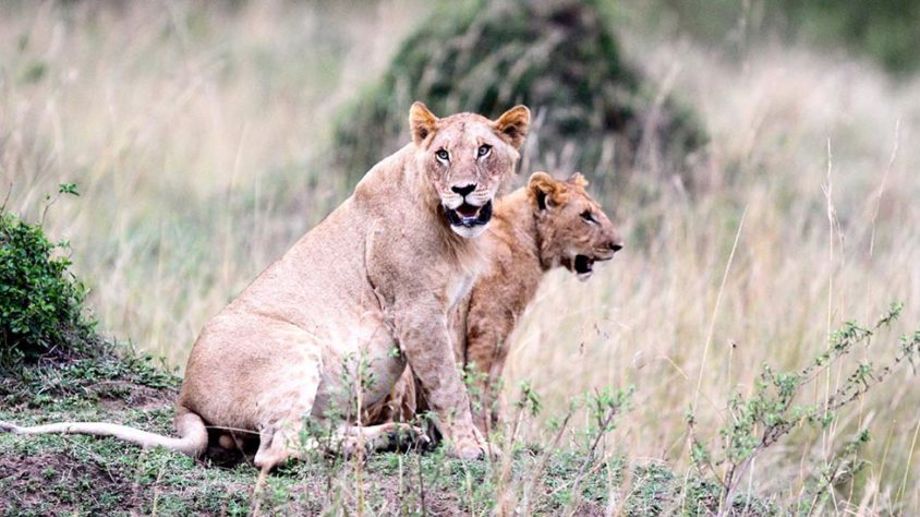
The international trade in lion bones with Asia is legal in South Africa. The South African Government set a quota of 800 lion skeletons to be exported to South East Asia per year! In Asia, these bones are used in the Traditional Chinese Medicine market, as they erroneously believe that the body parts of wild animals have therapeutic powers and health benefits. Historically, tiger bones have been very popular for use to make these medicines and especially in fortified tiger bone wine, but tigers have become more endangered so they are supplementing the imported lion bones for tiger bones. This means that captive-bred lions are exploited at every stage of their lives, even after their death. Lions are now being bred just for this purpose!
With their decision to export 800 lion skeletons per year, South Africa is also putting the wild lion population in big danger. History repeats itself, indeed the same happened with tigers in the past. We have definitely reached the lowest ebb. It can't be possible that the king of the jungle has been humiliated and turned into a simple product. South Africa's reputation could become permanently damaged and may be reaching a point of no return. The wildlife is Africa's pride and joy and a hugely important source of income through tourism, and this kind of exploitation means that it is now getting ruined.
It's very painful to know that South Africa has more lions living in captivity than there are left in the wild. The OIPA- International launched the movement – 'Stop captive lion exploitation and hunting in SA now' in mid-April 2019 and is now part of the coalition 'Stop the Captive Breeding and Keeping of Lions and other Big Cats for Commercial Purposes'.
The lion bone trade in South Africa is not only highly immoral for the lions but is also a danger to lions living in the wild. What a shame we are getting closer and closer to their extinction. Lions are defenceless and they rely on human beings with values for protection, not just fool poachers! This alliance of organisations believes that big cats belong in the wild, while the captive breeding and hunting, petting, walking, volunteering and trading of captive big cats and other wildlife are exploitative, does not contribute to conservation and must be stopped.
In the light of the abovementioned facts, we call for an immediate end to the quotas of skeleton exports from captive-bred lions and we also call on CITES to treat the trade in hunting trophies in the same manner as it treats all other trade in wildlife. Furthermore, canned hunting and non-conservation based captive breeding of lion and other predators should be banned as this industry does not in any way contribute to wildlife conservation and is entirely profit-driven.
Mr. Massimo Pradella is the International President of OIPA (International Organization for Animal Protection) headquartered at Italy.
(Disclaimer: The opinions expressed are the personal views of the author. The facts and opinions appearing in the article do not reflect the views of Devdiscourse and Devdiscourse does not claim any responsibility for the same.)
- FIRST PUBLISHED IN:
- Devdiscourse


 Google News