

Shocking! Scientists detect a black hole swallowing neutron star 900 million years ago
Neutron stars and black holes are the super-dense remains of dead stars.
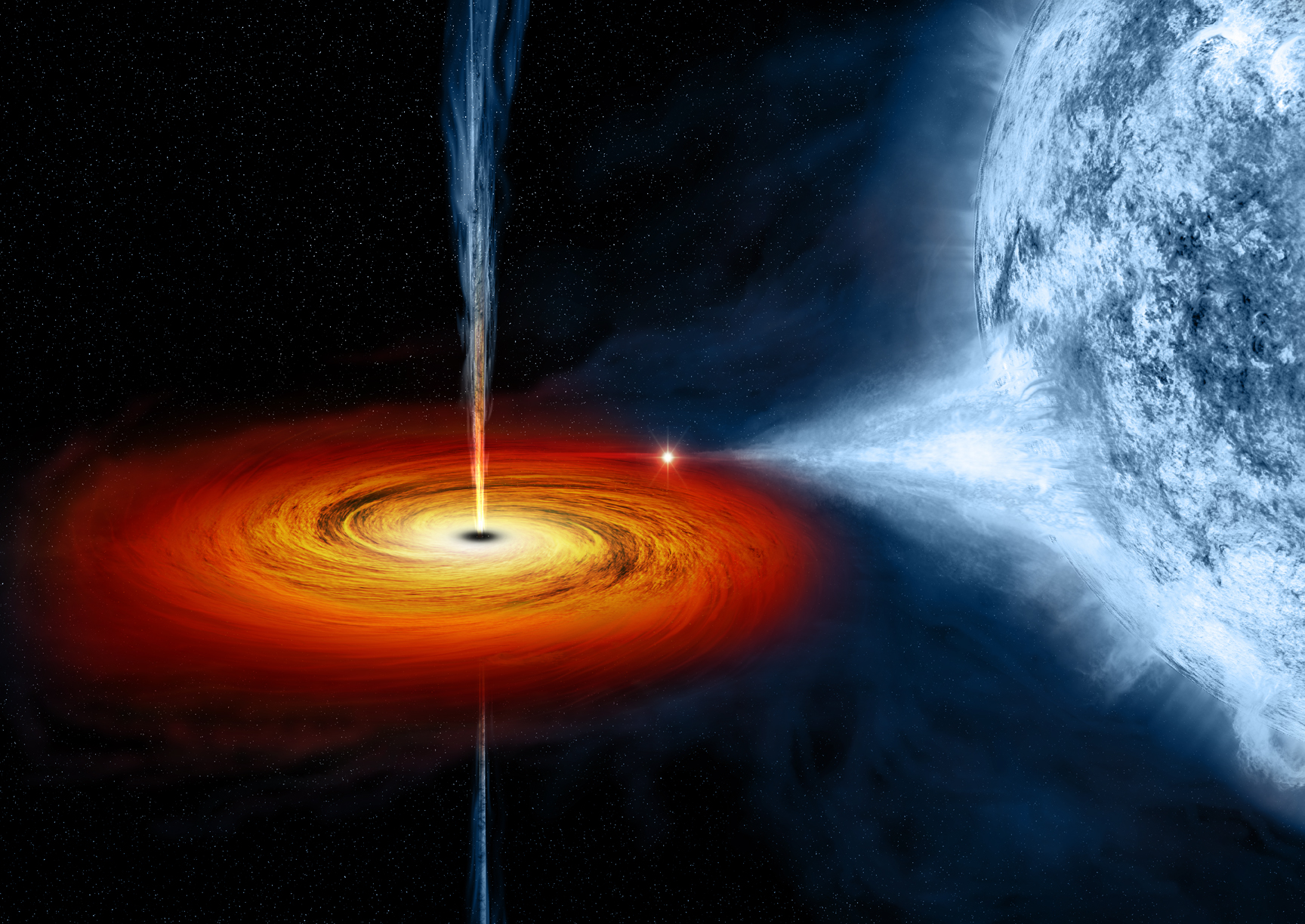
According to The Australian National University (ANU) and the scientists, they have detected a black hole swallowing a neutron star for the first time. Neutron stars and black holes are the super-dense remains of dead stars.
On Wednesday 14 August 2019, gravitational-wave discovery machines in the United States and Italy detected ripples in space and time from a cataclysmic event that happened about 8,550 million trillion kilometers away from Earth.
Also Read: Researchers propose a new holographic method to simulate black holes
Professor Susan Scott, from the ANU Research School of Physics, said the achievement completed the team's trifecta of observations on their original wish list, which included the merger of two black holes and the collision of two neutron stars.
"About 900 million years ago, this black hole ate a very dense star, known as a neutron star, like Pac-man - possibly snuffing out the star instantly," said Professor Scott, Leader of the General Relativity Theory and Data Analysis Group at ANU and a Chief Investigator with the ARC Centre of Excellence for Gravitational Wave Discovery (OzGrav).
"The ANU SkyMapper Telescope responded to the detection alert and scanned the entire likely region of space where the event occurred, but we've not found any visual confirmation."
Also Read: New planet discovered in orbit of young Milky Way star
Scientists are still analysing the data to confirm the exact size of the two objects, but initial findings indicate the very strong likelihood of a black hole enveloping a neutron star. The final results are expected to be published in scientific journals.
"Scientists have never detected a black hole smaller than five solar masses or a neutron star larger than about 2.5 times the mass of our Sun," Professor Scott said.
"Based on this experience, we're very confident that we've just detected a black hole gobbling up a neutron star.
"However, there is the slight but intriguing possibility that the swallowed object was a very light black hole - much lighter than any other black hole we know about in the Universe. That would be a truly awesome consolation prize."


 Google News