

Science News Roundup: Neil Armstrong's spacesuit smithsonian; 'The Dish' still beaming signals from Australia
Following is a summary of current science news briefs.
Apollo 11 astronaut returns to launch pad where first humans lifted off for the moon
Apollo 11 astronaut Michael Collins returned to the launch pad Tuesday at NASA's Kennedy Space Center in Florida where he flew to the moon 50 years ago along with the late Neil Armstrong and Buzz Aldrin. "Wonderful feeling to be back at launch pad 39A," Collins, the command module pilot for Apollo 11, said in an interview on the pad with Kennedy Space Center Director Bob Cabana, himself a veteran of four space shuttle launches and a former shuttle commander.
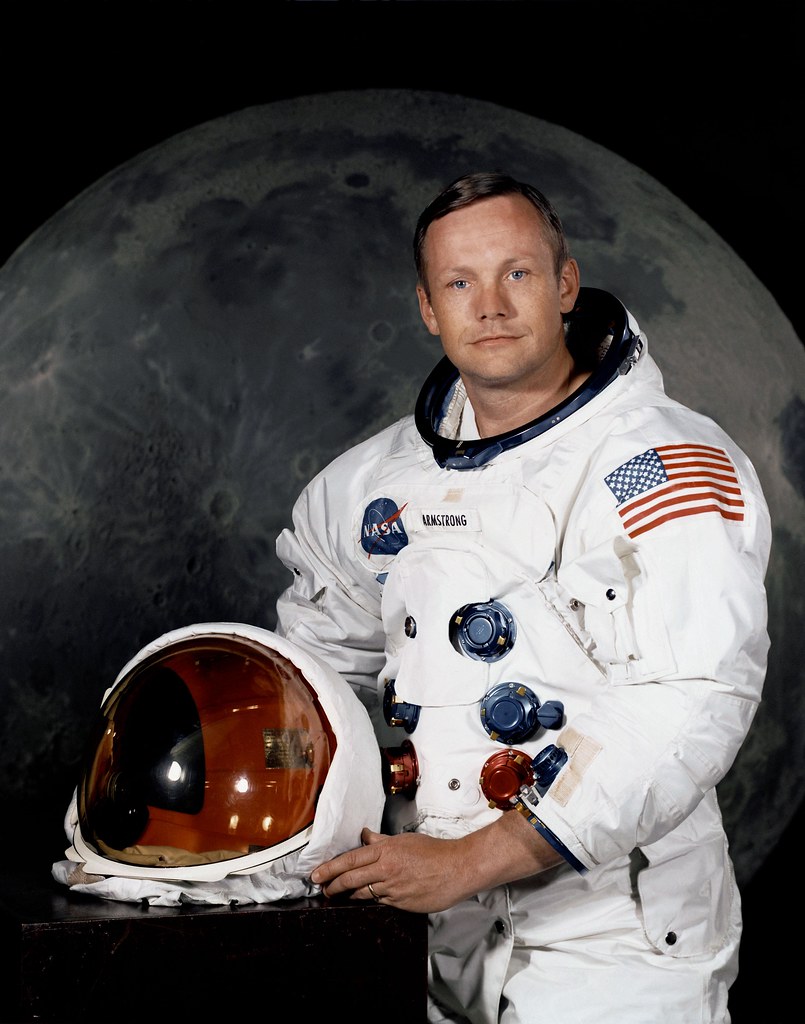
Neil Armstrong's Apollo 11 spacesuit unveiled at Smithsonian
The spacesuit astronaut Neil Armstrong wore during his mission to the moon went on public display for the first time in 13 years on Tuesday, at the Smithsonian's Air and Space Museum exactly 50 years to the day when Apollo 11 launched into space. Armstrong's son Rick unveiled the suit along with U.S. Vice President Mike Pence who recalled how the country was deeply divided in the late 1960s but came together in pride when Armstrong became the first man to walk on the moon. Apollo 11's astronauts snapped photos for science.
Then came MTV
The Apollo 11 astronauts who made mankind's first visit to the moon 50 years ago were trained in how to take pictures for science. Back on Earth, some of those photos became pop culture touchstones. People collected and shared prints of the Apollo 11 landing and moonwalk, which also became the basis for artist Andy Warhol's colored prints "Moonwalk" and for MTV's logo when the music channel launched in 1981.
'Artificial snow' could save stricken Antarctic ice sheet - study
Governments could stop the West Antarctic Ice Sheet from sliding into the ocean and submerging coastal cities by launching a last-ditch engineering project to blanket its surface with "artificial snow", according to a study released on Wednesday. Scientists believe that global warming has already caused so much melting at the south pole that the giant ice sheet is now on course to disintegrate, which would trigger an eventual global sea-level rise of at least three meters (10 feet) over centuries.
India to launch second lunar mission on July 22 after delay
India's space agency said on Thursday it would launch the country's second lunar mission on July 22, after the original launch was called off due to a 'technical snag' earlier this week. Chandrayaan-2, built by the Indian Space Research Organisation (ISRO), is now scheduled to be launched at 0913 GMT (1443 IST) on July 22, ISRO said in a tweet (https://twitter.com/isro/status/1151727440667893760).
Buzz Aldrin, second man on moon, recalls 'magnificent desolation'
Fifty years after their history-making voyage to the moon, Buzz Aldrin recalls the first moments of the Apollo 11 launch being so smooth that he and his two crewmates, Neil Armstrong and Mike Collins, were unsure precisely when they left the ground. He remembers the white-knuckle descent to the moon's dusty surface in the four-legged lunar module Eagle, as Armstrong took manual control of the landing craft to pilot it to a safe touchdown, just seconds from running out of fuel.
Explainer: NASA aims to build on moon as a way station for Mars
Unlike the Apollo program that put astronauts on the moon 50 years ago, NASA is gearing up for a long term presence on Earth's satellite that the agency says will eventually enable humans to reach Mars. "Now, NASA is working to build a sustainable, open architecture that returns humanity to our nearest neighbor," Jim Bridenstine, the administrator of the U.S. space agency, said in a statement to a Senate committee on Wednesday.
Apollo moon rocks shed new light on Earth's volcanoes
Fifty years after humans first set foot on the moon, scientists believe rock samples collected by Apollo astronauts could help predict volcanic eruptions on Earth more accurately. The basaltic fragments, similar to most of the Earth's volcanic rock, are the remains of the moon's volcanic past, with studies showing evidence of eruptions up until 1.5 billion to 2 billion years ago.
'The Dish' still beaming signals from Australia 50 years after moon walk
It's known as "The Dish" and it soars above a nondescript paddock in rural Australia. Without it, hundreds of millions of people would never have seen all of the generation-defining footage of Neil Armstrong walking on the moon 50 years ago. An estimated 600 million people around the world held their collective breath as they watched their television screens on July 20, 1969, waiting to see Armstrong step out from the Apollo 11 lunar module and into the history books.


 Google News