

Internet Privacy: Here's why you need a VPN?
In the recent few years, the demand for VPNs has grown at an extraordinary rate, owing to the increasing incidents of data breaches and cybercrimes.
 Renu Mehta
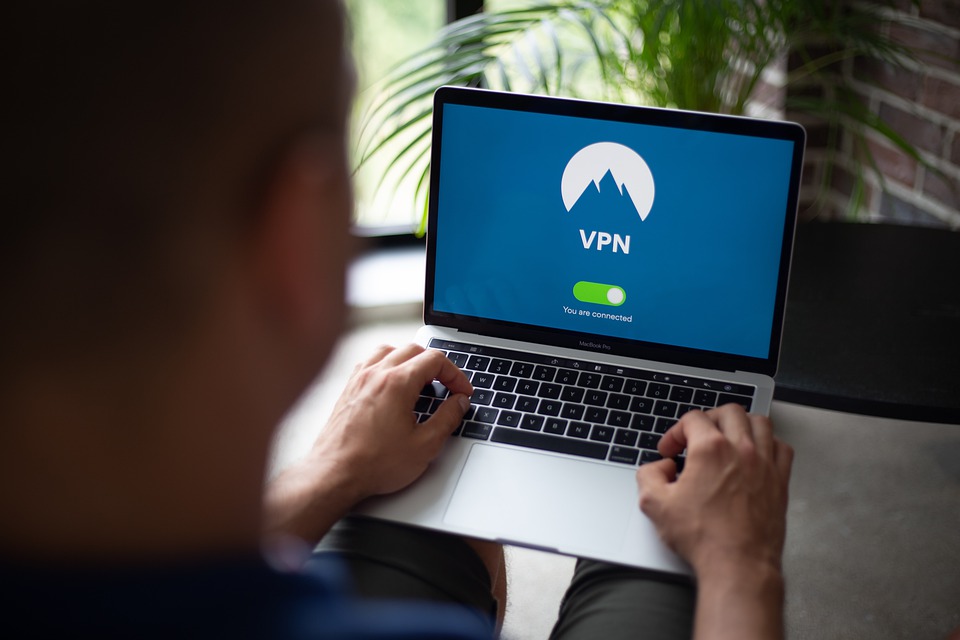
Cybersecurity is no more a buzzword but a prominent reality. The increased adoption of digital technologies has also increased the volume of data generated over the networks. With promising technologies also come vulnerabilities associated with privacy and security. In fact, data security and privacy is the biggest concern in today's connected digital ecosystems.
Be it an enterprise or government agency or an individual, nobody is immune to cyberattacks and privacy invasion in the digital world. The hyper-connected world needs to understand the potential threats and utilize the latest defensive techniques to help address potential vulnerabilities and stand vigilant against future attacks.
And let's not forget the famous saying by Benjamin Franklin 'an ounce of prevention is worth a pound of cure' because it literally takes fewer efforts to prevent something than to fix it afterward. Hence, online security and privacy should be given the utmost priority when browsing the internet.
How VPN helps?
Normally, when users connect to the Internet, the Internet Service Provider (ISP) receives the request and redirects them to the requested website. ISPs can track, monitor or store what users do online and even sell their private data and browsing history to third parties including cybercriminals and advertisers. Here is where the need for a VPN arises.
For those unfamiliar with the technology, a Virtual Private Network or VPN creates a safe and encrypted connection that ensures secure transmission of sensitive data over a public network such as the internet or WiFi Hotspots. In the simplest terms, a VPN technology prevents bad actors from eavesdropping on your online activities by creating an encrypted connection or data tunnel between your local network and a VPN server in another location.
VPNs can hide confidential information such as online banking credentials or social media passwords over a public network that would otherwise be used by government agencies, marketers, cybercriminals, or cyber thieves for surveillance, identity theft, financial fraud, or other illegal activities. Here's is what a VPN can hide:
- Web search history
- IP address
- Search patterns and other web activity including downloads
- Personal online data
- Geolocation
In addition to hiding sensitive information, Virtual Private Network helps you escape spying, data and bandwidth throttling, anonymously access any content on the web, even the geo-restricted websites, from anywhere in the world.
VPN types and protocols
VPNs are broadly divided into two categories: One is the Remote access VPN, aka Virtual Private Dial-up Network (VPDN) that allows users to remotely connect to a private network and access all its resources and services while the other is Site-to-site VPN, aka Router-to-Router VPN, which is used when it becomes geographically impossible to establish a connection between networks.
The VPN protocols are a series of instructions or encryption standards used to secure a private connection between two points. There are several protocols with different strengths and weaknesses that VPN providers use to provide secure and encrypted connections. Here are the most commonly used protocols:
- OpenVPN
OpenVPN, an open-source and highly secure tunneling protocol used by a majority of VPN providers. It runs on either the Transmission Control Protocol (TCP) that ensures full and orderly delivery of data packets or the User Datagram Protocol (UDP) that offers faster speeds as it doesn't use error correction.
- IKEv2 / IPSec
Developed by Microsoft and Cisco, IKEv2 (Internet key exchange version 2) is the most advanced VPN protocol based on Internet Protocol Security (IPSec), a protocol suite that authenticates and encrypts data packets for transport and tunneling.
IKEv2 can automatically switch between connections, such as from WiFi to cellular network without dropping the VPN connection.
- Point–to–Point Tunneling Protocol (PPTP)
Point-to-Point Tunneling Protocol (PPTP) is one of the oldest VPN protocols. This protocol does not provide data encryption by itself but supports 128-bit, 56-bit, and 40-bit key Microsoft Point-to-Point Encryption (MPPE) encryption schemes.
It was developed by the PPTP forum and is supported on older devices.
- L2TP/IPsec
Layer 2 Tunnel Protocol, commonly referred to as L2TP over IPSec, is considered as an outdated protocol and is not as secure as other protocols available in the market. L2TP/IPsec is more secure than PPTP but slower than OpenVPN.
- WireGuard
WireGuard is the newest open-source protocol that uses state-of-the-art cryptography, making it faster and more secure than other available VPN protocols in the market.
In the recent few years, the demand for VPNs has grown at an extraordinary rate, owing to the increasing incidents of data breaches and cybercrimes. According to a report by Research And Markets, the global VPN market is projected to grow at a CAGR of 6.39 percent to reach USD 50.153 billion by 2024, from USD 34.591 billion in 2018.
(Disclaimer: The opinions expressed are the personal views of the author. The facts and opinions appearing in the article do not reflect the views of Devdiscourse and Devdiscourse does not claim any responsibility for the same.)
- FIRST PUBLISHED IN:
- Devdiscourse
ALSO READ
-
Ghana’s Crypto Reset: New Rules Target a $21 Billion Market as Stablecoin Use Gains Ground
-
Smart Cities Are Giving AI More Control Over Power Grids. Who Keeps Its Decisions Safe?
-
Counting the Invisible: El Salvador’s $50 Million Bid to Map Its Full Economy and Workforce
-
Global Turmoil: Cyber Attacks, Political Shifts, and Military Escalations
-
Hackers Compromise US-Bound Vessels: Security Breach in the Gulf of Mexico


 Google News