

AfDB committed to partner with Africa's institutions to address development challenges
- Country:
- Egypt Arab Rep
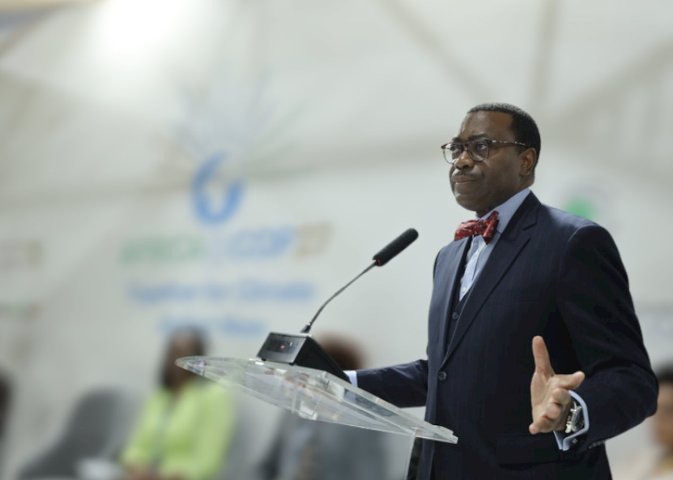
The African Development Bank Group (www.AfDB.org) is committed to partnering with Africa's regional and continental institutions to address the continent's biggest development challenges. This was the key message when Bank President, Dr. Akinwumi Adesina, met with the heads of intergovernmental organisations and African development finance institutions on 25 May in Sharm el-Sheikh, Egypt.
The meeting, titled "Mobilising capital for smart infrastructure and deeper integration", was the second of its kind organised by the Bank on the sidelines of its Annual Meetings and offered participants an opportunity to share their main concerns and discuss opportunities for cooperation.
Mr Adesina reminded the meeting of the vital role African regional institutions play in promoting Africa's political, economic, and social development and stressed that the continent needs to achieve double digit annual economic growth to eradicate poverty. "We must ensure that Africa is at the heart of debates worldwide. Africa must have its rightful place in leading international bodies. But in addition to having a place, we also need resources," he said.
The bank and regional and continental institutions must act together to achieve this. In particular, the African Continental Free Trade Area (AfCFTA), a market of 1.4 billion consumers with a combined GDP of $3.4 trillion, should be put to work in creating value chains to change Africa's role as a provider of raw materials for other countries' development. The Bank chief called on African regional organisations to work with individual countries to ensure that Africa benefits from the vast potential market for electric cars (estimated at $34 trillion) for example. Adesina pointed out it would cost less to produce lithium-ion batteries in Africa than in the United States or China.
Infrastructure, peace, and security for better integration
Regional institutions, and especially regional economic communities and regional banks have welcomed the Bank's investments and are calling for more inclusive projects in the near term. The Abidjan-Lagos Corridor Highway Development Project, the railway linking Tanzania, Burundi and the Democratic Republic of Congo, and the Kinshasa-Brazzaville Road-Rail Bridge Project are just a few examples of projects the Bank is financing.
Albert M. Muchanga, African Union Commissioner for Trade and Industry, outlined the Union's expectations for funding, including for its specialised institutions. "We are in the process of mobilising the private sector. We are working to set up the Association of African Stock Exchanges and, together with the African Development Bank we have launched a study of Africa's development drivers, which will identify key actions needed to achieve economic growth of 7-10% by 2063," he said.
Arab Maghreb Union Secretary-General Taïeb Baccouche called for greater emphasis on young people to save them from the mirage of emigration. An agropastoral project is now being rolled out to create more jobs for young people in the Maghreb. Mr Baccouche said that abolishing visas would be a step forward for the proper functioning of the AfCFTA.
Elias M. Magosi, Executive Secretary of the Southern African Development Community (SADC), said that infrastructure is a major concern for the SADC and in particular, energy infrastructure.
ALSO READ
-
Côte d’Ivoire Secures $24 Million to Restore Forests and Support Rural Communities
-
AfDB Places KEEPS Construction Under 12-Month Compliance Order After Fraudulent Practice
-
Central Africa Faces $35.6 Billion Funding Gap as Growth Forecasts Signal Steady Gains
-
Benin’s Growth Surges as $2.43 Billion Annual Funding Need Shapes Its Economic Future
-
Free AI Training Opens Doors for African Public Officials to Build Smarter Services


 Google News