

ILO Advocates for Effective Governance of Labour Mobility at Doha Dialogue
Ruba Jaradat, ILO Regional Director for Arab States, presented an in-depth overview of strategies to govern migrant worker mobility effectively between countries and regions.
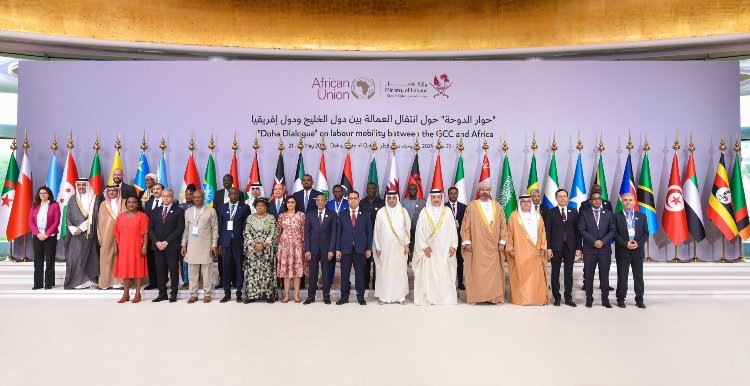
The International Labour Organization (ILO) hosted a pivotal event titled the "Africa-Gulf Cooperation Council, Jordan, and Lebanon Dialogue on Labour Mobility" in Doha from May 21-22, organized by the State of Qatar and the African Union. Ruba Jaradat, ILO Regional Director for Arab States, presented an in-depth overview of strategies to govern migrant worker mobility effectively between countries and regions.
During her visit, Jaradat engaged in significant discussions with:
Qatar's Minister of Labour Ali bin Samikh Al Marri: They reviewed joint cooperation aspects between the ILO and Qatar.
Mohammed Al Obaidli, Director-General of the Executive Bureau of the Council of Ministers of Labour & Ministers of Social Affairs in GCC: They explored collaborative efforts to enhance labour mobility governance.
Jaradat's Presentation Highlights
Jaradat emphasized the crucial role of dialogue and cooperation among stakeholders in the labour migration corridor between African states and the Arab states of the Gulf Cooperation Council (GCC), Jordan, and Lebanon. She highlighted three primary areas for improving labour mobility governance:
Fair Recruitment: Addressing fraudulent and abusive practices, such as the imposition of recruitment fees and contract substitution, which often lead to migrant worker exploitation and forced labour.
Skills Development and Recognition: Enhancing educational institutions and training providers in African countries to meet the skill demands of Middle Eastern employers, thus benefiting both migrant workers and destination countries.
Social Protection: Extending social protection schemes to migrant workers to ensure they have access to healthcare, pensions, and other benefits, regardless of their migration status.
Fair Recruitment Initiative
Jaradat discussed the ILO's Fair Recruitment Initiative, which focuses on:
Exchanging global knowledge on recruitment processes.
Improving laws, policies, and enforcement to promote fair recruitment.
Encouraging fair business practices.
Empowering and protecting workers.
Skills Development
She underscored the need for educational institutions in African countries to align with the labour market demands of the Middle East. This alignment would facilitate better job matching and help migrant workers reintegrate into their home countries' labour markets upon their return.
Social Protection Extension
Jaradat highlighted significant reforms in Arab countries aimed at extending social protection to migrant workers. These include access to healthcare, old-age pensions, and employment injury benefits. Additionally, there are discussions at the GCC level about reforming end-of-service indemnities to ensure comprehensive coverage for migrant workers.
Importance of Data and Gender Considerations
Jaradat called for improved data collection to better understand and address labour migration issues. She also emphasized the need to consider how labour migration affects men and women differently.
International and Bilateral Labour Agreements
She advocated for forging labour agreements based on international standards and effective monitoring, engaging social partners in dialogue to enhance the protection of migrant workers.
Jaradat concluded by expressing gratitude to the Qatari Ministry of Labour for organizing the event and reaffirmed the ILO's commitment to supporting constituents in enhancing decent work and labour protections for African workers in the GCC, Jordan, and Lebanon.
Broader Context
The Arab States region is a major destination for migrant workers, who significantly contribute to the development of their host countries and send vital remittances home. However, these workers often face numerous challenges. The ILO, through its Fair Migration Agenda and various initiatives, works to address these challenges and promote fair labour migration governance.
Participation and Future Collaboration
The event saw participation from 33 countries across Africa and the Arab region, including Ministers of Labour, ILO and International Organization for Migration (IOM) representatives, experts, and social partners. The Doha Dialogue is part of an ongoing effort to strengthen regional collaboration and implement best practices for fair labour mobility.
By fostering such dialogues and implementing comprehensive strategies, the ILO aims to enhance the governance of labour mobility, ensuring fair treatment and protection for migrant workers while meeting the labour market needs of destination countries.


 Google News