

E-Mobility R&D Roadmap to Achieve Self-Reliance and Global Leadership in Automotive Sector
In his opening address, Prof. Sood emphasized India's goal of reducing emission intensity by 45% by 2030 and achieving energy independence by 2047, aiming for net-zero emissions by 2070.
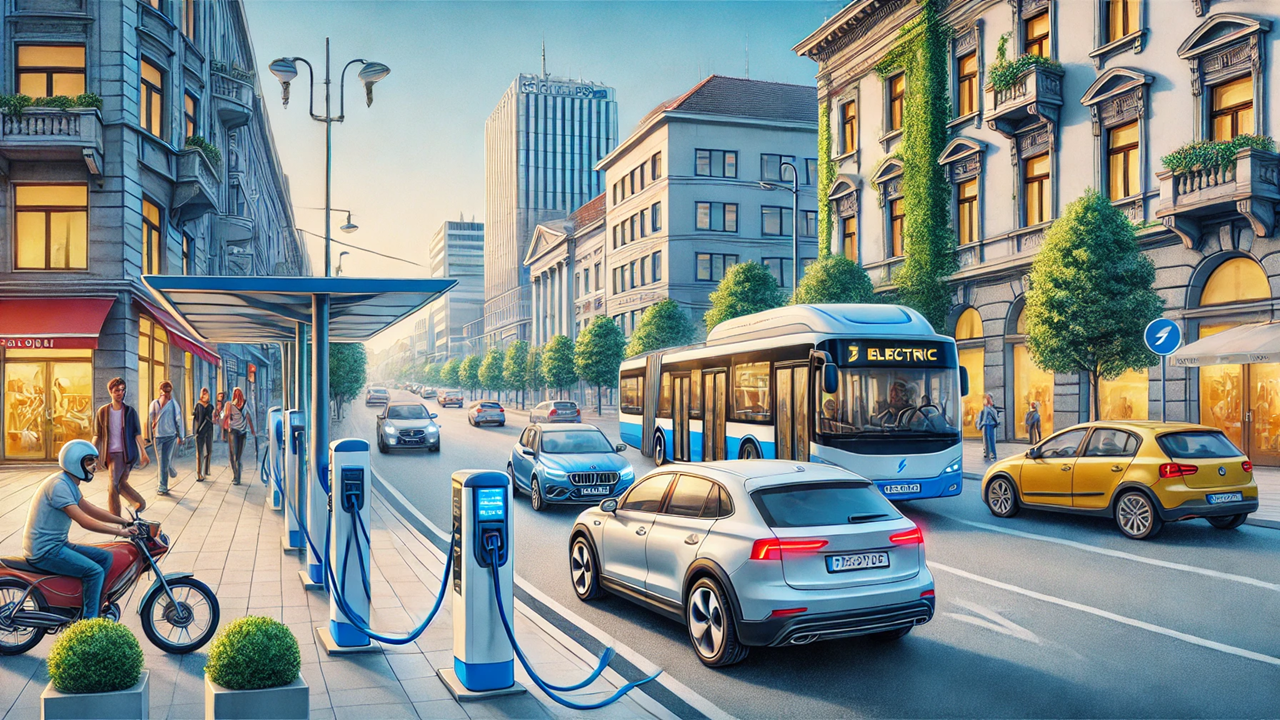
The "e-mobility R&D Roadmap for India" report was launched today (July 16, 2024) by Professor Ajay Kumar Sood, Principal Scientific Adviser to the Government of India, at Vigyan Bhawan Annexe in New Delhi. This roadmap was developed following a comprehensive review of the global automotive sector to identify future technological needs. It outlines research projects in four key areas: Energy Storage Cells, EV Aggregates, Materials and Recycling, and Charging and Refueling, with the aim of achieving self-reliance and global leadership within the next five years.
The official launch event, conducted in a hybrid mode, was attended by government officials, members of the Consultative Group on e-Mobility (CGeM), industry representatives, think tanks, and the media. Key participants included Dr. Parvinder Maini, Scientific Secretary, Office of the Principal Scientific Adviser to the Government of India; Dr. Reji Mathai, Director General of the Automotive Research Association of India (ARAI), Pune; and Dr. K. Balasubramanian, Director of the Non-Ferrous Materials Technology Development Centre (NFTDC), Hyderabad.
In his opening address, Prof. Sood emphasized India's goal of reducing emission intensity by 45% by 2030 and achieving energy independence by 2047, aiming for net-zero emissions by 2070. He highlighted the critical need to adopt electric vehicles, develop indigenous energy storage systems, and generate renewable energy for charging infrastructure. Currently, the e-mobility value chain relies heavily on imports, and Prof. Sood stressed the importance of strengthening domestic R&D capabilities to reduce this dependence.
Dr. Preeti Banzal, Adviser, Office of PSA, provided an overview of efforts to build a robust R&D ecosystem in the automotive sector. She noted that the Office of PSA established the Consultative Group on eMobility (CGeM) in August 2022, which includes experts from government, academia, and industry. This group was tasked with creating technical roadmaps to transition from fossil fuel-based transportation to electric mobility in India. The roadmap document was prepared by ARAI under the guidance of CGeM.
Prof. Karthick Athmanathan, PSA Fellow and Professor of Practice at IIT Madras, summarized the e-mobility R&D roadmap. He discussed how the roadmap addresses the need to move away from import dependence and outlines steps to avoid similar issues as technologies evolve. The research projects were selected based on their potential impact on national energy independence, feasibility, market dominance, and ability to leverage existing resources.
During the Q&A session with the press and media, it was highlighted that the roadmap aims to position India as a leader in the global automotive value and supply chains within the next five to seven years. The roadmap identifies critical research initiatives to fill current gaps and establish a foundation for future innovations.
In his concluding remarks, Prof. Sood noted that the automotive sector is a significant contributor to India's GDP and will continue to grow rapidly. He emphasized that this growth should align with the country's Net-Zero vision and called for a culture of R&D and innovation-driven progress in the automotive sector.


 Google News