

Somalia Launches $11.8 Million Programme to Boost Climate Resilience
WFP Deputy Country Director Marco Selva said the programme will help families build long-term resilience while contributing to broader development efforts for improving food security across the country.
- Country:
- Somalia
The Federal Government of Somalia, the African Development Bank Group, the United Nations Office for Project Services (UNOPS) and the World Food Programme (WFP) have launched a new $11.8 million initiative aimed at strengthening agricultural and pastoral livelihoods in some of the country's most climate-vulnerable regions.
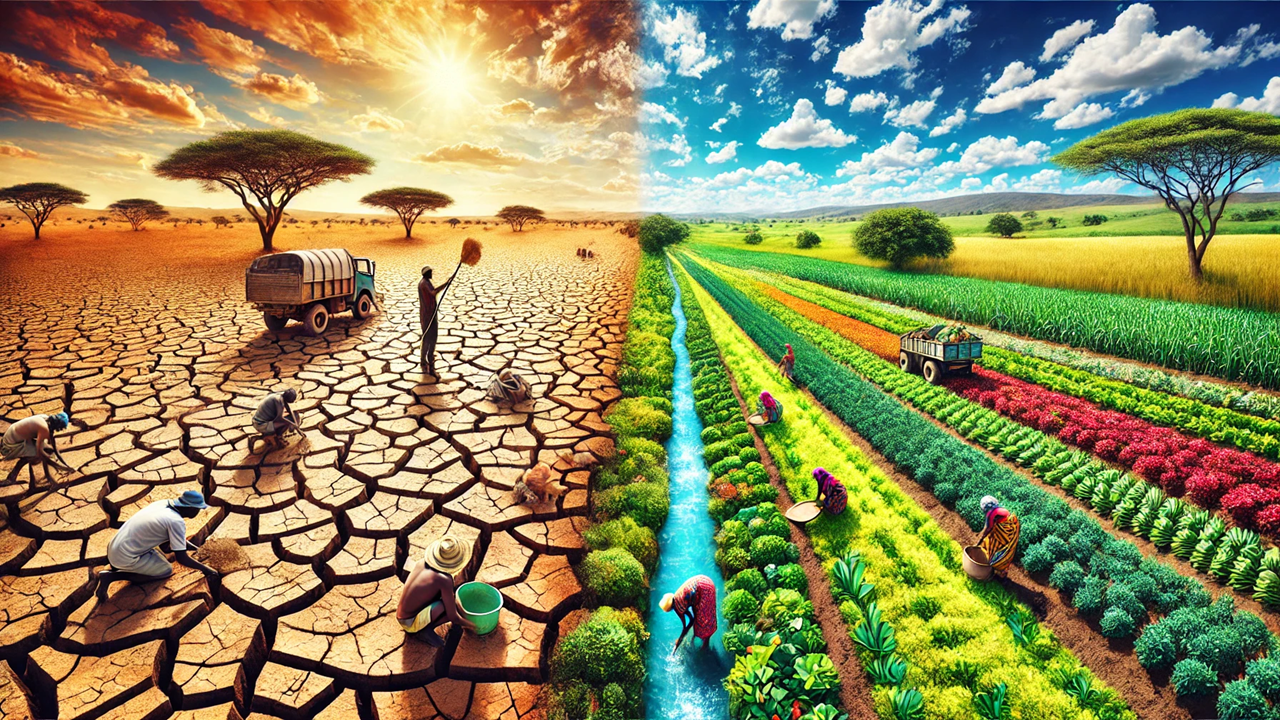
The three-year programme, known as Activating Climate-Resilient Agricultural Livelihoods in Somalia (ACALS), is designed to help communities better withstand the growing impacts of drought, climate change and food insecurity. Financed through the African Development Fund, the concessional lending arm of the African Development Bank Group, the project will be implemented jointly by WFP and UNOPS.
The initiative will directly support around 180,000 people, equivalent to approximately 30,000 families, across the drought-affected states of Hirshabelle and Puntland. Officials say the programme comes at a critical time as millions of Somalis continue to face severe food shortages and economic hardship linked to recurring climate shocks and ongoing insecurity.
Farmers, Herders and Youth to Receive Direct Support
A major focus of ACALS will be improving the resilience of farmers and pastoral communities whose livelihoods depend heavily on weather conditions and natural resources. The programme includes investments in sustainable land and water management, rehabilitation of irrigation systems and measures aimed at increasing agricultural productivity. Farmers will receive support to adopt climate-resilient crops and gain better access to markets, helping them improve incomes and reduce vulnerability to future shocks. Women and young people have been identified as priority beneficiaries, reflecting their important role in agricultural production and local economic development.
Somalia's Minister of Livestock, Forestry and Range, Hassan Hussein Mohamed, said targeted interventions are essential for helping the country's livestock and agricultural sectors adapt to changing climatic conditions and strengthen their ability to cope with future environmental challenges. The programme also seeks to improve business opportunities for rural communities by supporting local enterprises and strengthening value chains linked to agriculture and livestock production.
Stronger Disaster Preparedness at Community Level
Beyond agricultural development, ACALS places significant emphasis on disaster preparedness and climate adaptation. The project will support the establishment and strengthening of early warning systems designed to provide communities with timely information about droughts, floods and other climate-related threats. Training programmes will help local residents develop response plans and improve their ability to manage emergencies. Ecosystem-based adaptation measures will also be introduced to help protect natural resources while reducing environmental degradation.
African Development Bank East Africa Regional Manager for Agriculture and Agro-Industry Pascal Sanginga described the initiative as part of the Bank's broader effort to move beyond short-term emergency assistance and invest in long-term food security and resilience. He noted that agriculture now represents more than 12 percent of the Bank's active portfolio in Somalia, reflecting a growing focus on sustainable development and climate adaptation.
Partnership Seeks Long-Term Solutions to Hunger Crisis
The launch comes as Somalia continues to face one of the most severe food security crises in the region. An estimated six million people, roughly one-third of the population, are experiencing crisis-level hunger or worse, while nearly two million face emergency levels of food insecurity. Repeated droughts, conflict, reduced humanitarian funding and economic pressures linked to instability in the Middle East have combined to deepen the situation.
WFP Deputy Country Director Marco Selva said the programme will help families build long-term resilience while contributing to broader development efforts for improving food security across the country. The initiative is also notable because it marks the first joint project between WFP and UNOPS in Somalia. Both organizations see the partnership as a model for future collaboration that combines infrastructure development, humanitarian support and long-term resilience building.
UNOPS Country Director Ala'a Nemer emphasized that the project focuses not only on delivering infrastructure but also on ensuring that assets are designed to withstand future climate shocks and are supported by strong community governance systems. Aligned with Somalia's National Transformation Plan 2025–2029, ACALS aims to strengthen institutional capacity at both federal and state levels while bringing together government agencies, development partners, financial institutions and local communities in a coordinated effort to address the country's development challenges.
ALSO READ
-
Côte d’Ivoire Secures $24 Million to Restore Forests and Support Rural Communities
-
AfDB Places KEEPS Construction Under 12-Month Compliance Order After Fraudulent Practice
-
Central Africa Faces $35.6 Billion Funding Gap as Growth Forecasts Signal Steady Gains
-
Benin’s Growth Surges as $2.43 Billion Annual Funding Need Shapes Its Economic Future
-
Free AI Training Opens Doors for African Public Officials to Build Smarter Services


 Google News