

RCEP trade ministers to meet in Bangkok on Friday ahead of leaders' summit
- Country:
- India
A crucial meeting of trade ministers of 16 countries will meet on Friday in Bangkok, Thailand, to iron out differences on the proposed mega free-trade pact RCEP, an official said. The meeting is precursor to the RCEP leaders' summit, scheduled on November 4 in Bangkok, which will be attended by Prime Minister Narendra Modi.
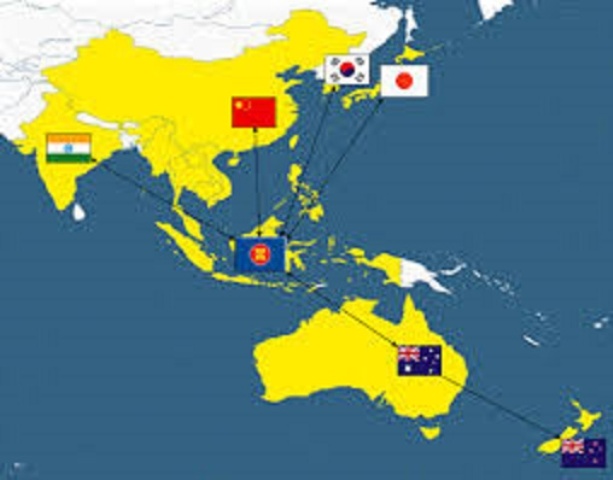
The RCEP (Regional Comprehensive Economic Partnership) is being negotiated by 16 countries -- 10-member ASEAN (Brunei, Cambodia, Indonesia, Laos, Malaysia, Myanmar, the Philippines, Singapore, Thailand, and Vietnam) and Australia, China, India, Japan, South Korea, and New Zealand. "Ahead of the RCEP leaders' summit, the trade ministers will hold discussions. They would also finalize the statement of leaders for RCEP summit," the official added.
Commerce and Industry Minister Piyush Goyal will attend the meeting. He would also hold bilateral talks there with countries such as China, with which most of the issues have not yet been settled. Talks at the official level are already going on between the member countries to iron out differences.
The negotiations for the RCEP deal have reached the last phase. As per the target of the members, the conclusion of the negotiations could be announced in the leaders' summit. Technically, India will have time till the end of February 2020 to sort out bilateral market access issues. After the announcement of the conclusion, the legal text would be finalized. The legal scrubbing for the RCEP text will continue until the end of February 2020.
If everything goes as per the plan, the agreement would be signed in June 2020. After that, RCEP members will have two more years to ratify the pact. This trade agreement assumes significance as several domestic players from industries such as metals, dairy, electronics, and chemicals have raised serious concerns over this agreement due to the presence of China in the grouping, with which India has a huge trade deficit of over USD 50 billion.
According to sources, a strong RCEP-specific safeguard duty mechanism is being negotiated by all members. If the import of a product increases significantly, a member nation would be able to impose safeguard duty for up to six years.
As many as 28 rounds of talks have been held at the level of chief negotiators and no more rounds are scheduled now. India is expected to reduce or eliminate duties on about 74-80 percent of goods imported from China under the proposed agreement.
India may also cut customs duties on 86 percent of imports from Australia and New Zealand, and 90 percent of products from ASEAN, Japan, and South Korea, with which India already has a comprehensive free-trade agreement. The cut or elimination of these duties could be implemented over a period of 5, 10, 15, 20 and 25 years.
There is a plan for an auto-trigger mechanism, wherein India will have the option to increase customs duties if there would be a sudden surge in imports of a particular product, particularly from China, to protect the domestic industry. India has registered trade deficit in 2018-19 with as many as 11 RCEP member countries including China, South Korea, and Australia.
The agreement aims to cover issues related to goods, services, investments, economic and technical cooperation, competition and intellectual property rights.
ALSO READ
-
Japanese Lawmakers Visit India to See Worker Protection and Skills Projects in Action
-
Indian Unions Push for Fair Recruitment and Rights for Care Workers in Germany
-
Cleaner Kitchens, Polluted Skies: Hidden Health Cost of India’s Electricity Boom
-
Japan-Backed ILO Projects Help 23,000 Workers Gain Rights and Fight Child Labour
-
India's Delicate Balancing Act: Navigating Energy Security Amid Middle Eastern Tensions


 Google News