

CM calls for investments in IT sector for sustainable and inclusive development
- Country:
- India
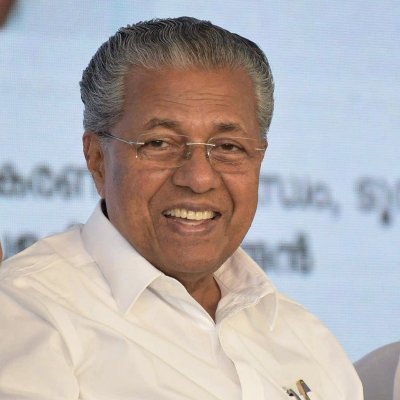
Kerala's efforts to modernize its economy, ensure inclusive growth, and injectefficiency in governance through a raft of IT applications were unfolded at a global stage here on Tuesday, even as chief minister Pinarayi Vijayan sought suggestions to help pull out the state from the pandemic-induced scenario.
Presenting the vision statement at the 'Kerala LooksAhead' (KLA) global conference and consultation, organized by the Kerala State Planning Board, Vijayan also stressed the need to ''rework and renew'' the existing Information Technology(IT) policy to meet new demands and changing circumstances.
The state has accorded priority to investments in human development and basic social welfare.
''But we are also aware that for a sustainable and prosperous future for all our people, we must attend to the improvement and modernization of productive capacities in the economy. One important way to do this is to invest in technologies and industries of the future,'' he said.
Underscoring the prominent role of IT in shaping the future of Kerala, Vijayan said the IT revolution has been progressing for more than 30 to 45 years now and continues to be at the forefront of modern technological advances.
''Like the machine of the 19th-century industrial revolution, the silicon chip is the key to the new technological revolution. Unfortunately, like machines in an earlier era, our country even today lags in manufacturing and fabrication of the range of silicon chips that are at the heart of the hardware that powers the revolution,'' he noted.
Significant progress in the production of software and hardware would contribute to value addition, growth of productive assets, advanced knowledge generation, and promotion of highly skilled labor and employment, Vijayan said.
Listing the initiatives taken by his government to promote the vital sector, he said ''we are aware that this isonly the beginning of a journey that is important to our stateand its future. Our government has declared an IT policy.If necessary, we can rework and renew this policy to meet new demands and changing circumstances.'' A common refrain at the conference was the imperative need to launch robust policy interventions, provide best-in-class infrastructure, ensure Ease of Doing business, offer hand-holding to startups, and put in place a system for continual skilling of the workforce.
Speakers also stressed the need for Kerala to stay competitive as several sectors of industry and business are undergoing digital transformation at a swift pace.
The conclave sought to identify a string of sectors that would attract leading enterprises to set up their digital transformation knowledge centers in the state.
Dr. Saji Gopinath, Vice-Chancellor, Kerala University of Digital Sciences, Innovation and Technology, predicted that the market for software and hardware would reach USD 350 billion and 400 billion dollars, respectively in India by 2025.
''In the next five years, as many as 10 million jobs will be created,'' he added.
Speaking about the 'Major Changes in the software industry and How Kerala could Leverage on the Same ThroughAppropriate Policy Intervention', S D Shibulal, Co-founder, Infosys, noted that digitization would continue at an unprecedented pace.
''We never thought that education will be an area where digitization will come in at such a fast pace.Healthcare is another area where we wanted digitization. If you look at global transportation, it will look at moving goods from one country to another.'' Srikanth Srinivasan, Head, Membership and Outreach, NASSCOM, advised Kerala to look at an effective ''cybersecurity policy that will encourage organizations to build security operation centers in the state. This will be a big boost to cybersecurity professionals, which is the need of the hour.'' Animation and gaming are the other two growing areas, he added.
Naruto Rai, Country Head Intel India & VP, Datacenter Group, talked about the opportunities in the electronics hardware sector and how Kerala should leverage it through appropriate policy interventions.
Nandakumar K Nair, Founder & CEO, Suntec BusinessSolutions, dwelt at length on opportunities in the software sector, while Prof Prahlad Vadakkepat, National University of Singapore, spoke about opportunities in the hardware sector.
In the open discussions that followed, Shibulalpointed out that Kerala should actively build a brand for its products and services that will create awareness and market potential besides reducing entry barriers.


 Google News