

Nation should use tech to enhance access, quality of learning: Vice-President
- Country:
- India
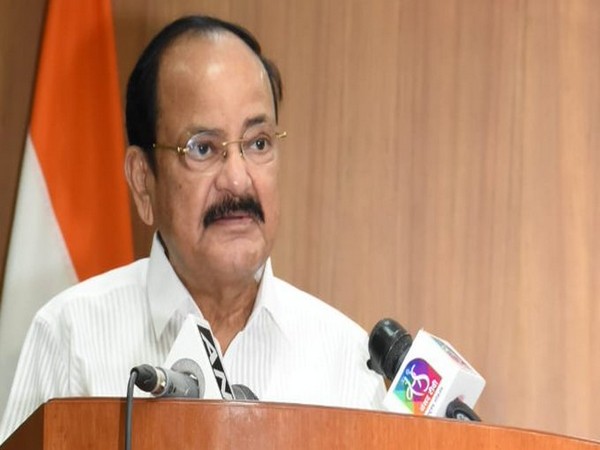
Vice-President M Venkaiah Naidu on Tuesday said the country should see how it can harness technology to enhance access and quality of learning.
At an event here, he said digital tools made learning very engaging and interactive, yet there was a gap in accessing technological gadgets.
''We should recognize the value of social and emotional dimensions of learning and strengthen them in the curriculum and functioning of schools,'' he said.
The Vice-President, while noting that there was some respite from the Covid-19 pandemic, said, ''We shall have to re-think education and see how best we can harness technology to enhance access and quality of learning.'' He said the pandemic taught many lessons and at the same time opened the door to new possibilities.
''During the last two years, we have learned to use technology to impart knowledge, learn new skills, and run educational institutions. New frontiers have made learning very engaging and interactive,'' he said.
Paying encomiums to teachers, he said, ''We must recognize adaptability and flexibility and commitment to ensure continuity of learning that our teachers have displayed during this time''.
''My appreciation goes to millions of teachers across our country who have kept the learning process alive by swiftly shifting to online mode. They had kept the learner at the center of their noble mission and minimized the learning losses,'' he said.
As India celebrates its 75th year of Independence, the country should not only celebrate the achievements of the post-Independence developmental journey but also think ahead on what needs to be done, he said.
''We have a lot to celebrate as we have moved from a literacy rate of a mere 18 percent when we became independent to around 80 percent today. More children are in schools and colleges today than they were 75 years ago,'' he said.
Observing that the New Education Policy (NEP 2020) aims to transform education in the country, he said it focuses on institutional restructuring and consolidation.
''It (NEP) attempts to create a template for holistic education, thus opening up new avenues of employment to the youth,'' he said.
''We must make education very integrated, multi-disciplinary and relevant,'' he said.
The education of the future must build bridges between the world of learning and the world of work through entrepreneurship and skill upgradation, he said.
The governance of the country should benefit from its vast intellectual capital and the strength of professional bodies, he said.
Education must become an instrument of national transformation and for this dream to be realized, the National Education Policy 2020 be the starting point, a springboard for taking the quantum leap, he said.
''We must ensure that access to learning opportunities is equitable and inclusive. We need to bridge the digital divide as well as the rural-urban divide. We must make education holistic with equal emphasis on cognitive and non-cognitive aspects,'' he said.
''We must collectively engage in this task. The government, private sector, and the academia, as well as media, must create platforms to collaborate and achieve the required synergy,'' he said.


 Google News