

Nigeria's main unions will begin indefinite nationwide strike over minimum wage
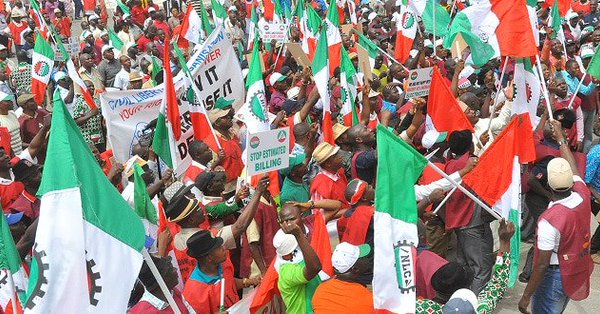
Nigeria's main unions will begin an indefinite nationwide strike over the minimum wage on Thursday, after talks with the government broke down, the leader of an umbrella labor body representing them said on Wednesday.
- Country:
- Nigeria
Nigeria's main unions will begin an indefinite nationwide strike over the minimum wage on Thursday, after talks with the government broke down, the leader of an umbrella labor body representing them said on Wednesday.
President Muhammadu Buhari's government had vowed to review the minimum wage, particularly in the wake of a fuel price hike and currency devaluation in the last two years both aimed at countering the effects of a plunge in global oil prices, Nigeria's economic mainstay.
Unions want the government to almost triple the monthly minimum wage to around 50,000 nairas ($164) from 18,000 nairas.
"We are going ahead with our planned activities," Peter Ozo-Eson, general secretary of the Nigerian Labour Congress (NLC), told Reuters.
Labour Minister Chris Ngige met union representatives on Wednesday to discuss the issues and threat of a strike.
"This wasn't really a formal meeting," Ngige told reporters in Abuja afterward. "We are convening a meeting on Thursday, Nov. 4."
If that meeting results in the government meeting union demands, the president's economic team would need to approve the decision, which must then also go before parliament, the Ngige said.
The NLC represents workers across most sectors of Africa's biggest economy, including parts of the oil industry such as tanker drivers and staff at loading depots. Prolonged industrial action has the potential to cause widespread disruption.
A 2016 strike organized by the umbrella body following an increase in fuel prices shut banks, schools, and parts of the transport system.
Analysts say the strike action, which comes months ahead of the February 2019 presidential election, is designed to ramp up pressure on the government to produce a minimum wage proposal.
Buhari is seeking a second term at next year's poll and his economic record is likely to come under scrutiny on the campaign trail. He won the 2015 election after pledging to fix the economy, tackle corruption and boost security.
Last year Nigeria emerged from a recession, its first in a quarter of a century. But growth remains fragile and consumer spending is yet to recover in a country where the United Nations estimates that most people live on $2 a day or less.
ALSO READ
-
South Korean Stance on Middle East Conflict
-
France's Bold Budget Battle: A €54 Billion Deficit Dilemma
-
Unleashing Market Forces: The Path to Reviving Britain's High Streets
-
Argentina Targets Companies with Falklands Bill Amid Tensions
-
Government Dismisses Claims of External Influence on UPI MDR Policy


 Google News