

Nigeria's Labour Unions Suspend Strike to Negotiate Minimum Wage
Nigeria's main labour unions have paused an indefinite strike to negotiate a new minimum wage with the government. The strike, which disrupted national services, will resume if no agreement is reached. The unions demand a significant increase from 30,000 to 494,000 naira, while the government is yet to announce a final amount.
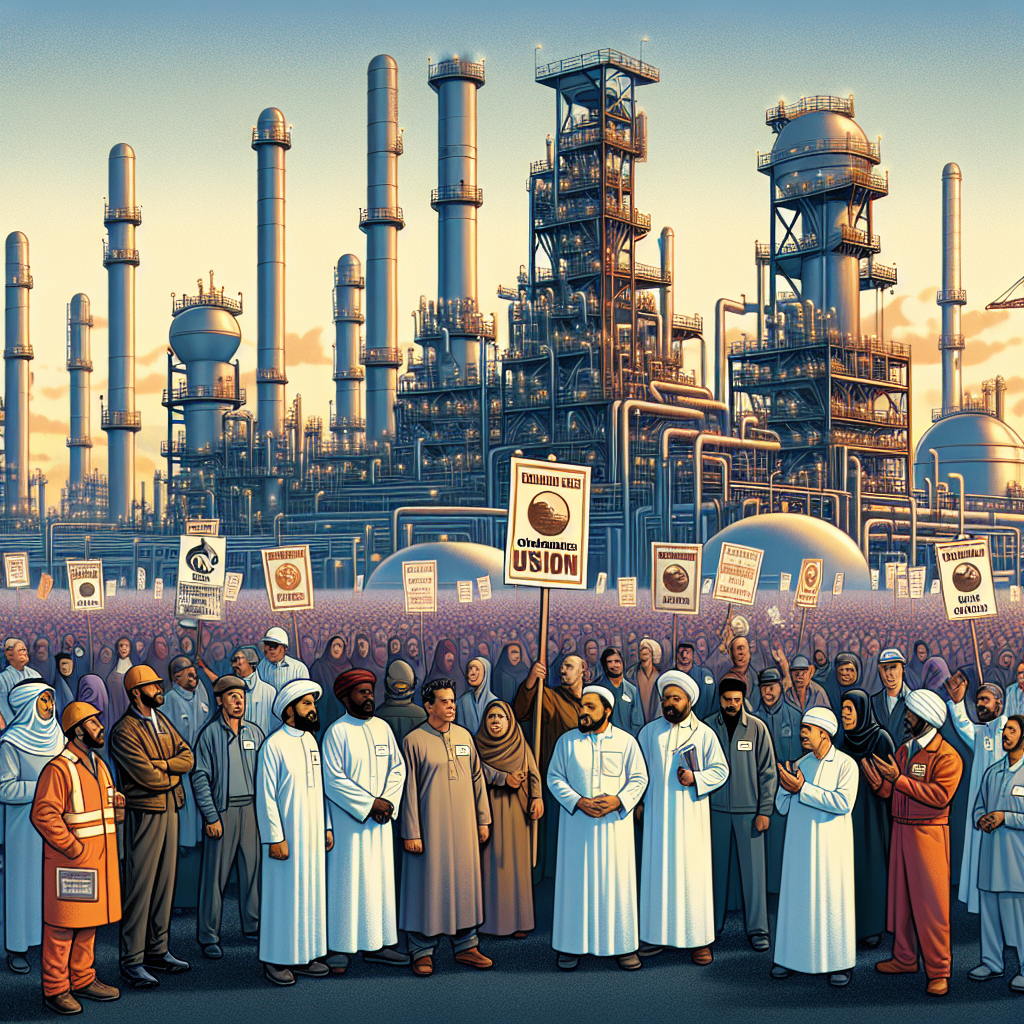
Nigeria's main labour unions suspended an indefinite strike for a week on Tuesday in order to continue talks with the government over a new minimum wage after reforms in the West African nation caused inflation to spike, worsening a cost of living crisis. Nigeria's two biggest union federations, the Nigerian Labour Congress (NLC) and the Trade Union Congress (TUC), shut down the national grid and disrupted flights across the country on Monday as they began an indefinite strike over the government's failure to agree a new minimum wage.
Unions and the government met late on Monday for talks where the government said it was open to a higher monthly minimum wage than the amount of 60,000 naira ($41.38) it had proposed. But a new amount is yet to be announced. The unions had demanded a 16-fold rise in the minimum wage to 494,000 naira a month, from 30,000 naira.
"After an extraordinary ... meeting today, it was decided that the ongoing strike be suspended for the next one week and we will continue negotiation with the government ... on minimum wage," TUC president, Festus Osifo, said. "Failure on the part of government to conclude with labour within one week shall prompt the organised labour to resume the strike without further notice," said Tayo Aboyeji, an NLC secretary.
Labour leaders met with their affiliates on Tuesday and Osifo told reporters that the government had been given a one-week 'grace' period to come up with an agreeable minimum wage. President Bola Tinubu has been under pressure to reverse his decision to scrap a popular petrol subsidy that had kept fuel prices low but was costly on government finances.
Earlier, the head of the Nigeria Union of Petroleum and Natural Gas Workers (NUPENG) said it was holding off from recalling workers from offshore rigs pending the outcome of talks between the government and labour on Tuesday. NUPENG represents workers across the oil and gas sectors, including upstream oil platform workers, fuel tanker drivers, and pump attendants and its decision on the strike is closely watch by oil markets and could lead to a significant escalation of the unions' dispute with the government.
Nigeria, Africa's largest oil producer, relies on oil and gas for around 90% of foreign exchange earnings and about half for its budget. ($1 = 1,450.00 naira) (Additional reporting by Camillus Eboh in Abuja; Writing by Chijioke Ohuocha and Elisha Bala-Gbogbo; Editing by Andrew Cawthorne, Louise Heavens and Emelia Sithole-Matarise)
ALSO READ
-
Nigeria Launches $5 Billion AgriConnect Plan to Back Farmers and Create 2.5m Jobs
-
AfDB and Nigeria Strengthen Corruption Safeguards to Protect Development Projects
-
Crackdown on Ansaru: Trial of Key Suspects Begins
-
Nigerian Fintech Overload: The Rush for Dangote Refinery Shares
-
Nigeria's Bold Move for State Police Forces


 Google News