

Navigating the Storm: How a New Index is Helping the World Tackle Global Shipping Disruptions
The article explores the World Bank's development of the Global Supply Chain Stress Index (GSCSI), a metric designed to assess and quantify disruptions in global maritime supply chains. It highlights the impact of recent global events on shipping routes and how the GSCSI aims to improve the resilience of maritime infrastructure.
 CoE-EDP, VisionRI
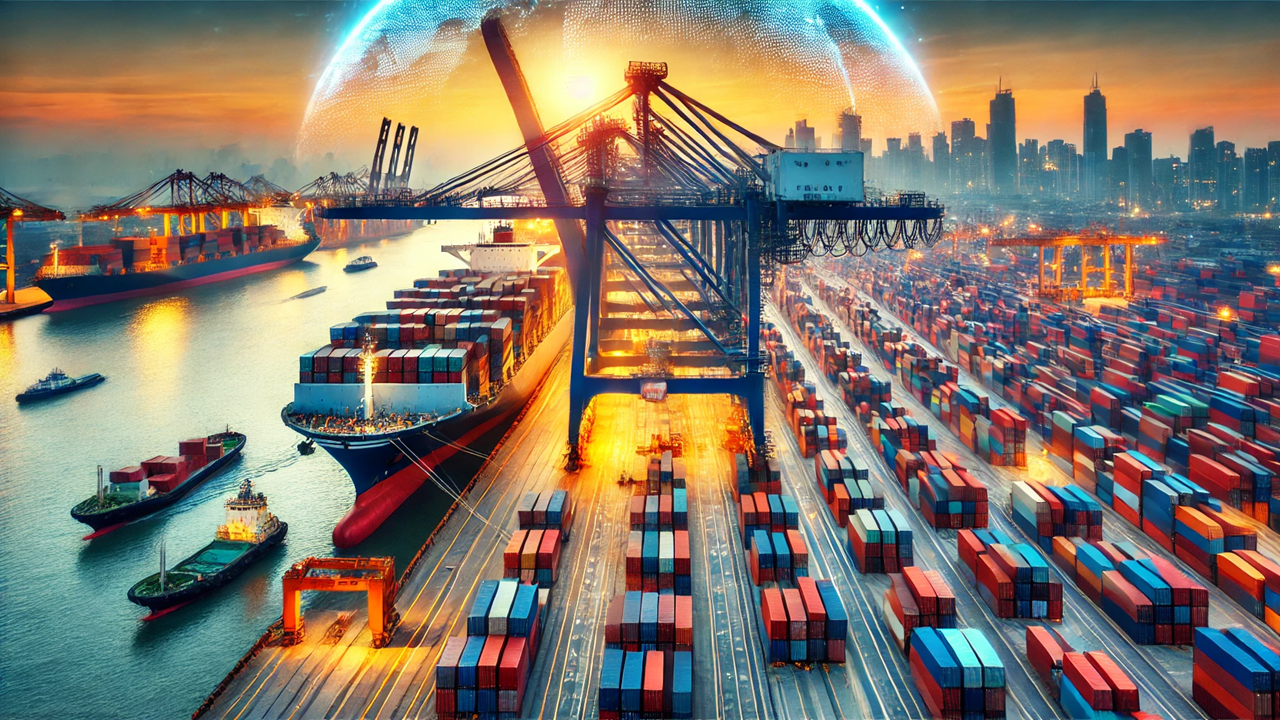
A New Tool for a Global Problem
In the wake of the COVID-19 pandemic, geopolitical tensions, and environmental challenges, global shipping routes have faced unprecedented disruptions. These disturbances have sent shockwaves across global supply chains, affecting everything from consumer goods to essential raw materials. To address these challenges, the World Bank has introduced a pioneering tool: the Global Supply Chain Stress Index (GSCSI). This new metric offers a way to quantify and assess the scale of these disruptions, providing critical insights into the health of global trade.
Understanding the Global Supply Chain Stress Index
The GSCSI was developed in 2021 by the World Bank's Macroeconomics, Trade, and Investment Global Practice. The index is a response to the need for a unified way to measure and understand the disruptions that have plagued global supply chains in recent years. By using Automatic Identification System (AIS) tracking data, the GSCSI provides a detailed analysis of ship movements and delays, offering a clear picture of the global maritime landscape.
The index measures the equivalent stalled ship capacity in twenty-foot equivalent units (TEUs), a standard unit used to describe a ship's cargo-carrying capacity. By analyzing this data at the port, country, regional, and global levels, the GSCSI can highlight where disruptions are occurring and their potential impact on global trade. This granular information is invaluable for targeted interventions, helping policymakers and industry leaders to make informed decisions that enhance the resilience of maritime infrastructure and networks.
Why the GSCSI Matters
The significance of the GSCSI extends beyond just measuring delays. It explains why we've seen a surge in shipping rates during times of disruption. For instance, when global stress increases by 1 million TEUs, the Shanghai Containerized Freight Index—a key indicator of shipping costs—can rise by as much as $2,300 per TEU. This correlation underscores the direct impact that supply chain disruptions have on the cost of goods and, ultimately, on global economies.
The GSCSI provides a way to predict and respond to these disruptions, allowing for better preparedness and quicker recovery when global shipping routes are affected. This has never been more important, as the world continues to grapple with the aftershocks of the COVID-19 pandemic and new challenges such as geopolitical conflicts and climate change-related events.
A Future with More Resilient Supply Chains
The development of the GSCSI is part of a broader effort by the World Bank to foster resilience in global supply chains. As the paper highlights, the goal is not just to measure disruptions but to use this data to improve global trade infrastructure and operations. By providing a clear metric of stress in the maritime sector, the GSCSI helps identify where investments are needed most, whether in port infrastructure, logistics, or new technologies that can mitigate the impact of future disruptions.
Moreover, the GSCSI's focus on real-time data allows for continuous monitoring and adjustments, making it a dynamic tool that evolves with the changing landscape of global trade. This adaptability is crucial as the world faces increasingly complex and interconnected challenges.
Navigating a Complex Future
As global trade becomes more interdependent and vulnerable to various disruptions, tools like the GSCSI are essential for navigating the complexities of the modern world. The World Bank's initiative provides not only a way to measure and understand these disruptions but also a path forward for building more resilient and reliable global supply chains.
By shining a light on the stress points within the maritime sector, the GSCSI empowers stakeholders to take proactive steps in safeguarding the flow of goods around the world. In doing so, it plays a critical role in ensuring that the global economy can weather the storms of the future, no matter how unpredictable they may be.
- FIRST PUBLISHED IN:
- Devdiscourse
ALSO READ
-
Tanzania’s Growth Gains Need Better Jobs to Bring Lasting Prosperity to More Families
-
Tanzania’s Economy Gains Momentum, but Better Jobs Hold the Key to Broader National Prosperity
-
Tanzania’s Growing Economy Puts Better Jobs at the Heart of Its Next Growth Chapter
-
From Debt Pressure to AfCFTA: Africa Searches for a New Formula to Finance Growth and Jobs
-
World Bank Backs Tonga’s Push for Better Jobs and Business Growth With $15M Grant


 Google News