

From Epidemic to Elimination: How Tajikistan Defeated Malaria and Stayed Alert
Tajikistan successfully eliminated malaria through decades of coordinated public health efforts, robust surveillance, and international support, earning WHO certification in 2023. Despite remaining ecologically vulnerable, the country maintains strict prevention measures to avoid re-establishment.
 CoE-EDP, VisionRI
Tajikistan's journey to malaria elimination is a testament to scientific resilience, state coordination, and strategic global partnerships. Detailed in the World Health Organization's 2025 report "Elimination of malaria and prevention of re-establishment in Tajikistan," this public health triumph is built on the tireless work of national institutions such as the Republican Tropical Diseases Center (RTDC), the Centre for Tropical Diseases Control (CTDC), the State Sanitary and Epidemiological Surveillance Service (CSSES), and the Institute of Malaria and Medical Parasitology. These bodies, in collaboration with global partners like WHO, the Global Fund, USAID, UNICEF, and MERLIN, formed a nationwide network that delivered diagnostics, surveillance, case management, and vector control in both crisis and calm.
From Elimination to Epidemic: A Rollercoaster History
Malaria was once a major public health burden across Tajikistan's lowlands, with both Plasmodium vivax and P. falciparum circulating widely. During the Soviet era, the NMCP launched ambitious elimination campaigns that brought incidence to nearly zero by 1960. However, the country's southern border with Afghanistan continued to pose a risk, and sporadic outbreaks occurred over the following decades. When the Soviet Union collapsed and Tajikistan fell into civil conflict in the early 1990s, its public health infrastructure unraveled. Hundreds of thousands of returning refugees carried malaria back with them from Afghanistan, creating fertile conditions for epidemic resurgence. By 1997, reported cases reached nearly 30,000, and unofficial estimates suggested over 200,000 cases. Alarmingly, Tajikistan became the only country in the WHO European Region to witness re-established P. falciparum transmission.
Crisis Response and Turning the Tide
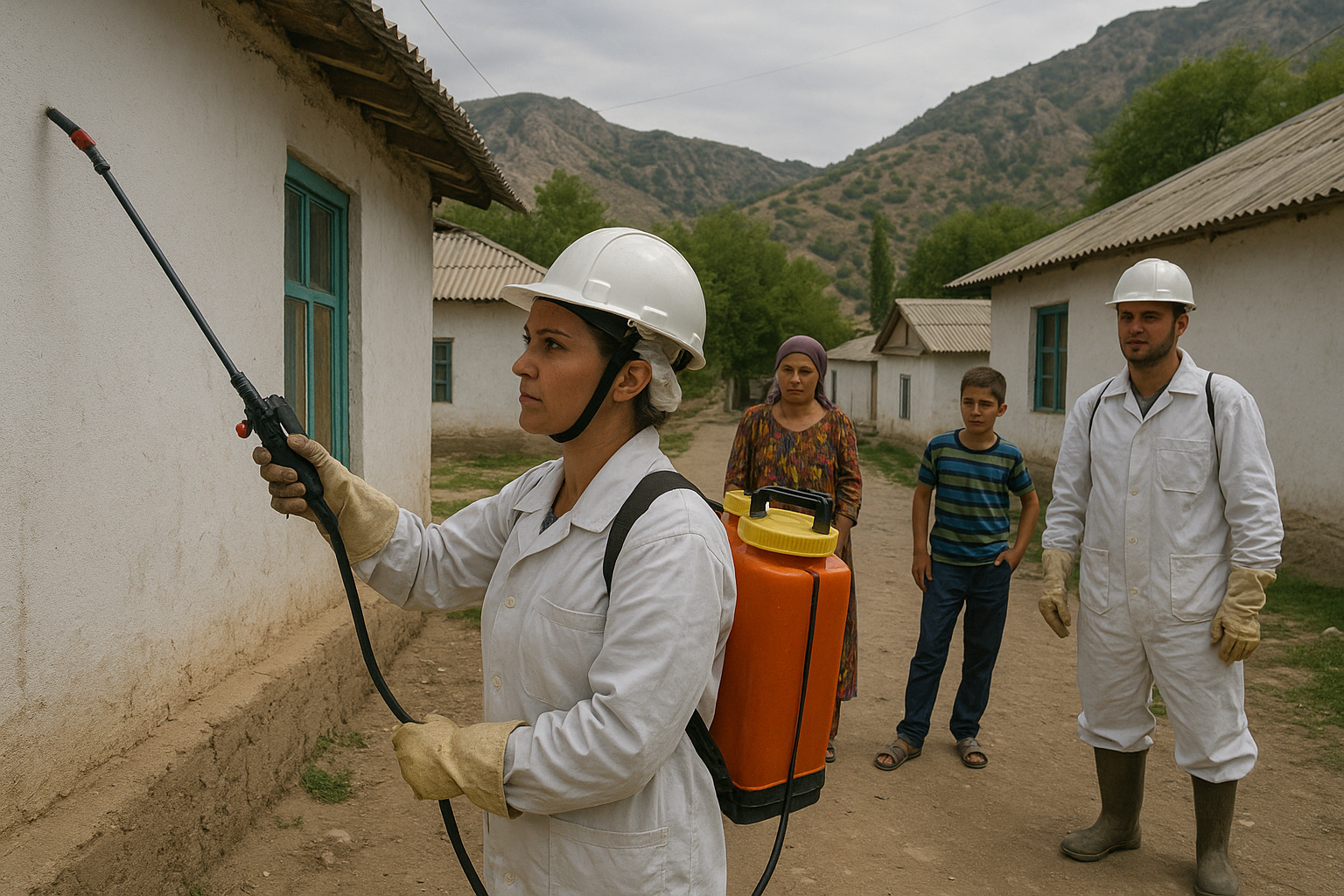
Facing this resurgence, the Tajik government launched the National Programme for the Control of Tropical Diseases (1997–2005), with strategic and technical support from WHO. The programme took a multi-pronged approach: aggressive indoor residual spraying, larval source management using Gambusia affinis, mass prophylaxis, community education, and deployment of mobile antimalarial teams. Surveillance intensified with both passive case detection in health facilities and active case finding through household visits. The training and redeployment of epidemiologists, parasitologists, and laboratory personnel ensured high diagnostic accuracy and rapid case reporting.
These interventions were crucial in reversing the epidemic. Reported cases fell by over 50% in just two years, and by 2009, P. falciparum transmission had been halted. With support from international donors, most notably the Global Fund, efforts shifted toward full elimination. Tajikistan's 2011–2015 elimination programme emphasized micro-stratification of risk zones, reactive case detection, entomological mapping, and quality-assured laboratory diagnostics. Every case was confirmed by microscopy, recorded in a national database, and followed up with epidemiological and entomological investigations. The final indigenous P. vivax cases were reported in 2014. Since 2015, all detected malaria cases have been imported.
Borderlines of Risk and the Cost of Complacency
Despite the elimination of local transmission, Tajikistan remains vulnerable. Its geography includes sprawling river valleys and swampy lowlands near the Afghan border, ideal breeding conditions for Anopheles mosquitoes. Local malariologists warn of the risk of infected mosquitoes flying across the Pyanj River from malaria-endemic Afghan provinces, where settlements often lie less than a kilometer from Tajikistan's frontier. Furthermore, the construction of trade markets and cross-border bridges in the 2000s, designed to boost economic integration, also increased the risk of human and vector-borne malaria importation.
In response, Tajikistan introduced a robust post-elimination programme focused on preventing re-establishment. Territories were stratified based on receptivity and importation risk. Surveillance continued year-round, supported by rapid diagnostic testing, household visits, and case investigations. Border troops were supplied with insecticides, LLINs, and antimalarial medication. Entomological surveillance, anchored by CTDCs in high-risk provinces, monitored vector breeding sites and informed targeted spraying. In areas like Khatlon and GBAO, integrated vector control included IRS and the continued use of Gambusia affinis.
A Public Health Blueprint for the Region
Tajikistan's success is built not only on top-down policy but on the strength of its health system and people. The malaria surveillance network remains deeply embedded in the general health infrastructure, with CTDCs and CSSES working alongside district hospitals and primary care providers. During the elimination phase, over 200,000 malaria tests were conducted annually, and rapid case notification systems allowed national-level response within 24 hours of any detection. The health workforce, including epidemiologists, entomologists, and laboratory specialists, was constantly trained and re-trained to maintain vigilance. Mobile teams, often deployed to remote or outbreak-prone areas, served as first responders with expertise in all facets of malaria management.
Sociologically, the burden of malaria affected more than just isolated individuals. Analysis from 2010–2014 showed that 65% of indigenous cases occurred in Khatlon province, particularly in agricultural communities near Afghanistan. Males were slightly more affected than females (53.1% to 46.9%), and a significant portion of cases occurred among children, housewives, school students, and farmers. Soldiers stationed near the frontier also represented a high-risk group. Seasonal patterns revealed spikes in August and September, tied closely to peak mosquito activity during the warm summer months.
Tajikistan's WHO certification as malaria-free in 2023 is not the end of the story but the beginning of a new era of vigilance. It stands as a model for countries transitioning from elimination to prevention of re-establishment. With continued international cooperation, robust health infrastructure, and sustained political will, Tajikistan demonstrates that even in challenging geopolitical and ecological contexts, malaria can not only be defeated, but it can also be kept at bay. The country's story offers hope and a replicable blueprint for nations still facing the threat of this ancient disease.
- FIRST PUBLISHED IN:
- Devdiscourse


 Google News