

US-China trade optimism boosts global markets with rally in various stocks
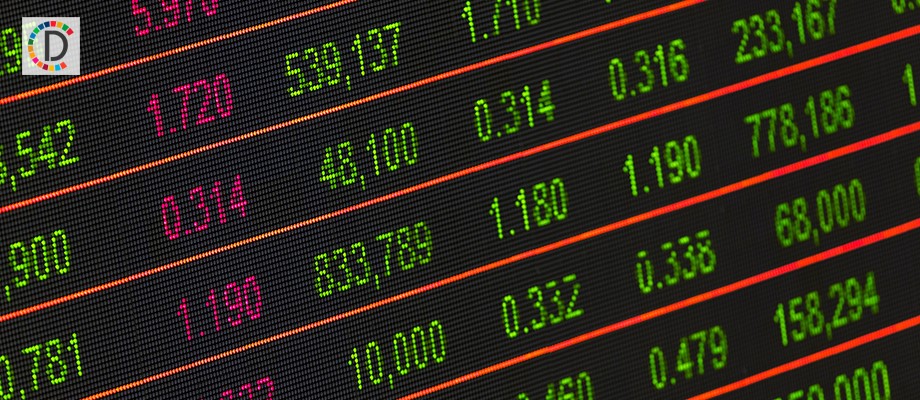
Global stocks jumped to their highest in more than a month on Friday after a report suggested progress towards resolving the trade dispute between the United States and China. E-mini futures for the S&P 500 index were up about 0.2 per cent and Dow futures were up about 0.3 per cent, indicating a higher open on Wall Street. European stocks surged to their highest since early December, with the pan-European STOXX 600 index up over 1 per cent by afternoon trade in London. Trade-exposed indexes and stocks gained the most, with autos rising nearly 2 per cent and Germany's exporter-heavy DAX up 1.5 per cent.
The gains followed the lead of stocks in Asia overnight, which in turn took their cue from Wall Street's performance on Thursday. The Wall Street Journal reported on Thursday that U.S. Treasury Secretary Steven Mnuchin discussed lifting some or all tariffs imposed on Chinese imports and suggested offering a tariff rollback during trade discussions scheduled for Jan. 30. U.S. stocks rallied on the report but pared some of the gains after the Treasury denied Mnuchin had made any such recommendation.
The Journal also reported that U.S. Trade Representative Robert Lighthizer resisted Mnuchin's idea. "Even though the Treasury quickly denied the report, markets didn't retrace much, which implies that traders believe the news is credible – or at least that the overall negotiating process is moving in the right direction," said Marios Hadjikyriacos, investment analyst at online broker XM.
MSCI's broadest index of Asia-Pacific shares outside Japan added 0.75 per cent. The index has gained 1.5 per cent this week. The Shanghai Composite Index was up 1.4 per cent. Australian stocks rose half a per cent, South Korea's KOSPI advanced 0.8 per cent and Japan's Nikkei gained more than 1 per cent to a one-month high. The gains across regions helped lift the MSCI All-Country World Index to its highest in more than a month. The index, which tracks stocks across 47 countries, was set for its fourth straight weekly gain, its longest weekly winning streak in six months. It was last up almost half a per cent.
Chinese Vice Premier Liu He will visit the United States on Jan. 30 and 31 for the latest round of trade talks aimed at resolving the dispute between the world's two largest economies. Indicators released recently showed signs that the Chinese economy is losing momentum. A report due on Monday is expected to show China's fourth-quarter economic growth slowed to its weakest since the global financial crisis, according to a Reuters poll, as demand faltered at home and abroad.
Against a basket of currencies, the dollar was set for its first weekly rise in five, though it was flat on the day. The euro rose 0.1 per cent to $1.14040. It was on track for a weekly loss of 0.7 per cent. The 10-year Treasury yield stood at 2.7716 per cent, its highest in three weeks. The pound was 0.4 per cent lower at $1.2932, after climbing to a two-month peak of $1.3001 in hopes that Britain can avoid a no-deal Brexit. British retail sales fell for the first time since March during the three months to December, confirming a slowdown in consumer spending as Brexit draws near.
Prime Minister Theresa May survived a vote of confidence this week, removing some political uncertainty for now. The longer-term prospects for Britain and its markets remained far from clear, though. U.S. crude oil futures extended Thursday's gains, adding 1.5 per cent to $52.84 per barrel. Brent crude was up 1.3 per cent at $61.99 per barrel and on track to gain roughly 2 per cent on the week. Elsewhere in commodities, palladium was 1.2 per cent higher at $1,412.50 an ounce after rising to an all-time high of $1,434.50 overnight.
Demand has recently outstripped supply for the metal, used in emissions-reducing catalytic converters for cars. Palladium also appeared to get a boost from hopes for further government stimulus in China, the world's biggest auto market. Spot gold was down half a per cent at $1,285.03 an ounce, after relinquishing its spot as the most expensive precious metal to palladium early in December.


 Google News