

Pessimism over world economy, trade disputes take toll on equity markets
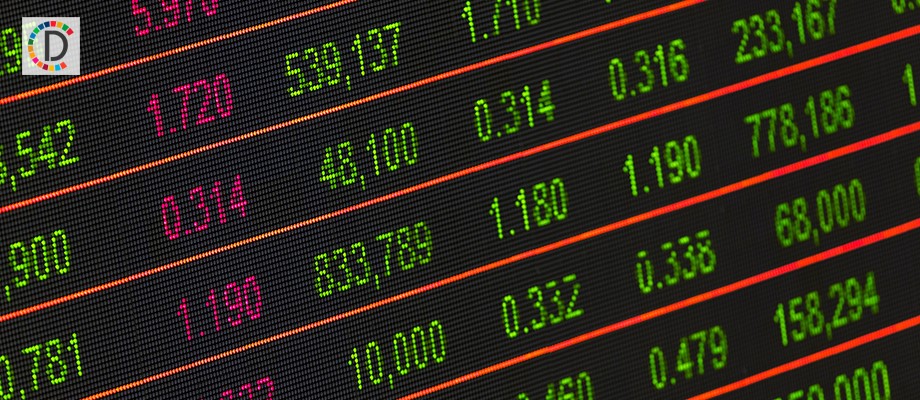
Pessimism about global growth drove down world shares and commodity markets on Tuesday and left investors seeking refuge in the dollar, government bonds and gold. The International Monetary Fund's warning of a darkening outlook on Monday, after China's confirmed its slowest growth rate in nearly 30 years, continued to weigh on the mood.
European shares followed Asia into the red as disappointing earnings from Swiss bank UBS compounded what had been a catastrophic 2018 for Europe's banking sector, which lost nearly 30 per cent of its value over the year. In its World Economic Outlook report, the IMF predicted the global economy would grow at 3.5 per cent in 2019 and 3.6 per cent in 2020, down 0.2 and 0.1 percentage point respectively from last October's forecasts.
The downgrades heavily reflected weakness in Europe though, with Germany hurt by new car emission rules, Italy under market pressure due to Rome's recent budget standoff with the European Union and Brexit worries aplenty too. "We have seen a little bit of a pullback, but whether it's the IMF growth downgrade or China-related is neither here nor there," said CMC Markets' senior analyst Michael Hewson.
He pointed to the strong rebound markets like Germany's Dax has seen since the end of December as well as other major global stock markets. "We are at the top end of the range for this year and given the global uncertainty investors are probably taking the view that it is probably wise to take a bit of profit off the table."
Futures markets pointed to another weak start for the U.S. later although the mood had improved a touch since Asian trading with Wall Street futures last off 0.5-0.7 per cent. In Asia, losses had been led by Chinese shares, with the blue-chip index off 1.2 per cent. Japan's Nikkei skidded 0.5 per cent, Hong Kong's Hang Seng index closed down 0.8 per cent and Sydney faltered 0.5 per cent.
In another sign of risk aversion, the Australian dollar, often used as a liquid proxy for China investments, eased 0.3 per cent to $0.7134, putting it on track for a third straight session of losses. The same worries had also sent copper, used in electrical wires and vehicles, drifting lower in the metals markets.
BREXIT PLANS
In the currency markets, the dollar held at a near three-week high as investors sought the relative safety of the U.S. currency. That knocked the euro and most emerging market currencies, many of which have had a decent start to the year. Sterling was a shade firmer at $1.29 after data showed British workers' pay growth hit a new 10-year high and employment had grown by much more than expected in the three months to the end of November.
Otherwise, traders were still waiting to see whether UK Prime Minister Theresa May can push her Brexit plans through the country's bitterly divided parliament. May had offered tweaks on Monday by seeking further concessions from the European Union on a backup plan to avoid a hard border between the British-administered province of Northern Ireland and the Irish Republic.
But she had also refused to rule out leaving the EU at the end of March without any deal. "Any upside for sterling in the near term may be limited," said Capital Economics analyst Liam Peach. "Uncertainty would continue during the extended negotiations and there is no guarantee that it would last for only a short period of time."
There was demand too for the safe-haven yen with the Japanese currency last buying at 109.41 per dollar. The euro was near the floor of its recent trading range at $1.1358. Against a basket of currencies, the dollar was barely changed at 96.393. In commodities, the global growth worries pulled oil prices lower with Brent down 55 cents at $62.19 and U.S. crude futures off 39 cents at $53.41.
Eurozone government bond yields also fell. Most 10-year yields were down two basis points on the day with Germany's at 0.225 per cent compared to Friday's one-month high close to 0.28 per cent. The European Central Bank holds its first meeting of the year on Thursday.
ALSO READ
-
From Oil Shale to Wind Power: Estonia’s High-Stakes Plan for Cheaper, Secure Electricity
-
Colombia's IMF Gamble: Can Fiscal Reform Restore Confidence Without Sacrificing Economic Growth?
-
African Venture Capital Gets a Boost as Oxford Programme Builds Investor Connections
-
From Market Access to Market Power: What African Firms Need to Capture AfCFTA’s Trade Gains
-
Too Many Homes, Too Little Spending: Inside China’s Deepening Housing and Consumption Divide


 Google News