

Amnesty: Hundreds detained as Egyptian police quash protests
Riot police forcibly dispersed the limited demonstrations over economic grievances that erupted across several impoverished, rural villages over the past few weeks, firing tear gas and birdshot, according to a new report from London-based rights group Amnesty International. The group said it verified videos showing officers with rifles out in force, in two cases beating unarmed protests with batons and firing birdshot at those running away.
- Country:
- Egypt Arab Rep
Egyptian authorities have arrested hundreds of people in their effort to clamp down on a spate of small but exceptionally rare protests across the country, a global watchdog and human rights lawyers said Friday. Riot police forcibly dispersed the limited demonstrations over economic grievances that erupted across several impoverished, rural villages over the past few weeks, firing tear gas and birdshot, according to a new report from London-based rights group Amnesty International.
The group said it verified videos showing officers with rifles out in force, in two cases beating unarmed protests with batons and firing birdshot at those running away. Two men were killed in the crackdown, the group said, one hit with birdshot by security forces south of Cairo and another during a police raid in the southern city of Luxor. Hundreds have landed in jail, according to estimates from multiple lawyers, and remain in custody pending investigations into murky terrorism-related charges, a common tool used by state prosecutors to silence critics and quash dissent. From interviews with eyewitnesses, activists, family members and lawyers, Amnesty said it had confirmed that 496 people remain in detention.
In an unusual show of defiance, small groups of Egyptians dared to join street demonstrations on the anniversary of short-lived protests against the authoritarian rule of President Abdel Fattah el-Sissi that flared last year. "The fact that these protesters took to the streets while knowing the very high risk to their lives and safety they were taking shows how desperate they were to demand their economic and social rights," said Philip Luther, Amnesty's regional research and advocacy director.
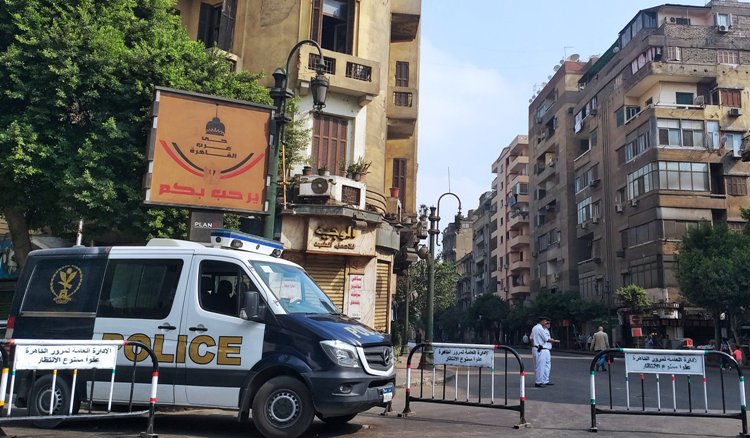
Last September, Egyptians violated a long-standing protest ban to rally in Cairo and several other cities, heeding calls from former military contractor Mohamed Ali, a self-exiled dissident. In a series of widely watched videos, Ali accused el-Sissi's government of wasting money on lavish projects while ordinary Egyptians struggled under harsh austerity measures. To stamp out the demonstrations, the government arrested thousands and planted security forces at intersections. This year, the turnout was much smaller, confined to poor neighborhoods in villages rather than major streets in the capital. Still, the government response was swift and decisive.
Khaled Ali, a well-known Egyptian human rights lawyer, told The Associated Press that he documented 800 arrests following protests in the suburb of Giza, the northern city of Alexandria, and towns in southern Egypt, including Luxor and Aswan. He said police used electric shocks when interrogating one of his clients who was picked up in the northeastern city of Suez. A lawyer at the Egyptian Front for Human Rights, a monitoring group, said he represents 50 defendants across five different provinces caught in the most recent crackdown but knows of a total of 1,200 people detained last month from records shared among lawyers. He said officers denied 14 of his clients at a prison in Giza adequate food and water, and routinely beat them during interrogations. In 90% of the cases, he said, those arrested had not participated in street protests but were pulled from their homes after rallies died down.
"This is why we call the arrests arbitrary," he said, speaking on condition of anonymity for fear of reprisals. "The authorities are under pressure. They can't let demonstrations happen without arrests." One resident of Aswan confirmed to the AP that his brother, a village leader, disappeared after protests broke out in the city on Sept. 20. Four days later, he resurfaced at the local prosecution office and was ordered detained for 15 days on charges of misusing social media and joining illegal demonstrations. He spoke on condition of anonymity for the same reason.


 Google News