

UN chief urges Libya cease-fire, warns its future at stake
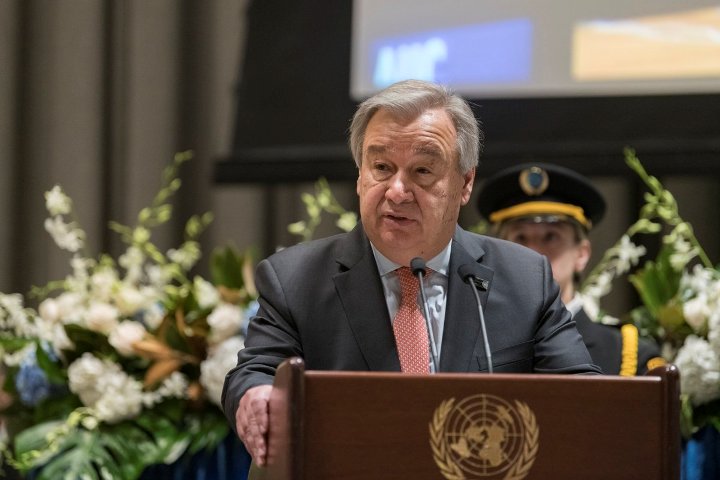
The United Nations chief on Monday urged world powers and other countries with interests in Libya's long-running civil war to keep working toward a lasting cease-fire between its rival governments, warning that the country's very future "is at stake.” Secretary-General Antonio Guterres implored participants at a virtual ministerial meeting co-hosted by the United Nations and Germany to encourage and support peace efforts “not only in words but in actions,” including full and immediate implementation of a widely violated UN arms embargo.
- Country:
- Germany
The United Nations chief on Monday urged world powers and other countries with interests in Libya's long-running civil war to keep working toward a lasting cease-fire between its rival governments, warning that the country's very future "is at stake." Secretary-General Antonio Guterres implored participants at a virtual ministerial meeting co-hosted by the United Nations and Germany to encourage and support peace efforts "not only in words but in actions," including full and immediate implementation of a widely violated UN arms embargo. "The violations of the embargo are a scandal and call into question the basic commitment to peace of all involved," he said in remarks to the closed meeting, released by the UN "Foreign deliveries of weapons and other military support must stop immediately." Libya was plunged into chaos after a NATO-backed uprising in 2011 toppled longtime dictator Moammar Gadhafi, who was later killed. The country has since split between rival east- and west-based administrations, each backed by armed groups and foreign governments.
Military commander Khalifa Hifter and his self-styled army launched an offensive in April 2019, trying to capture Tripoli. But his campaign collapsed in June when the Tripoli-allied militias, with Turkish support, gained the upper hand, driving his forces from the outskirts of Tripoli and other western towns.
Hifter is supported by Egypt, the United Arab Emirates and Russia. Turkey, a bitter rival of Egypt and the UAE in a broader regional struggle over political Islam, is the main patron of the Tripoli forces, which are also backed by the wealthy Gulf state of Qatar. Germany has been trying to act as an intermediary in the conflict, and in January held a summit in Berlin where participants from both sides agreed to respect an arms embargo and push Libya's warring parties to reach a full cease-fire. That agreement has been repeatedly violated.
Guterres noted that the Berlin commitments also include restoring due process in Libya and preventing arbitrary detention in the north African nation, stressing that "this, too, is essential." "We must also see the immediate, permanent and unconditional lifting of the blockade on the country's oil production and exports, which has had a crippling impact on the economy," he said. Guterres said the UN mission in Libya is preparing for a series of meetings and consultations "that would facilitate the resumption of inclusive intra-Libyan political talks — Libyan-led and Libyan-owned." Arab League Secretary General Ahmed Aboul-Gheit said the situation in Libya is still "fragile and complex." He called for participants to "unite efforts behind the United Nations to enable it .... to organize the expected Libyan dialogue forum."


 Google News