

Bangladesh to start de-radicalising campaign for jailed Islamists
While the IS immediately claimed responsibility for the attack, Bangladesh repeatedly declined the presence of any foreign terrorist group in the country, attributing the incident to homegrown terrorists.Three years later, a Bangladesh court in 2019 handed death sentences to seven Neo-JMB operatives who were found to have financed the attack, supplied weapons, or assisted in other forms those who directly carried out the massacre.Their case, however, is pending at the high court for a mandatory death reference hearing.
- Country:
- Bangladesh
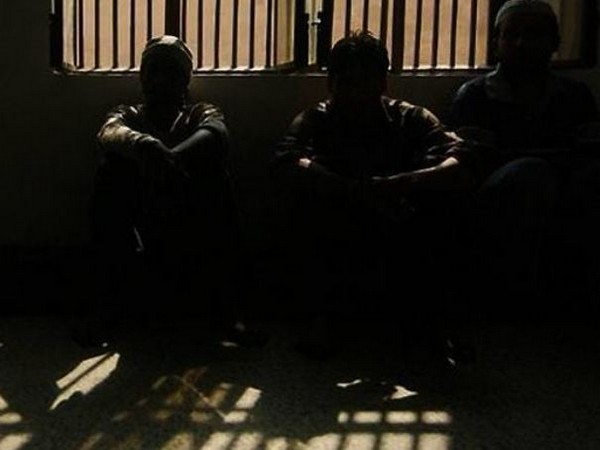
Bangladesh will start a de-radicalization campaign for Islamists in jail as years of security clampdown have waned the strength of the militant outfits in the country since the 2016 terrorist attack on a posh Dhaka restaurant in which 20 people, including an Indian and 16 other foreigners, were killed, officials said here on Friday.
''The initiative is aimed to prevent the jailed militants' return to the path of militancy," said a spokesman of police's Counter-Terrorism and Transnational Crime (CTTC) unit as Bangladesh revisits the horror of the July 1, 2016 night at the Holey Artisan cafe.
CTTC unit chief Mohammad Asaduzzaman said they received the home ministry's approval for the deradicalization campaign to appoint psychologists, clerics, and counterterrorism experts to counsel the militants who were in jail or on bail.
Under the project, the CTTC will rehabilitate 20 militants next year, providing them financial support so they could earn their living and get themselves reintegrated into society after they complete their prison terms, he said, adding, "We will also monitor their activities".
According to home minister Asaduzzaman Khan, 7,000 suspected militants were arrested under the anti-terrorism campaign in 2016.
Five militants, armed with guns and machetes, stormed the Holey Artisan cafe on July 1, 2016 evening and took diners hostage, and carried out the massacre overnight, killing nine Italians, seven Japanese, and an American, an Indian woman, and five Bangladeshis, including two police officials.
Army commandos launched a counter-assault, killing all the attackers on the spot in the early hours of July 2, and rescued the survivors after 12 hours of mayhem during which one restaurant worker was accidentally killed.
An Islamic State or IS-inclined outfit called Neo Jamaat-ul-Mujahideen Bangladesh (Neo JMB) had carried out the massacre. While the IS immediately claimed responsibility for the attack, Bangladesh repeatedly declined the presence of any foreign terrorist group in the country, attributing the incident to homegrown terrorists.
Three years later, a Bangladesh court in 2019 handed death sentences to seven Neo-JMB operatives who were found to have financed the attack, supplied weapons, or assisted in other forms those who directly carried out the massacre.
Their case, however, is pending at the high court for a mandatory death reference hearing. Bangladesh's attorney general's office has said efforts were underway to quicken the process.
The attack forced Bangladesh to launch immediately a massive and protracted nationwide anti-militancy crackdown engaging its military, and specialized police units including the elite anti-crime Rapid Action Battalion (RAB), which also draws personnel from the army, navy, and air force.
A series of crackdowns killed dozens of militants including women, some with their minor children who could not be saved during the armed encounters at the Islamist hideouts.
The CTTC and other security agencies said the Neo-JMB and other outlawed militant groups currently lost their operational strengths while some groups were trying to remain active on online platforms.
Former CTTC chief and police's incumbent additional inspector general Monirul Islam had recently underlined that like many countries, Bangladesh also witnessed a rise in radicalization and "counterterrorism is a complex and lengthy task that requires the involvement of the whole of society".
"The frequent reports of the discovery of militant hideouts and recovery of their materials indicate they became weak, but not inactive," said security analyst retired major general ANM Muniruzzaman, who runs the private Bangladesh Institute of Peace and Security Studies (BIPSS).
Coinciding with the sixth anniversary of the Holey Artisan attack, the anti-terrorism unit (ATU) on Friday released a nationwide study report on militancy, which noted that half of the jailed militants were from low-income families.
The ATU report said 83 percent of the militants hailed from northwestern Bangladesh, still considered a backward region as the study analyzed the data of the past two decades which indicated JMB to be the strongest outfit in terms of manpower.
As per the study, 58.3 percent of jailed militants belonged to JMB, 10.27 to Neo-JMB, 7.72 to Ansarulla Bangla Team (ABT), and 7.39 to Hizbut Tahrir, an outfit that comprised members hailing from rich and educated families, Bengali newspaper Samakal reported.
The rest 16.32 percent of militants belonged to other outlawed groups like Harkatul Jihad Bangladesh (HUJI-B), it said.
The ATU said they carried out the study among 1,217 jailed militants selected on random sampling basis. Most of them were aged between 31 and 40 years.


 Google News