

Don't include borrowings of state entities in debt of state govt: Kerala FM to Union FM
- Country:
- India
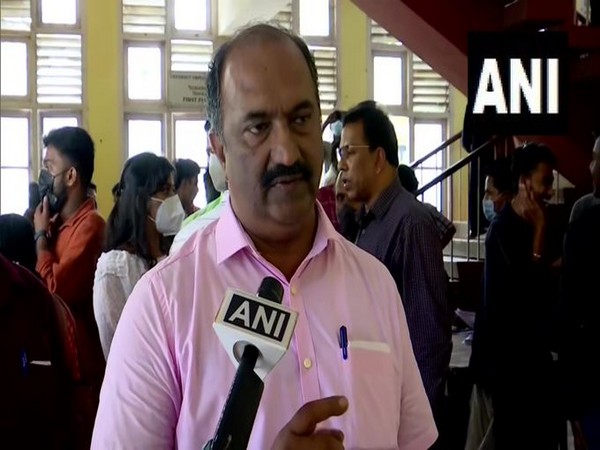
Kerala Finance Minister K N Balagopal has requested Union Finance Minister Nirmala Sitharaman to exclude balances in the public account of the states and borrowings by entities run by them while determining their net borrowing capacity, as was the situation before August 2017, given the grave financial crisis the southern state was facing.
Raising concerns over some actions of the Centre in the past five years regarding fixing of states' net borrowing ceiling, Balagopal has contended that liabilities of state instrumentalities, like statutory bodies and companies, do not come within the definition of state debt.
Therefore, combining the debt of such entities with that of the state government is contrary to the provisions of the Constitution and would ''imperil'' the borrowing powers of the states and ''jeopardize'' their development plans, he has said in his letter dated July 22.
The matter assumes significance as the guarantee given by the state to borrowings by special purpose vehicles like Kerala Infrastructure Investment Board (KIIFB) and the Kerala State Social Security Pension Limited (KSSPL) have been defined as the state government's debt by the Centre.
On July 25, Sitharaman, in a written reply in the Lok Sabha, said that borrowing by state public sector undertakings or their special purpose vehicles (SPVs) will be considered as borrowing by the state government needing consent.
The Kerala Finance Minister, on the other hand, in his letter has contended that ''the liabilities of other instrumentalities of the state government, like statutory bodies and companies, do not come within the definition of state debt''.
''The move to combine the debts of legal entities owned by the state and the general debt of the state government is contrary to the provisions of the Constitution. It would imperil the borrowing powers of the states and jeopardize the development plans it seeks to achieve through its various agencies,'' he has said. Balagopal, in his letter, has further said that Kerala is currently facing a grave financial crisis which poses a serious threat to the government in sustaining spending on welfare schemes for the poor, including housing, education, and health among others.
''The financial health of the state has been seriously affected by a reduction in the revenue deficit grant to the tune of around Rs 7,000 crore this year and loss due to stoppage of GST compensation of around Rs 12,000 crore.
''In addition, the Ministry of Finance has arbitrarily, in the name of off-budget borrowing, made a reduction of approximately Rs 4,000 crore in the net borrowing limits of the State. In all, the State government will have to contend with a reduction of Rs 23,000 crore in the financial resources available to it for financing the budget in the current financial year,'' he has said.
If these realities being faced by Kerala, as it struggles to emerge from the ''economic debilitation wrought by the COVID pandemic'', are not recognized by the Centre, the socio-economic security system that the southern state has built over the last several decades will be in jeopardy, Balagopal has said.
Sitharaman, in her reply in the Lok Sabha, had said that instances of borrowing by certain state public sector companies, SPVs, and other equivalent instruments, where a principal and/ or interest are to be serviced out of the state budgets, had come to the notice of the Ministry of Finance.
She said that such borrowings would be considered as that by the state and would need the consent of the Centre under Article 293 of the Constitution.
On the other hand, Balagopal has contended in his letter that Article 293 can only be ''legitimately'' used for imposing conditions related to a request for borrowing from a state government and not to control or administer its borrowing.
He said that even if for sake of argument Article 293 is made applicable to the overall annual borrowing program of states, it could at most apply to a state's share of open market borrowings and loans from central PSUs and financial institutions like LIC, NABARD, etc., which are regulated administratively by the Union government.
Balagopal has also said that the point of concern was that over the last five years, under the declared objective of fixing the net borrowing ceilings, Article 293 was being allegedly ''used to vitiate the state's independence and make systematic inroads into the financial autonomy of state governments, enshrined in our Constitution.'' ''...the requirement that a state must obtain consent under clause (3) of Article 293 of the Constitution of India is applicable only when a state is either indebted to the Centre, or when the repayment of a loan taken by the state which the Centre has guaranteed remains outstanding,'' he has claimed.
However, what the central government was doing was ''far beyond what is contemplated in the Constitution'', he said.


 Google News