

COLUMN-Europe plays a complex game with China and Taiwan
With worries of a major war in Asia between China and the United States – most likely over Taiwan – continuing to rise, German and European leaders talk in terms of "de-risking" to reduce dependence on China rather than "economic decoupling" altogether. Germany, France, Italy, Sweden and others have spent years building closer relationships with Beijing, selling Chinese firms considerable stakes in infrastructure and other firms.
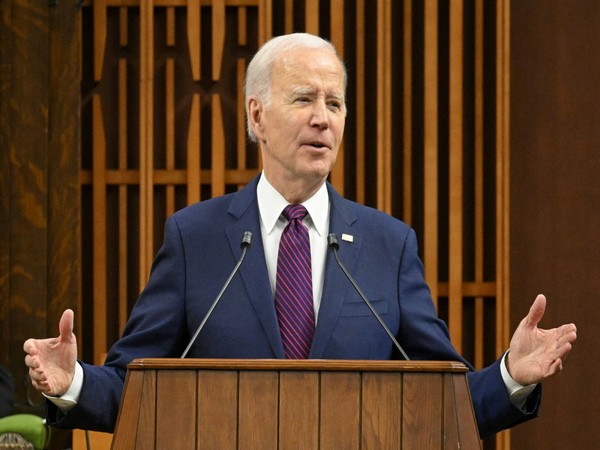
As US President Joe Biden called Chinese counterpart Xi Jinping a "dictator" this week, Chancellor Olaf Scholz and senior German ministers and industrialists met with the second most powerful man in Beijing, Premier Li Qiang, during his visit to Europe. Germany's polite embrace of China this week followed its new National Security Strategy unveiled only a few days earlier, which describes China simultaneously as a "partner, competitor and systemic rival". German officials have accused China of extensive espionage against both the government and German companies, and are keen to "de-risk" relations with China by reducing dependence on the Asian giant for both raw materials and industrial components.
But this points to a much larger shifting dynamic between Europe and China. Even as multiple major European nations including France and Germany look to step up their military postures to confront Russia following the 2022 invasion of Ukraine, they are divided on how to tackle a government in Beijing that finds itself increasingly in open confrontation with the United States. This month also saw Taiwanese Foreign Minister Joseph Wu visit Europe and give a speech in the Czech Republic in which he said the island needed "European friends" to maintain its "status quo" of independence.
While no European nations aside from the Vatican have formal diplomatic relationships with the island, informal contact has increased sharply, particularly from Eastern European nations. Taiwanese chipmaker TSMC has been in discussions since 2021 about potentially opening a manufacturing plant in Germany, although progress has been relatively slow compared to the United States, where an equivalent factory is now under construction.
Both the U.S. and EU have expressed concern over the dependence of their industries on Taiwanese manufactured semiconductors, worried any Chinese invasion of the island might upend the global economy even more seriously than Russia's invasion of Ukraine. Several Eastern European nations including the Baltic states, Poland and the Czech Republic have deliberately improved relations with Taiwan in recent years, part of an increasingly tough line on China shared by European Commission President Ursula von der Leyen and NATO Secretary General Jens Stoltenberg.
Both the EU and NATO have quietly increased their engagement with U.S. allies in the Pacific. Earlier this year, the French head of NATO's defence college was reported to have made a low-key visit to his counterparts in Taipei, while South Korea has emerged as an increasingly important source of weaponry for Eastern Europe, particularly for Poland. But that approach is far from universal. Returning from visiting Xi in Beijing in March, French President Emanuel Macron implied European countries were becoming too subservient to the U.S. on China policy, saying they should not be Washington's "followers" and that "being an ally doesn't not mean being a vassal". He also implied it might not be in Europe's interest to defend Taiwan.
At his joint public appearance with Premier Li, German Chancellor Scholz avoided reference to Taiwan, alongside a host of other contentious issues, including human rights and industrial espionage, while journalists were not allowed to ask questions. DETERRING BEIJING ON TAIWAN, UKRAINE
Behind the scenes, European officials say governments on the continent have two major priorities beyond maintaining economic links: deterring an invasion of Taiwan by convincing Beijing it has too much to lose, and preventing it throwing its industrial weight behind Russia to support its war against Ukraine through significant supplies of weapons. Both of those objectives are shared with the U.S. administration, which this week sent Secretary of State Anthony Blinken to Beijing. That visit saw a meeting with Xi that yielded a commitment to cooperate on issues such as climate change but nothing approaching a substantial breakthrough.
At the annual Shangri-La dialogue in Singapore at the beginning of the month, Chinese Defence Minister Li Shangfu declined a conversation with his U.S. counterpart Lloyd Austin, limiting himself to a handshake. But he held bilateral meetings with EU foreign policy chief Josep Borrell, German Defence Minister Boris Pistorius and British counterpart Ben Wallace. With worries of a major war in Asia between China and the United States – most likely over Taiwan – continuing to rise, German and European leaders talk in terms of "de-risking" to reduce dependence on China rather than "economic decoupling" altogether.
Germany, France, Italy, Sweden and others have spent years building closer relationships with Beijing, selling Chinese firms considerable stakes in infrastructure and other firms. That includes allowing Chinese shipping giant Cosco to buy 24.99% of the port terminal in Hamburg, which styles itself as "China's gateway to Europe". Traffic to China accounts for a third of all container traffic through the port and there are now more than 200 train connections between the city and China every week. CONTRADICTORY POLICIES
The truth is that multiple countries in Europe have found themselves taking what sometimes feel like contradictory decisions. In 2018, Chinese firm Geely purchased 15% of Volvo – but two years later, the Swedish government still joined much of the rest of Europe in restricting China's Huawei's participation in building its 5G network over concerns its security might be compromised. It is a dynamic made more complex by the conflict in Ukraine. Chinese officials have attempted to portray Beijing as a potential peacemaker in that war, although Western officials see little in the way of solid progress. More importantly, China's Xi has made it clear that Beijing opposes the use of nuclear weapons by Russia in Ukraine, seen as tying the Kremlin's hands as some hawkish pro-war elements within Russia demand the potential use of atomic arms.
After meeting China's Li this week, Scholz said he was "thankful" that Beijing continued to oppose nuclear weapons threats, and that it should "exert its influence even more strongly on Russia in this war", adding that it was "important" that China not deliver weapons to Russia. Amongst Eastern European states who consider the threat from Russia existential, keeping China from aligning itself too closely with Vladimir Putin's Kremlin is itself a national security priority.
Without China's industrial might, Russia feels more like a fading empire. If relations between the West unravel to the point that Xi and Putin – or their successors – build their alliance ever closer, that might considerably increase the threat. Keeping a dialogue with Beijing open might seem naïve to some, but for now at least it is keeping Chinese artillery shells from changing the dynamic in Ukraine.


 Google News