

Amit Shah Reviews New Criminal Laws in Delhi, Urges Accountability & Fast Trials
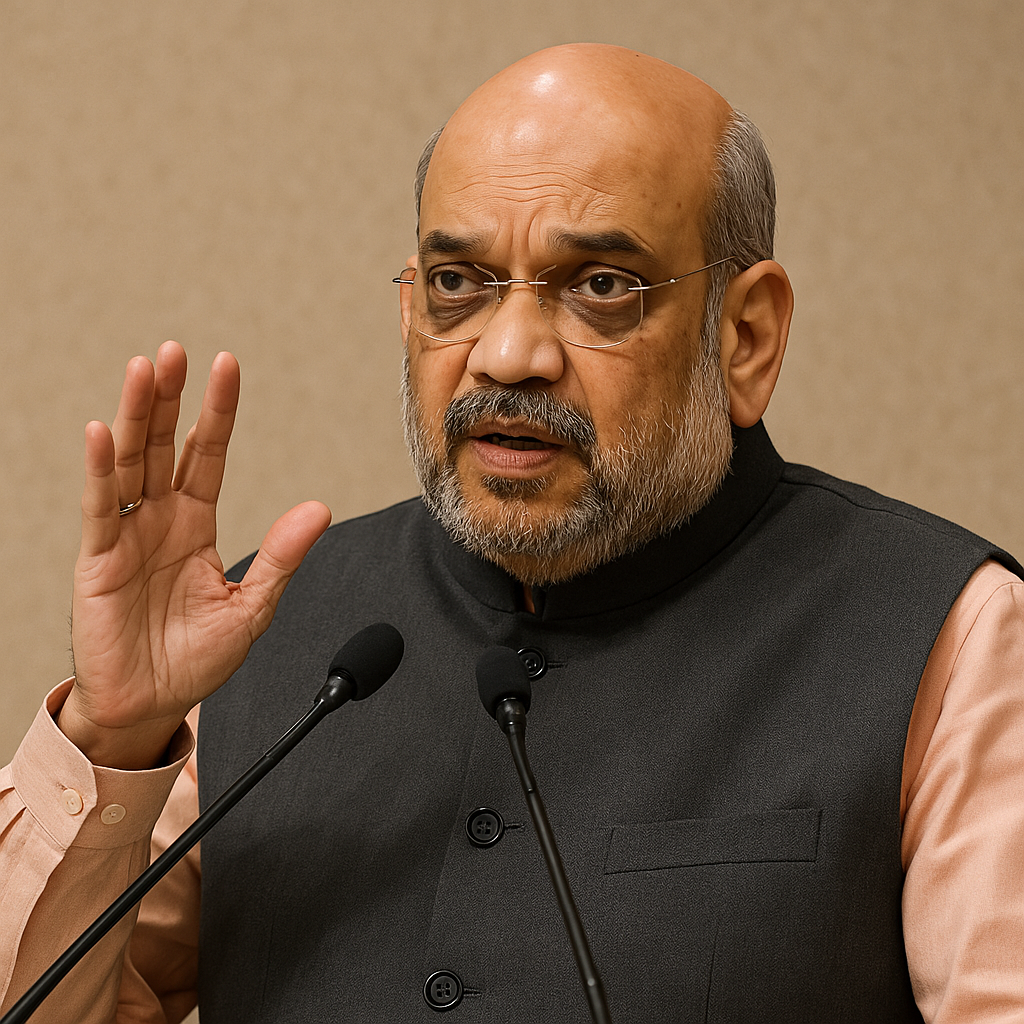
In his address, Shri Amit Shah reiterated that these new laws are not just legal reforms but a transformative push towards ensuring justice delivery is timely, transparent, and citizen-centric.
- Country:
- India
In a high-level meeting held today in New Delhi, Union Home Minister and Minister of Cooperation Shri Amit Shah conducted a comprehensive review of the implementation status of the three newly enacted criminal laws in the National Capital. The meeting was attended by key stakeholders, including the Lieutenant Governor of Delhi, Shri Vinai Kumar Saxena, and newly elected Chief Minister, Smt. Rekha Gupta, alongside top officials from various law enforcement, judicial, and administrative agencies.
The review focused on the integration and operational readiness of the new provisions introduced under the Bharatiya Nyaya Sanhita, Bharatiya Nagarik Suraksha Sanhita, and Bharatiya Sakshya Adhiniyam—laws designed to replace the colonial-era Indian Penal Code (IPC), Code of Criminal Procedure (CrPC), and Indian Evidence Act. These laws were spearheaded by Prime Minister Shri Narendra Modi's administration with the aim of modernizing the Indian justice system.
The review meeting, held at the Ministry of Home Affairs, included participation from the Union Home Secretary, Chief Secretary of Delhi, Commissioner of Delhi Police, Director General of the Bureau of Police Research and Development (BPR&D), Director of the National Crime Records Bureau (NCRB), and several senior officials from both the Ministry and the Delhi Government.
Emphasis on Police Reforms and Efficiency
In his address, Shri Amit Shah reiterated that these new laws are not just legal reforms but a transformative push towards ensuring justice delivery is timely, transparent, and citizen-centric. He stated that the new criminal laws will bring "radical improvements" in the functioning of police forces and are expected to increase their efficiency and accountability, especially at the grassroots level.
He emphasized that monitoring the timeliness of investigations and prosecutions would be essential to the success of the reforms. To that end, the Home Minister issued explicit directives that charge-sheets in criminal cases must be filed strictly within the mandated timeframes of 60 and 90 days, depending on the nature of the crime. He called on law enforcement agencies to set up real-time monitoring systems to ensure compliance with these deadlines.
Boosting Conviction Rates and Prosecution Strength
Recognizing the importance of convictions in building public confidence in the legal system, Shri Shah urged officials to take concrete steps to increase the conviction rate in heinous crime cases by at least 20 percent. This, he asserted, would require not only better policing but also improvements in forensic science, evidence gathering, and prosecution.
In this context, he directed an urgent acceleration of appointments within the Directorate of Prosecution. He insisted that decisions on appeals in any case should rest solely with the Directorate, to eliminate delays and enhance legal accountability.
Push for Technological Integration and Paperless Operations
Highlighting the role of technology in justice delivery, Shri Shah advocated for the implementation of e-Summons—a system in which summons are issued electronically by courts and copies are automatically dispatched to local police stations. He noted that this system would reduce the dependency on manual processes and help expedite court proceedings while maintaining traceable records.
Additionally, he stressed the importance of strengthening forensic capabilities and ensuring that every district is equipped with mobile forensic units. The move is expected to make crime scene investigation more immediate and scientific, thereby strengthening the evidence base for prosecution.
Coordination Between Institutions
The Home Minister praised the collaborative spirit between central and state agencies but reminded attendees that the success of the new laws would depend on tight inter-departmental coordination. He urged the Delhi Government, Delhi Police, and the judiciary to work in unison to facilitate seamless implementation.
Chief Minister Smt. Rekha Gupta assured full cooperation from the Delhi Government and briefed the gathering on the preparatory steps taken so far. These include sensitization workshops for police personnel, judicial officers, and public prosecutors, as well as the rollout of training programs in collaboration with the National Law University and other institutions.
Lieutenant Governor Vinai Kumar Saxena underscored the importance of timely infrastructure upgrades and administrative alignment, citing the need for digital integration of all judicial and policing systems to fully realize the benefits of the new laws.
Looking Ahead
The meeting concluded with a roadmap that includes periodic assessments of implementation milestones, training benchmarks, infrastructure readiness, and review of case backlogs. Shri Shah reaffirmed that under Prime Minister Modi's vision, these reforms are aimed at ensuring that justice is not only delivered but delivered swiftly and fairly.
The successful implementation of the new criminal laws in the capital is expected to serve as a model for other states, as India takes a decisive step toward overhauling its legal framework for the 21st century.


 Google News