

SARB Holds Repo Rate at 6.75% as Growth Firms, Inflation Risks Watched
Kganyago noted that South Africa’s economic growth has stabilised, with the economy expanding for four consecutive quarters—the longest uninterrupted growth phase since 2018.
- Country:
- South Africa
The South African Reserve Bank (SARB) has decided to keep the repo rate unchanged at 6.75%, with the prime lending rate remaining steady at 10.25%, signalling a cautious approach amid easing inflation and improving growth prospects.
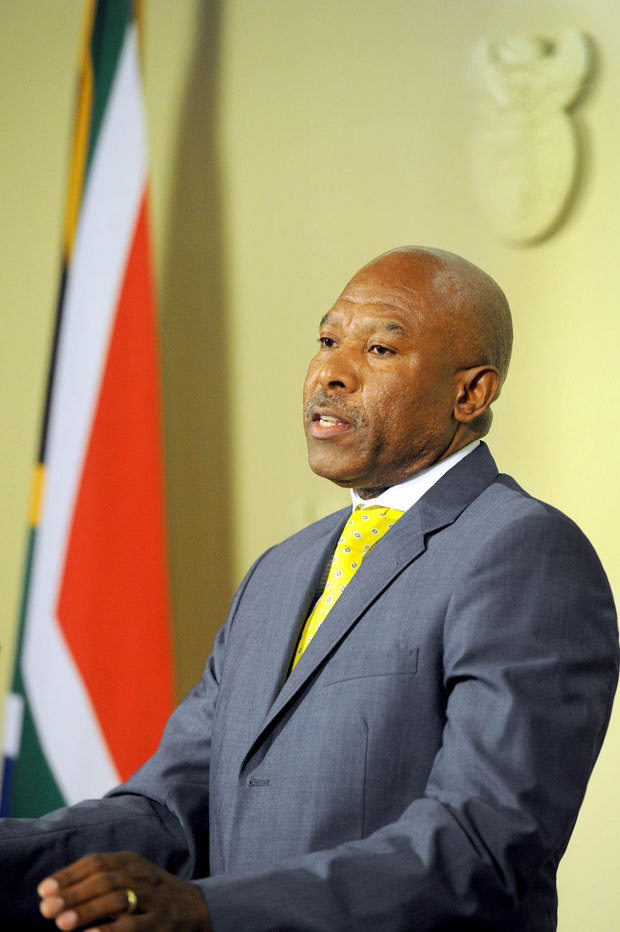
Announcing the decision on Thursday, Reserve Bank Governor Lesetja Kganyago said the Monetary Policy Committee (MPC) was divided, with two members favouring a 25 basis point cut, while four supported holding rates.
"The Quarterly Projection Model continues to forecast gradual rate cuts as inflation subsides. The model sees the current stance as moderately restrictive, with interest rates reaching neutral levels during 2027," Kganyago said, adding that policy decisions will continue to be taken meeting by meeting, guided by data and risk assessments.
Growth steadier, investment still fragile
Kganyago noted that South Africa's economic growth has stabilised, with the economy expanding for four consecutive quarters—the longest uninterrupted growth phase since 2018.
"Available data suggests the economy grew further in the most recent quarter. Household consumption has been the main driver, rising by more than 3% last year, compared to overall growth of about 1.3%," he said.
However, investment remains a concern. While it contracted in the first half of 2025, third-quarter data showed a rebound. "We hope this recovery will be sustained, allowing the economy to achieve structurally higher growth," Kganyago said.
SARB forecasts growth edging higher towards 2% over the medium term, with some upside risks.
Inflation outlook improves, but risks remain
Inflation rose to 3.6% in December 2025, but SARB expects it to moderate in the near term, supported by a stronger rand and lower oil price assumptions.
At the same time, Kganyago cautioned that the Bank is closely monitoring food inflation, particularly meat prices affected by the foot-and-mouth disease outbreak, as well as electricity prices, given that NERSA's price correction may increase from R54 billion to R76 billion.
On a positive note, inflation expectations have fallen sharply, with longer-term expectations at record lows, reflecting growing confidence in the new inflation target.
A watershed year for reforms
Kganyago described the past year as a "watershed year" for the South African economy, citing progress on domestic reforms, including the adoption of a new inflation target, despite global volatility.
"These reforms have been rewarded with lower borrowing costs, falling inflation expectations, and steadier growth," he said, stressing the need to sustain momentum.
"For monetary policy, our key contribution is to deliver on the new target—stabilising inflation at 3% over the next few years. Further gains will depend on prudent public debt management, lower administered price inflation, and continued structural reforms to lift potential growth," Kganyago concluded.


 Google News