

New Zealand Unveils $8m Ukraine Aid, Expands Russia Sanctions
“Russia’s illegal and unprovoked invasion, now entering its fifth year, has devastated Ukraine, destabilised Europe and impacted the security of our own region,” Mr Peters said.
- Country:
- New Zealand
New Zealand has announced an additional $8 million in assistance to Ukraine and unveiled a sweeping new package of sanctions aimed at tightening pressure on Russia's war economy, as the conflict enters its fifth year.
Foreign Minister Winston Peters said the new measures reflect Wellington's continued commitment to Ukraine's sovereignty and to the rules-based international order amid escalating attacks on civilian infrastructure.
"Russia's illegal and unprovoked invasion, now entering its fifth year, has devastated Ukraine, destabilised Europe and impacted the security of our own region," Mr Peters said.
"Russia's relentless bombardment of civilian infrastructure this winter has hit Ukraine's people hard, and this assistance demonstrates New Zealand's continued solidarity."
Strengthening Humanitarian Support as Winter Bites
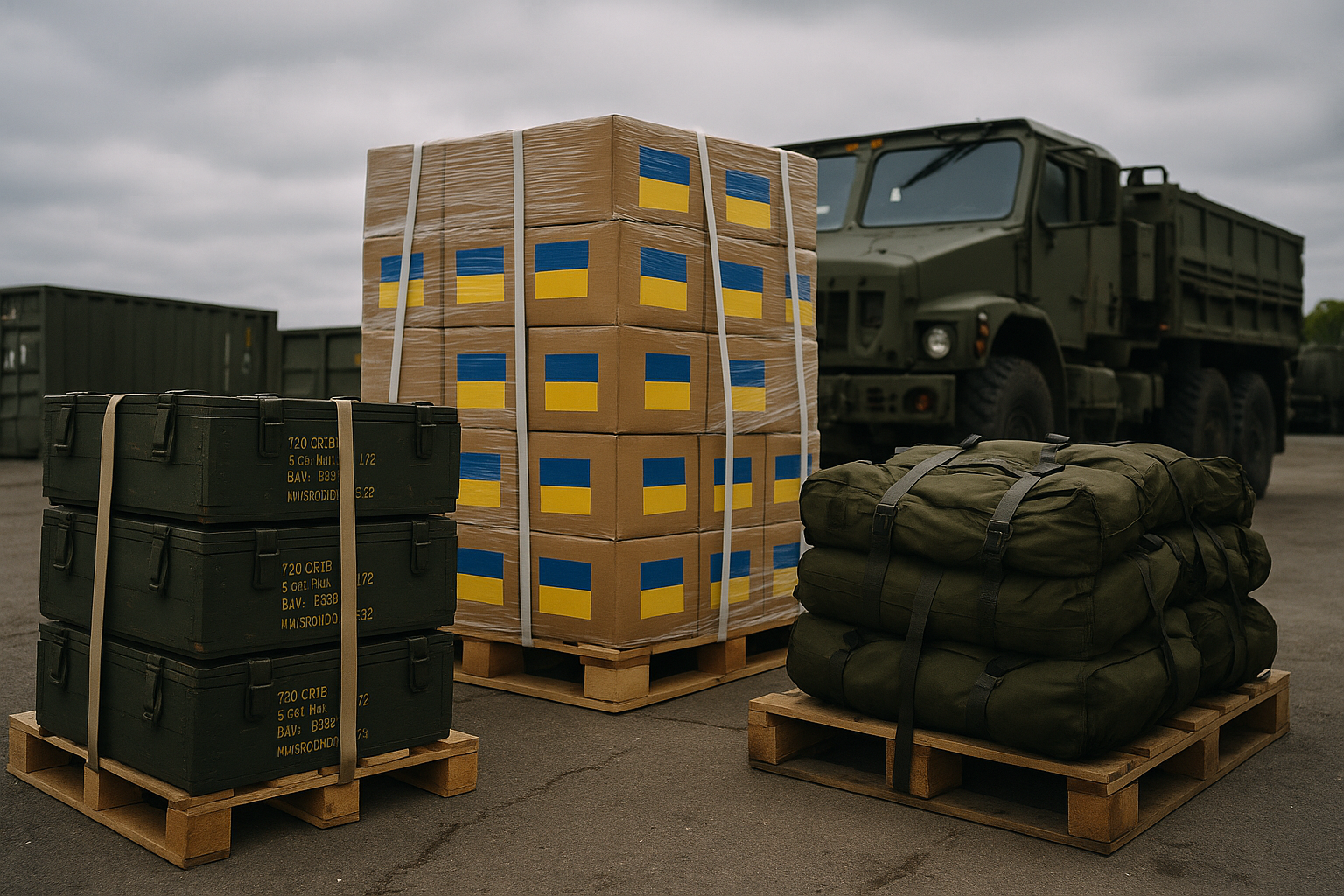
Of the newly announced funding, $5 million will go toward humanitarian assistance, delivered through international aid partners working directly with Ukrainian communities affected by ongoing missile and drone strikes.
The funding will help provide emergency shelter, food security, medical care, and winterisation support as Russia continues targeting energy grids, heating systems and residential areas. Repeated strikes on Ukraine's power infrastructure have caused widespread electricity outages during freezing conditions, compounding risks for elderly citizens, families with children, and internally displaced people.
The latest allocation brings New Zealand's total humanitarian assistance to Ukraine to $45 million over the past four years, underscoring a sustained commitment that has evolved alongside the conflict's changing needs.
Aid agencies have warned that continued attacks on energy infrastructure pose long-term humanitarian risks, including disruptions to water supply systems, healthcare services and schools. The new funding is designed to address these urgent civilian needs while supporting frontline humanitarian responders.
Backing Energy Resilience and Reconstruction
In addition to immediate relief, $3 million will be directed to the World Bank-administered Ukraine Relief, Recovery, Reconstruction and Reform Trust Fund.
This fund supports large-scale recovery projects, including energy resilience, infrastructure repair and institutional reform. By contributing to a multilateral reconstruction vehicle, New Zealand is aligning its support with broader international efforts to stabilise Ukraine's economy and rebuild critical systems damaged by war.
Energy resilience has become a central focus of Ukraine's recovery strategy. Sustained attacks on thermal and hydroelectric facilities have significantly reduced generation capacity, increasing reliance on emergency imports and temporary repairs. Contributions to the trust fund are intended to help restore grid stability and support longer-term reconstruction of essential infrastructure.
Expanding Sanctions: Targeting Oil Revenues and the Shadow Fleet
Alongside humanitarian and reconstruction funding, New Zealand has launched its 34th round of sanctions against Russia, introducing measures aimed squarely at cutting off revenue streams that finance the Kremlin's war effort.
Key steps include:
-
Lowering the price cap on Russian crude oil.
-
Sanctioning 100 so-called "shadow fleet" vessels used to circumvent international oil restrictions.
"These are calculated steps to curtail crucial oil revenues fuelling Putin's illegal war of aggression against Ukraine," Mr Peters said.
The "shadow fleet" refers to ageing oil tankers often operating under opaque ownership structures and flags of convenience. These vessels are widely reported to be used to transport Russian oil above the established price cap, undermining international sanctions regimes. By targeting these ships, New Zealand aims to close enforcement gaps and reinforce coordination with like-minded partners.
Broader Network of Sanctions
The new measures also extend beyond Russia itself.
New Zealand has sanctioned actors from Belarus, Iran and North Korea linked to support for Russia's military operations. Additional designations target alternative payment providers, malicious cyber actors and individuals and entities connected to Russia's military-industrial complex.
By broadening sanctions to include external enablers and logistical networks, Wellington is signalling an intent to disrupt supply chains and financial channels that sustain the war effort.
Since the invasion began in February 2022, New Zealand has imposed sanctions across multiple sectors, including finance, trade, shipping, defence technology and travel. The cumulative approach reflects growing international coordination designed to restrict Russia's access to advanced technologies, capital markets and energy revenues.
A Strategic and Regional Message
While geographically distant from Europe, New Zealand has consistently framed its response as a matter of global security and principle.
Officials argue that Russia's invasion challenges fundamental norms around territorial sovereignty and non-aggression — principles that underpin stability not only in Europe but across the Indo-Pacific.
"Russia's invasion has destabilised Europe and impacted the security of our own region," Mr Peters said, reinforcing the view that violations of international law in one theatre have wider consequences.
New Zealand's measures align closely with those of key partners, including Australia, the European Union, the United Kingdom, Canada and the United States, demonstrating continued diplomatic coordination among countries supporting Ukraine.
Four Years of Sustained Support
Over four years, New Zealand's support has included humanitarian funding, military assistance, training deployments and sanctions enforcement. The latest announcement builds on that record at a time when Ukraine faces renewed pressure on its energy infrastructure and civilian population.
With winter attacks intensifying and reconstruction costs mounting, the combined package of humanitarian relief, reconstruction financing and expanded sanctions underscores a dual-track strategy: immediate civilian protection alongside long-term economic and energy resilience.
Further details on New Zealand's sanctions regime, travel bans, export controls and broader diplomatic, military and economic support for Ukraine are available through the Ministry of Foreign Affairs and Trade.
As the war enters its fifth year, Wellington's latest measures send a clear message — support for Ukraine remains firm, and pressure on Russia's war machine will continue to escalate.
ALSO READ
-
Naftogaz Sets Out Cleaner Energy Future With EIB Support and 2050 Net Zero Target
-
New Zealand Gives NZ$300,000 to Help Developing Countries Build Safer Food Trade
-
KSrelief and UNDP Launch $5M Lifeline for Ukraine’s War-Affected Hospitals
-
Poltava University Reopens With Safer, Greener Spaces for Nearly 3,000 Campus Users
-
UNDP Urges Recovery From Day One as 160 Million People Risk Being Trapped in Crisis


 Google News