

Lesotho Highlands Project Advances as SA Secures Future Water Supply with Major Engineering Milestones
Describing the tunnel as an “umbilical cord between two nations,” Minister Majodina emphasized its strategic importance in linking resources and ensuring long-term sustainability.
- Country:
- South Africa
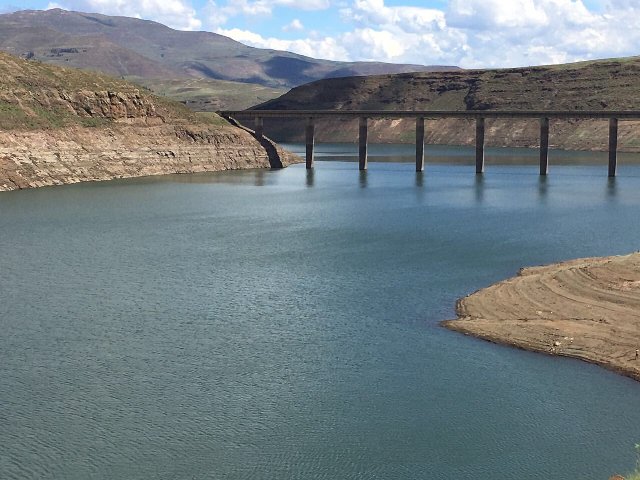
South Africa has reaffirmed its long-term strategy to secure water supply for future generations, as Water and Sanitation Minister Pemmy Majodina highlighted significant progress on the Polihali Dam and Transfer Tunnel, a flagship component of the Lesotho Highlands Water Project (LHWP) Phase II.
During an oversight visit to the construction site in Lesotho, the Minister inspected key infrastructure developments, including the launch of a Tunnel Boring Machine (TBM)—a critical milestone in one of Africa's most ambitious cross-border water projects.
A Strategic Lifeline for Gauteng and Beyond
The Lesotho Highlands Water Project is a bi-national initiative between South Africa and Lesotho designed to:
-
Augment water supply to Gauteng, the country's economic hub
-
Support hydropower generation in Lesotho
-
Strengthen regional water security and climate resilience
At the heart of Phase II is the 38.5 km Polihali Transfer Tunnel, which will connect the Polihali and Katse Dam reservoirs through a gravity-fed system—effectively increasing water transfer capacity.
Describing the tunnel as an "umbilical cord between two nations," Minister Majodina emphasized its strategic importance in linking resources and ensuring long-term sustainability.
Engineering Progress Gains Momentum
The project has recorded steady advancement:
-
Construction progress has increased from 53% in December 2025 to 58% in April 2026
-
The TBM is now operational, marking a major step in tunnel excavation
-
Supporting infrastructure, including water channels and visitor facilities, has been completed
Despite challenges such as difficult terrain and adverse weather conditions, the project continues to move forward through round-the-clock operations and coordinated engineering efforts.
Addressing South Africa's Water Challenges
While acknowledging concerns over water shortages—particularly in Gauteng—the Minister clarified that the issue is not a lack of water resources, but rather poor maintenance and management of existing infrastructure.
"Water is available, but inefficiencies in municipal systems often lead to losses before it reaches consumers," she noted, pointing to leakages and operational gaps across municipalities.
The project, she said, is designed not just to meet current demand but to future-proof water supply in the face of population growth and economic expansion.
Beyond Water: Driving Regional Development
The LHWP Phase II is also delivering wide-ranging socio-economic benefits:
-
Construction of roads, bridges, schools, and clinics
-
Housing relocation programmes for affected communities
-
Job creation, skills transfer, and local economic development
A major highlight includes the upcoming handover of the Senqu Bridge, described as one of the most advanced bridges on the continent.
"These projects are transforming communities, not just delivering water," the Minister said.
Supporting Agriculture and Climate Resilience
In addition to supplying water to Gauteng, the project will enhance agricultural resilience in South Africa:
-
Water will be stored and released via the Mohokare River
-
Drought-prone regions such as the Free State and Eastern Cape will benefit from irrigation support
This multi-purpose approach positions the project as a key tool in managing climate variability and water scarcity.
Financial Framework and Bilateral Cooperation
The project is financed through a structured arrangement involving:
-
Funding raised via the Trans-Caledon Tunnel Authority (TCTA)
-
Royalty payments from South Africa to Lesotho, contributing to the latter's national revenue
The Minister confirmed that compensation processes for affected communities are nearing completion, with only a small number of cases still under verification.
A Model of Cross-Border Infrastructure Collaboration
The Lesotho Highlands Water Project is widely regarded as one of Africa's most successful examples of regional infrastructure cooperation, combining resource sharing with mutual economic benefits.
Minister Majodina reaffirmed both countries' commitment to completing the project on time and within budget, emphasizing its long-term importance for water security and development.
Securing Water for Future Generations
As South Africa faces growing pressures from urbanization, industrial demand, and climate change, projects like LHWP Phase II are critical to ensuring sustainable and reliable water supply.
With engineering milestones being achieved and broader development impacts unfolding, the project stands as a cornerstone of the country's vision to build a resilient, water-secure future.


 Google News