

Matching of VVPAT slips with EVMs to take place in five polling booths per assembly
- Country:
- India
As the Supreme Court, Tuesday made it clear that random matching of VVPAT slips with EVMs will take place in five polling booths per assembly segment, the exercise will be held in 20,600 of the 10.35 lakh polling stations on May 23 when votes for the Lok Sabha elections are counted. The top court on Tuesday dismissed the plea filed by 21 opposition leaders seeking a review of its April 8 order directing the Election Commission to increase random matching of VVPAT slips with EVMs to five polling booths per assembly segment.
The plea was filed by opposition leaders led by Andhra Pradesh Chief Minister N Chandrababu Naidu. Senior advocate A M Singhvi, appearing for petitioners, told the bench that the apex court had increased the random matching of VVPAT slips with EVMs to five polling booths per assembly segment and they are now seeking that it should be increased to 25 per cent at least.
Though the exercise of matching EVM results with paper trail machine slips was being held in various assembly elections, this is the first time it will be undertaken in Lok Sabha polls. So far, paper audit trail checks were done in only one polling station per assembly segment selected randomly by a draw of lots or lottery system, though the VVPAT machines are deployed in all the polling stations.
Highly placed sources in the Election Commission said the exercise will not have much bearing on official declaration of results. "Though candidates come to know of the results after the EVM results are counted, the official declaration will be delayed by two to three hours," a functionary explained.
He said if the EC is able to deploy five separate teams for random matching, then there would not be much of a delay in announcing the results. "But if there are less than five teams, the delay would be proportional to the time taken at each station," he said.
India has 4,120 assembly seats. Now, multiplied by five, the paper audit trail checks will take place in 20,600 polling stations spread across these assembly seats. "The number of voters varies from 800 to 2,500 per polling station," the functionary said.
Since Union Territories such as Chandigarh, Daman and Diu, Lakshadweep, Andaman and Nicobar, and Dadra and Nagar Haveli do not have state assemblies, five polling stations will be selected randomly. This would mean another 25 polling stations. A cautious approach by the EC, thin margins of leads and counting of paper trail machine slips were some of the key factors that led to the delayed poll results in Madhya Pradesh and Chhattisgarh in December last year.
With parties blaming the electronic voting machines, the poll panel was extra cautious in its approach. The Chief Electoral Officers of Madhya Pradesh, Rajasthan, Chhattisgarh, Telangana and Mizoram were reminded of an old rule that they had to provide round-wise results to candidates without fail.
Referring to its April 2014 instruction, the poll panel had said observers and returning officers would sign candidate-wise results for each round after checking everything. The system ensured that very few demands were made for a recount, but it delayed the counting process.
The panel will set up nearly 10.35 lakh polling stations in the country, as compared to nearly 9.28 lakh during the 2014 polls -- an increase of 10.1 per cent. Nearly 39.6 lakh EVMs and 17.4 lakh voter-verifiable paper trail machines (VVPAT) would be used in these polling stations. These include reserves.
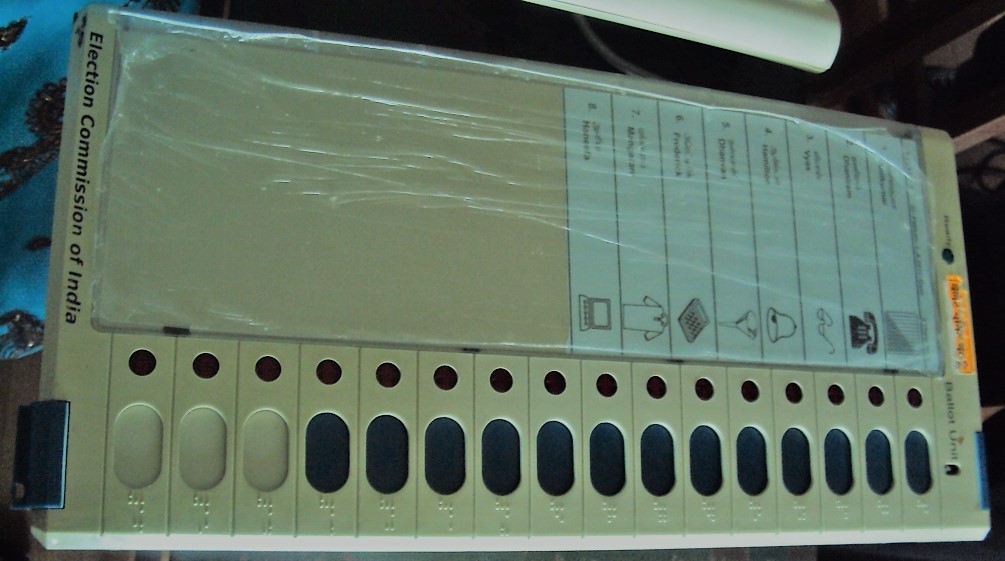
One control unit and at least one ballot unit where buttons are placed constitute an EVM. After votes are cast, the polling station where VVPAT slips are matched with EVM results is decided by a draw of lots or lottery system in the presence of the candidates.
VVPAT machine is a device which dispenses a slip with the symbol of the party for which a person has voted. The slip appears on a small window for seven seconds and then drops in a box. The voter cannot take it home.


 Google News