

Displaced Families in Lebanon Remain Trapped in Schools Months After Ceasefire
According to UNHCR, more than one million people have been forced to flee their homes during the latest escalation of violence in Lebanon.
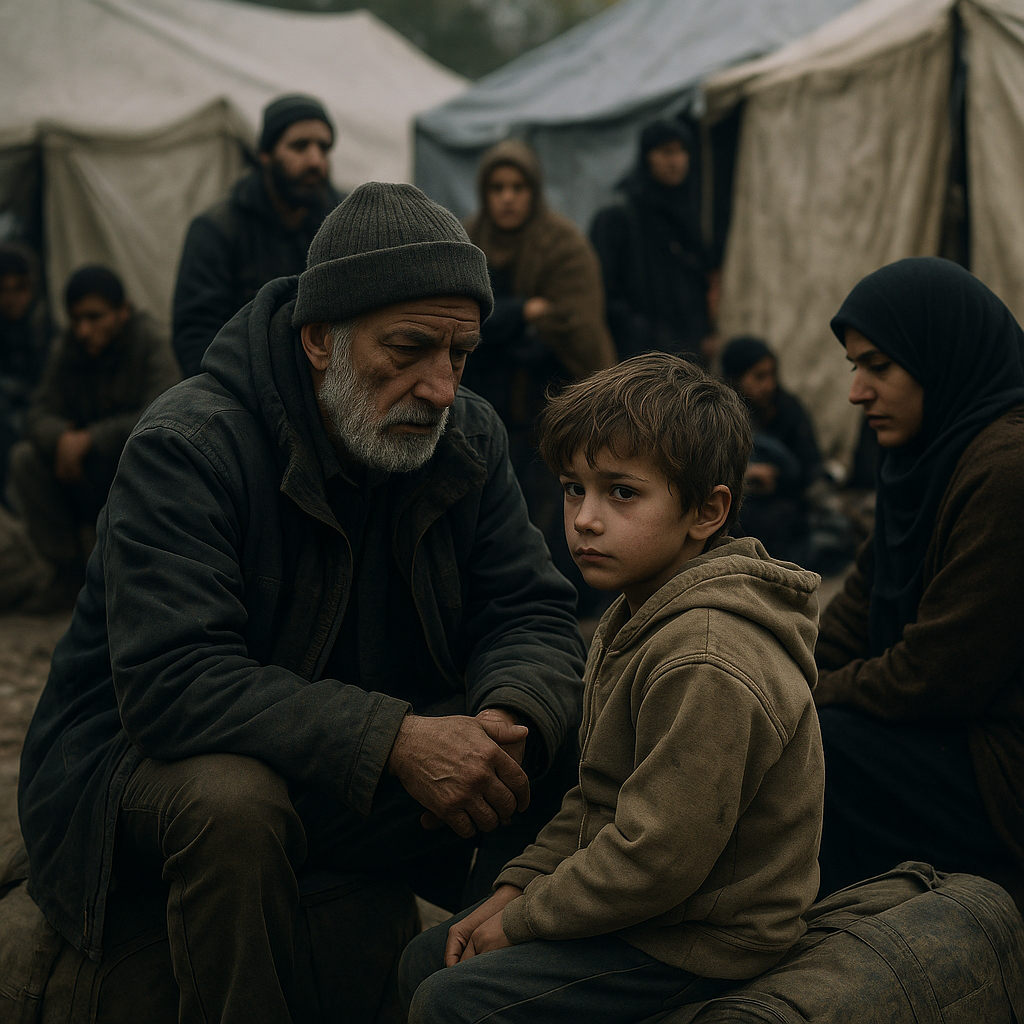
Nearly a month after a fragile ceasefire brought temporary relief to parts of Lebanon, tens of thousands of displaced families continue living in overcrowded schools and emergency shelters, unable to return home because of destruction, insecurity, and continuing airstrikes.
Across Beirut and other regions, classrooms once filled with students have been transformed into makeshift homes where entire families now sleep behind thin partitions, struggling to rebuild their lives amid uncertainty and trauma.
In Raml El Zarif Public School in Beirut's Hamra district, laundry lines hang where whiteboards once stood, mattresses cover classroom floors, and voices echo through temporary dividers separating one displaced family from another.
For many, displacement in Lebanon is no longer a short-term emergency but a prolonged humanitarian crisis with no clear end in sight.
More Than One Million People Forced to Flee
According to UNHCR, more than one million people have been forced to flee their homes during the latest escalation of violence in Lebanon.
Approximately 130,000 displaced people are still living in collective shelters, most of them public schools converted into emergency accommodation facilities.
Many families fled with little warning as heavy airstrikes targeted residential areas, particularly in Beirut's southern suburbs, southern Lebanon, and the Bekaa region.
Displaced residents describe chaotic escapes where families left behind:
-
Homes
-
Businesses
-
Personal belongings
-
Documents
-
Savings
-
Livelihoods
Some arrived at shelters carrying only the clothes they were wearing.
Families Return Briefly, Then Flee Again
When the ceasefire was first announced, many displaced families attempted to return home or inspect damaged properties.
However, these returns were often temporary.
Ghadir Houjaj, who fled southern Lebanon, explained that her family returned for only one day before deciding conditions remained too dangerous to stay.
Families continue to report:
-
Ongoing airstrikes
-
Drone activity
-
Destroyed infrastructure
-
Unexploded ordnance
-
Lack of basic services
These dangers have forced many people back into displacement shelters despite the official ceasefire.
Humanitarian agencies warn that repeated displacement is becoming increasingly common as civilians move back and forth between damaged communities and emergency shelters in search of safety.
Southern Lebanon Still Facing Daily Strikes
While parts of Beirut have experienced relative calm in recent days, areas in southern Lebanon and West Bekaa reportedly continue facing near-daily Israeli airstrikes, demolitions, and destruction.
According to UNHCR, these attacks continue to affect:
-
Homes
-
Roads
-
Water systems
-
Schools
-
Civilian infrastructure
The ongoing violence has made return impossible or extremely dangerous for many displaced families.
Humanitarian organizations warn that even where active fighting has subsided, unexploded bombs and severe infrastructure damage continue to threaten civilian lives.
Homes Destroyed, Livelihoods Lost
For many displaced families, returning home is not simply a question of security but also one of survival.
Yusuf Qbeissi, a retired army serviceman from Nabatieh, returned to find the house he spent years building severely damaged.
Cracked walls and structural damage have made the home unsafe for his family, while the cost of repairs is far beyond what he can afford.
Now living in a school shelter in northern Lebanon, Yusuf spends his days tending small herb gardens planted in the schoolyard — an effort to maintain a sense of routine and dignity amid ongoing uncertainty.
Across Lebanon, thousands of families face similar situations:
-
Destroyed homes
-
Damaged businesses
-
Loss of income
-
Rising debt
-
Lack of reconstruction support
Many displaced people say they no longer know when, or if, they will be able to return permanently.
Schools Overcrowded and Ill-Equipped for Long-Term Shelter
UNHCR says life inside collective shelters remains extremely difficult.
Schools were never designed to host hundreds of displaced families for extended periods.
Families now live in cramped conditions with:
-
Limited privacy
-
Shared bathrooms
-
Poor ventilation
-
Inadequate sanitation
-
Constant noise
-
Emotional stress
The humanitarian crisis has created deeply emotional scenes where newborn babies share shelter spaces with families grieving relatives killed in the conflict.
Some residents say they have lost count of how many times they have been displaced during recent months.
Syrian refugees who had previously fled war in Syria over a decade ago now find themselves displaced yet again inside Lebanon.
UNHCR Support Improving Conditions, But Challenges Remain
UNHCR and humanitarian partners have carried out repairs and installed partitions inside hundreds of shelters to improve privacy and living conditions.
Residents say these changes have helped restore some dignity to daily life.
Ghadir Houjaj explained that conditions improved significantly after partitions were installed, reducing noise and allowing families more privacy.
However, humanitarian agencies stress that these improvements do not replace the security and dignity of returning home.
As temperatures rise, heat and poor ventilation inside overcrowded shelters are becoming major health concerns, particularly for:
-
Children
-
Elderly residents
-
Pregnant women
-
People with chronic illnesses
Economic Hardship Deepening Crisis
Many displaced families have also lost their primary sources of income.
Maha, a 48-year-old woman from Srifa in southern Lebanon, said her family lost both their home and her husband's welding workshop during airstrikes.
With few employment opportunities available, her daughter now works in the shelter kitchen to help the family survive.
Humanitarian agencies warn that prolonged displacement is increasing poverty levels among affected communities.
Many families now depend almost entirely on:
-
Aid distributions
-
Community support
-
Temporary shelter assistance
-
Informal work opportunities
The destruction of businesses and infrastructure has further weakened local economies already struggling with Lebanon's ongoing financial crisis.
Children Bearing Heavy Psychological Burden
The emotional and psychological toll on children is becoming increasingly visible inside shelters.
Twelve-year-old Zahraa described how her classroom, once a place for learning, has now become a place for sleeping and displacement.
Her family remains unable to return home because their neighbourhood in Beirut has suffered severe damage and lacks:
-
Electricity
-
Water
-
Internet access
-
Functional schools
Disrupted education has become a major concern for displaced families.
Many children are unable to attend school regularly or participate in online learning because of damaged infrastructure and unstable living conditions.
Mental health specialists warn that prolonged displacement, exposure to violence, and repeated instability can leave long-term psychological scars on children.
Women Seeking Support Amid Trauma
Inside one shelter classroom, groups of women gather for emotional support sessions where they discuss fears, stress, and trauma while practicing breathing exercises.
Aid workers say these sessions provide rare opportunities for displaced women to speak openly about their experiences.
However, not everyone feels ready to share.
One woman named Nawal quietly explained that she preferred to keep her painful memories to herself, reflecting the deep emotional strain carried by many displaced people.
Humanitarian Agencies Warn Crisis Far From Over
Although international attention has shifted elsewhere in recent weeks, humanitarian organizations warn that Lebanon's displacement crisis remains severe and unresolved.
The combination of:
-
Ongoing insecurity
-
Infrastructure destruction
-
Economic collapse
-
Psychological trauma
-
Lack of reconstruction funding
continues to prevent durable solutions for thousands of families.
UNHCR and aid agencies say sustained humanitarian support will be essential in the months ahead as displaced communities struggle to recover from one of Lebanon's most devastating periods of conflict and instability in recent years.


 Google News