

Rights on Paper, No Safety Net: Why Billions Still Live Without Social Protection
A new international discussion led by the International Labour Organization (ILO) has highlighted the urgent need for governments to turn promises about social protection into practical systems that reach people throughout their lives.
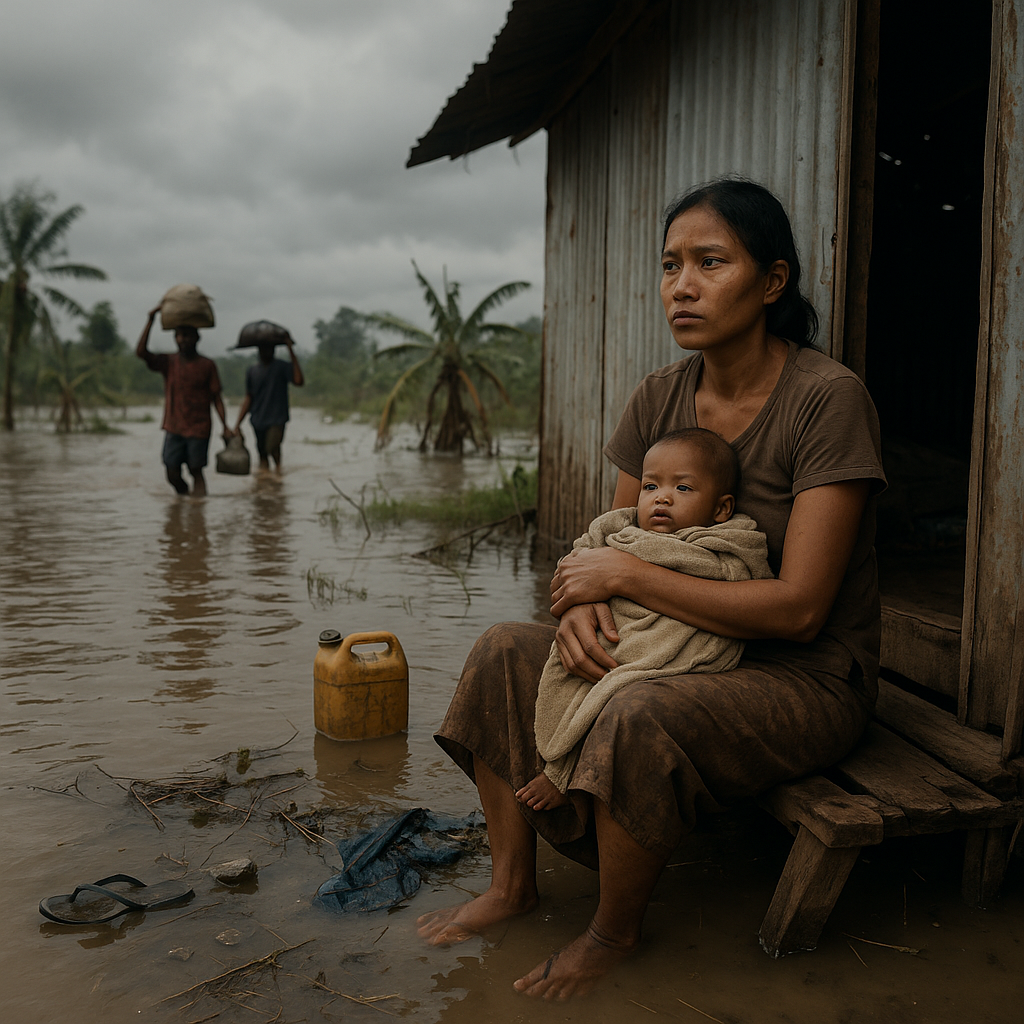
Nearly 3.8 billion people worldwide remain without social protection, leaving millions of families vulnerable to financial hardship when they lose employment, become ill or face unexpected emergencies. A new international discussion led by the International Labour Organization (ILO) has highlighted the urgent need for governments to turn promises about social protection into practical systems that reach people throughout their lives. Experts emphasized that access to income security, healthcare and essential benefits is becoming increasingly important as economic uncertainty, climate change and shifting employment patterns place greater pressure on households.
Representatives from governments, workers' and employers' organizations, international institutions and civil society gathered at the ILO headquarters in Geneva on 4 November 2026 to discuss how countries can expand social protection coverage. The conference, titled Universal Social Protection in a Changing World: Advancing Social Development and Decent Work, was organized by the ILO, World Bank and Friedrich-Ebert-Stiftung under the Global Partnership for Universal Social Protection to Achieve the Sustainable Development Goals (USP2030). Participants examined how stronger national policies, reliable financing and international cooperation could help ensure that social protection becomes accessible to everyone rather than remaining a commitment expressed in government agreements.
According to the ILO's World Social Protection Report 2024–26, only 52.4% of the global population receives at least one social protection benefit, exposing the considerable gaps that persist across countries. Population ageing, technological changes, widening inequality and climate-related disruptions are increasing demand for assistance, particularly among people with unstable incomes and limited access to formal employment. Rising national debt, restricted government budgets, armed conflicts and declining development assistance are making it harder for countries to finance the programmes needed to protect vulnerable communities.
Billions Remain Unprotected as Economic Pressures Continue to Grow
Social protection systems can help families maintain basic living standards through pensions, unemployment assistance, child benefits, disability support and other forms of income security. Millions of people remain excluded from these programmes because of limited public resources, weak administrative systems and employment arrangements that do not provide access to social insurance. The conference highlighted the importance of designing programmes that respond to people's changing needs and provide meaningful support during financial hardship, illness and other major life events.
Lucas Chancel, Co-Director of the World Inequality Lab at the Paris School of Economics, pointed to the experience of Scandinavian countries, where social protection and progressive taxation helped reduce income inequality during the twentieth century. He explained that similar approaches could support future efforts to distribute economic resources more fairly and strengthen financial security across different income groups. Economist Jayati Ghosh, Professor at the University of Massachusetts Amherst, stressed that social protection should be recognized for its contribution to economic growth and development, rather than being viewed only as government expenditure.
Countries Must Turn Social Protection Promises Into Practical Policies
Governments renewed their commitment to expanding social protection during the Second World Summit for Social Development in Doha in 2025, recognizing national strategies as essential tools for improving coverage and benefit adequacy. Conference participants emphasized that political commitments must be supported by effective programmes, adequate resources and institutions capable of delivering assistance to people who need it most. Particular attention was given to connecting short-term financial support with opportunities for stable employment, skills development and long-term social security.
Peter Ombasa, Assistant Director of Kenya's National Social Protection Secretariat, explained that cash transfers provide important immediate assistance but should be supported by measures that help beneficiaries develop skills and improve their earning opportunities. Experiences shared during the conference showed that extending social security to informal workers requires practical arrangements that reflect irregular incomes and different employment conditions. Smritee Lama, a representative of Nepal's General Federation of Nepalese Trade Unions, called for simplified registration, flexible contribution systems and publicly funded support for workers unable to make regular payments.
Changing labour markets create additional challenges because workers increasingly move between jobs, employment arrangements and periods of economic uncertainty throughout their careers. Pierre Vincensini, Special Advisor at the International Organisation of Employers, emphasized the importance of adapting social protection systems to these employment transitions. Participants recognized that effective protection must remain accessible when people change jobs or experience interruptions in employment, preventing workers from losing essential benefits during vulnerable periods.
Stronger Financing and Global Cooperation Needed to Close Protection Gaps
Turning social protection policies into effective services requires sustained government leadership, predictable financing and administrative systems capable of reaching communities across different regions. Civil society representatives highlighted the importance of public participation, accountability and ensuring that people can access the benefits promised under national laws. Discussions emphasized that stronger institutions and cooperation between governments, employers, workers and international organizations can help countries overcome implementation challenges and improve service delivery.
The conference identified sustainable investment and coordinated national policies as essential for extending protection to underserved populations, particularly people working outside formal employment systems. International cooperation was recognized as an important way to support countries facing financial pressures and limited institutional capacity, helping them build programmes that respond to economic shocks and emergencies. Participants stressed that expanding coverage must be accompanied by adequate benefits so that social protection provides meaningful financial security rather than limited assistance.
Valérie Schmitt, Chief of the ILO Universal Social Protection Branch, closed the conference by emphasizing the importance of strong institutions, consistent investment and international cooperation in making universal coverage a reality. She described social protection as essential for social justice, fairer income distribution and ensuring that economic and technological changes do not leave vulnerable people behind. The gathering reinforced a central message that protecting billions of people requires more than political promises, with governments needing to build sustainable systems that provide reliable support throughout people's lives.


 Google News