

President gives assent to Criminal Procedure (Identification) Bill
But, if a political leader is arrested in a criminal case, then he will have to be at par with a citizen, Shah said.Several opposition parties slammed as unconstitutional and draconian the legislation and claimed it could be misused.Shah said no measurements will be taken of any political person for violation of prohibitory orders promulgated by police.He said the legislation is aimed at improving the conviction rate.It is aimed at building capacity for the police and forensic teams, he said.
- Country:
- India
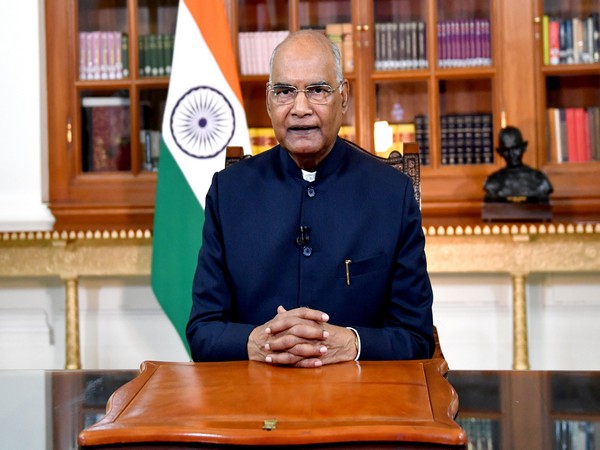
President Ram Nath Kovind has given his assent to the Criminal Procedure (Identification) Bill, which empowers police to obtain physical and biological samples of convicts and those accused of crimes.
The Act, which replaces the Identification of Prisoners Act, 1920, was passed by Lok Sabha on April 4 and Rajya Sabha on April 6.
''The following Act of Parliament received the assent of the President on the 18th April, 2022 and is hereby published for general information:- The Criminal Procedure (Identification) Act, 2022 No.11 of 2022,'' a gazette notification issued by the government said.
Apart from providing legal sanction to police to obtain physical and biological samples of convicts and detainees for investigation in criminal matters, the legislation also empowers a magistrate to order measurements or photographs of a person to be taken to aid the investigation of an offence.
In case of acquittal or discharge of the person, all material must be destroyed.
The Act explained the types of data that may be collected, people from whom such data may be collected and the authority that can authorise such collection.
It also provides for the data to be stored in a central database.
Both the 1920 Act and the 2022 legislation clarified that resistance or refusal to give data will be considered as an offence of obstructing a public servant from doing his duty.
While participating in the debate on the legislation in Rajya Sabha, Union Home Minister Amit Shah had said the biometric data of political detainees would not be collected and the proposed law would exclude brain mapping and polygraph test from its ambit.
''Under section 3, the government of India has the right to make rules. We will define it and ensure that no person involved in a political agitation has to give (physical and biometric) measurements only for political agitation. But, if a political leader is arrested in a criminal case, then he will have to be at par with a citizen,'' Shah said.
Several opposition parties slammed as ''unconstitutional'' and ''draconian'' the legislation and claimed it could be misused.
Shah said no measurements will be taken of any political person for violation of prohibitory orders promulgated by police.
He said the legislation is aimed at improving the conviction rate.
''It is aimed at building capacity for the police and forensic teams,'' he said.
ALSO READ
-
Japanese Lawmakers Visit India to See Worker Protection and Skills Projects in Action
-
Indian Unions Push for Fair Recruitment and Rights for Care Workers in Germany
-
Cleaner Kitchens, Polluted Skies: Hidden Health Cost of India’s Electricity Boom
-
Japan-Backed ILO Projects Help 23,000 Workers Gain Rights and Fight Child Labour
-
India's Delicate Balancing Act: Navigating Energy Security Amid Middle Eastern Tensions


 Google News