

Why Trump’s declaration doesn’t spell relief for Venezuelans
- Country:
- Venezuela Rb
For opponents of Venezuela's president Nicolas Maduro, January 23rd was a day of both incredible risk and jubilant celebration. Spurred to protest by the opposition-controlled National Assembly, thousands of demonstrators turned out in urban centers while opposition leader Juan Guaidó declared himself acting president. Almost immediately afterward, Guaidó received recognition from the United States and much of the Western hemisphere. In the days since, he's been granted control over at least some of Venezuela's overseas assets.
Neighbouring Colombia and Brazil, as well as Canada and the Organisation of American States (OAS), joined Washington in backing Guaidó's claim to power. Guaidó's move to assert constitutional authority was celebrated by Maduro's opponents both inside and outside Venezuela, but more surprisingly, much of the American foreign policy establishment – usually harshly critical of Donald Trump's approach to global affairs – has also cheered Trump's decision to lend Guaidó his support.
Unfortunately, for the thousands who turned out to protest and the millions who have suffered through the country's economic collapse, neither Guaidó's proclamation of executive authority nor his international support is likely to alleviate Latin American's worst humanitarian crisis. Instead, the standoff between the government and opposition in Venezuela threatens to approach the level of escalation previously seen in countries such as Syria and Libya. If those conflicts offer any indication, Venezuela could be on the verge of civil war – and the possibility of American intervention only makes things worse.
Could direct US involvement really be in the offing? Maduro has long claimed the United States is waging a campaign of economic warfare against his government and the chavista movement. According to this narrative, Washington wants to punish anti-imperialist Venezuela for its opposition to American foreign policy and undermine its independence. The Venezuelan leader has been able to point to decades of historical precedent: since the Cold War, US foreign policy in Latin America has been defined by hostility towards leftist governments and support for right-wing alternatives, with little regard for whether its allies or adversaries respect norms of human rights or democracy in the region.
In the 1970s and 1980s, Washington secretly supported right-wing guerrillas in Nicaragua and helped overthrow the democratically elected president of Chile. Just over the past few months, the Trump administration has continued to slap Maduro's government with additional sanctions while openly embracing the radically right-wing Brazilian president Jair Bolsonaro. An unabashed racist and misogynist who openly endorsed the country's former military dictatorship, Bolsonaro inaugurated his term with a legislative assault on Brazil's indigenous peoples.
Furthermore, Donald Trump and his key advisers, such as John Bolton, have repeatedly indicated their willingness to intervene militarily against the Maduro government since taking office. In August 2017, Trump compared Venezuela to North Korea and publically suggested a "military option" for addressing events in the country, with subsequent reporting revealing he had discussed the idea of invading Venezuela with regional leaders on numerous occasions. Last year, the New York Times also revealed the White House had secretly explored plans for a coup with some of the same Venezuelan military officers it has itself sanctioned. Bolton has been happy to feed these rumours, notoriously flashing a note about deploying 5,000 troops to neighbouring Colombia for the press to spot.
If Trump does decide to invade Venezuela, it is difficult to see how the outcome would prove any less destructive than the United States' other recent military interventions. The 2001 invasion of Afghanistan has resulted in 17 years of American military involvement in a long-running civil war, with the Taliban now resurgent and the central government reliant on Western assistance to keep them at bay. The invasion of Iraq created a failed state in the heart of the Middle East, with an estimated 405,000 Iraqis dying as a result of the conflict between 2003 and 2011. Western intervention in Libya that same year toppled Muammar Gadhafi but left a similarly conflict-ridden territory in its wake.
Trump, if sources are to be believed, does not have those examples in mind when he deliberates whether to send American troops into Venezuela. Instead, he has pointed Latin American leaders to the example of Ronald Reagan's intervention in Grenada, holding up a mission on an island of 100,000 people to argue for invading a country of over 30 million.
But regardless of whether or not Trump decides to act on his words, the political conflict between Maduro and Guaidó already has a military dimension. The stated goal of the opposition is to convince members of Venezuela's security forces to help unseat the government, creating the possibility of dueling military forces in a similar vein to the government and rebel armies that continue to fight Syria's eight-year-old civil war. If such a scenario comes to pass, the scale of human suffering in Venezuela will become more dramatic than it already is.
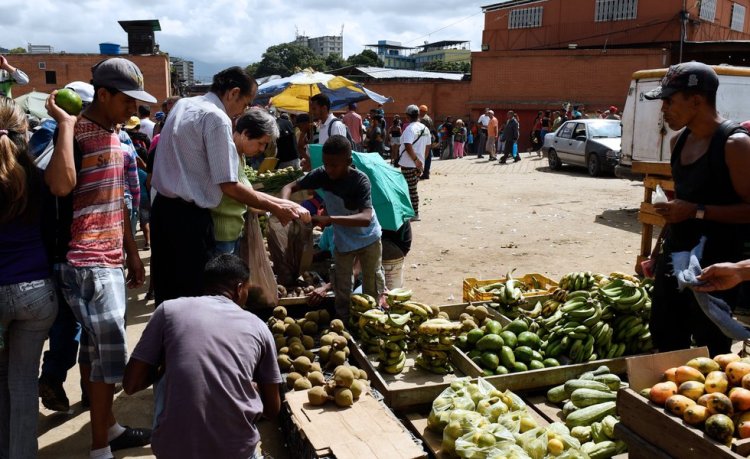
That is no mean feat. In 2001, Venezuela ranked as the richest country in South America. Now, nine out of ten Venezuelans live below the poverty line. Gross domestic product (GDP) per capita shrunk by 40% between 2013 and 2017. This stark reversal of fortune can be measured in body weight: in 2017, the average Venezuelan lost 11 kilograms as a result of widespread malnourishment. According to the United Nations, over three million Venezuelans have fled to neighbouring countries, with Colombia currently home to over one million Venezuelans and Peru taking in 500,000. The breakdown of Venezuela's health system has also allowed diseases such as diphtheria and measles to spread, stoking fears refugees may bring medical crises with them as they flee across the borders.


 Google News